Understanding Your Plating Options
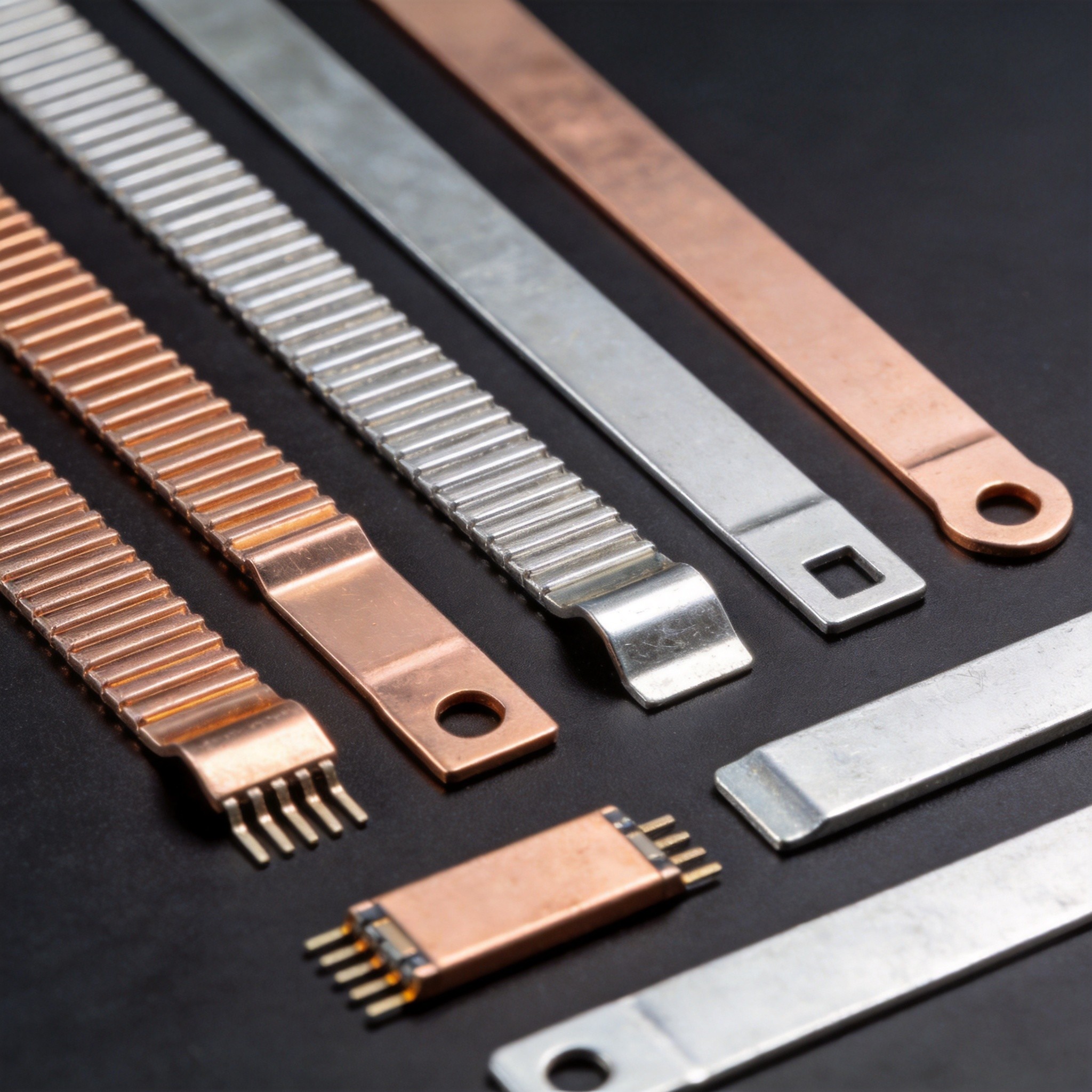
When selecting copper strips for your electronics manufacturing project, one of the most critical decisions involves choosing the right surface finish. The plating you select impacts everything from conductivity and corrosion resistance to solderability and cost. In this comprehensive guide, we compare bare copper, nickel-plated, and tin-plated copper strips to help you make an informed choice.
Bare Copper Strips
Advantages
- Maximum conductivity – Pure copper offers the highest electrical conductivity among all three options, approximately 101% IACS (Inteational A
ealed Copper Standard)
- Superior thermal performance – Ideal for heat dissipation applications where thermal conductivity is paramount
- Cost-effective – No additional plating process means lower material costs
- Easy to work with – Can be easily formed, bent, or shaped without plating damage
Limitations
- Oxidation susceptibility – Bare copper oxidizes when exposed to air, forming a green patina over time
- Limited corrosion resistance – Not suitable for harsh environments without additional protection
- Soldering challenges – May require flux or special techniques for reliable solder joints
Best Applications
Bare copper strips excel in applications where maximum conductivity is essential, such as:
- High-frequency RF components
- Power distribution bus bars
- Thermal management solutions in controlled environments
- Inteal battery co
ections in protected enclosures
Nickel-Plated Copper Strips
Advantages
- Excellent corrosion resistance – Nickel plating provides a robust barrier against environmental factors
- Good conductivity – Maintains approximately 50-70% of pure copper conductivity with proper plating thickness
- Wear resistance – Harder surface resists scratching and mechanical wear
- High-temperature tolerance – Performs well in elevated temperature environments
- Solderability – When properly processed, nickel-plated surfaces can be soldered reliably
Limitations
- Higher cost – Additional plating process increases material expenses
- Contact resistance – May not be ideal for low-resistance electrical contacts
- Specialized soldering – Requires specific solder and flux formulations
Best Applications
Nickel-plated strips are the go-to choice for:
- Automotive electronics and under-hood applications
- Industrial control systems exposed to moisture
- Medical devices requiring biocompatibility
- Marine and outdoor electronic equipment
Tin-Plated Copper Strips
Advantages
- Superior solderability – Tin plating creates an ideal surface for soldering with standard lead-free or leaded solders
- Good conductivity – Only minimally reduces copper conductivity
- Oxidation prevention – Effectively protects against air oxidation and taishing
- Cost-effective protection> – Offers a middle ground between bare copper and premium platings
- Contact-friendly – Suitable for spring contacts and mating surfaces
Limitations
- Tin whisker risk – Under certain conditions, tin can form conductive whiskers
- Temperature sensitivity – Tin melts at approximately 232°C, limiting high-temperature applications
- Wear considerations – Softer than nickel, may wear with repeated mating cycles
Best Applications
Tin-plated copper strips are ideal for:
- Consumer electronics and mass-produced devices
- PCB co
ectors and pin headers
- Battery contact terminals
- General-purpose electrical co
ections
Making Your Selection
Consider these key factors when choosing:
Environmental Conditions
If your application involves exposure to moisture, salt, or extreme temperatures, nickel plating offers superior protection. For controlled indoor environments, tin plating provides excellent value with good solderability.
Electrical Requirements
When conductivity is paramount, bare copper delivers the best performance. For most general applications, tin-plated strips provide an excellent balance of conductivity and practicality.
Manufacturing Process
Consider your assembly methods. If you rely heavily on reflow soldering, tin-plated strips streamline your production process. For applications requiring mechanical co
ections or welding, bare copper may be preferable.
Budget Constraints
Balance performance requirements against cost considerations. While bare copper is most economical, the long-term benefits of plated options often justify the investment through improved reliability and reduced field failures.
Expert Assistance Available
Choosing the right copper strip for your project does not have to be overwhelming. At TechMart SE, our technical team can help you evaluate your requirements and select the optimal material and plating combination for your specific application.
We stock an extensive range of SMT copper strips including bare copper, nickel-plated, and tin-plated options, along with specialty alloys for demanding applications. Contact us today to discuss your project requirements.