Introduction: The Heat Challenge in Modern LED Systems
LED lighting has revolutionized the electronics industry with its energy efficiency and longevity. However, these compact light sources generate significant heat that must be dissipated effectively to maintain performance and extend lifespan. Without proper thermal management, LED junction temperatures rise, causing reduced light output, color shifting, and premature failure.
This is where SMT copper strips emerge as the definitive solution for heat dissipation in LED applications. Their exceptional thermal conductivity, combined with the precision of surface mount technology, makes them ideal for managing heat in everything from residential bulbs to industrial lighting systems.
## Understanding Thermal Management in LED Applications
Heat management represents one of the most critical challenges in LED system design. LEDs convert only about 20-25% of electrical energy into light, with the remaining 75-80% converted to heat that must be removed from the device junction.
The thermal resistance path from the LED junction to the ambient environment includes multiple interfaces: the LED die, die attach material, lead frame, circuit board, and finally the heat sink or mounting surface. Each interface adds thermal resistance, making it essential to minimize resistance at every point, particularly where SMT copper components interface with the LED assembly.
### Why Copper Outperforms Traditional Materials
Thermal conductivity measures a material’s ability to conduct heat. Copper demonstrates thermal conductivity of approximately 400 W/m·K, significantly superior to aluminum at 205 W/m·K and traditional leadframe materials. This superior conductivity allows copper strips to draw heat away from sensitive LED components more efficiently.
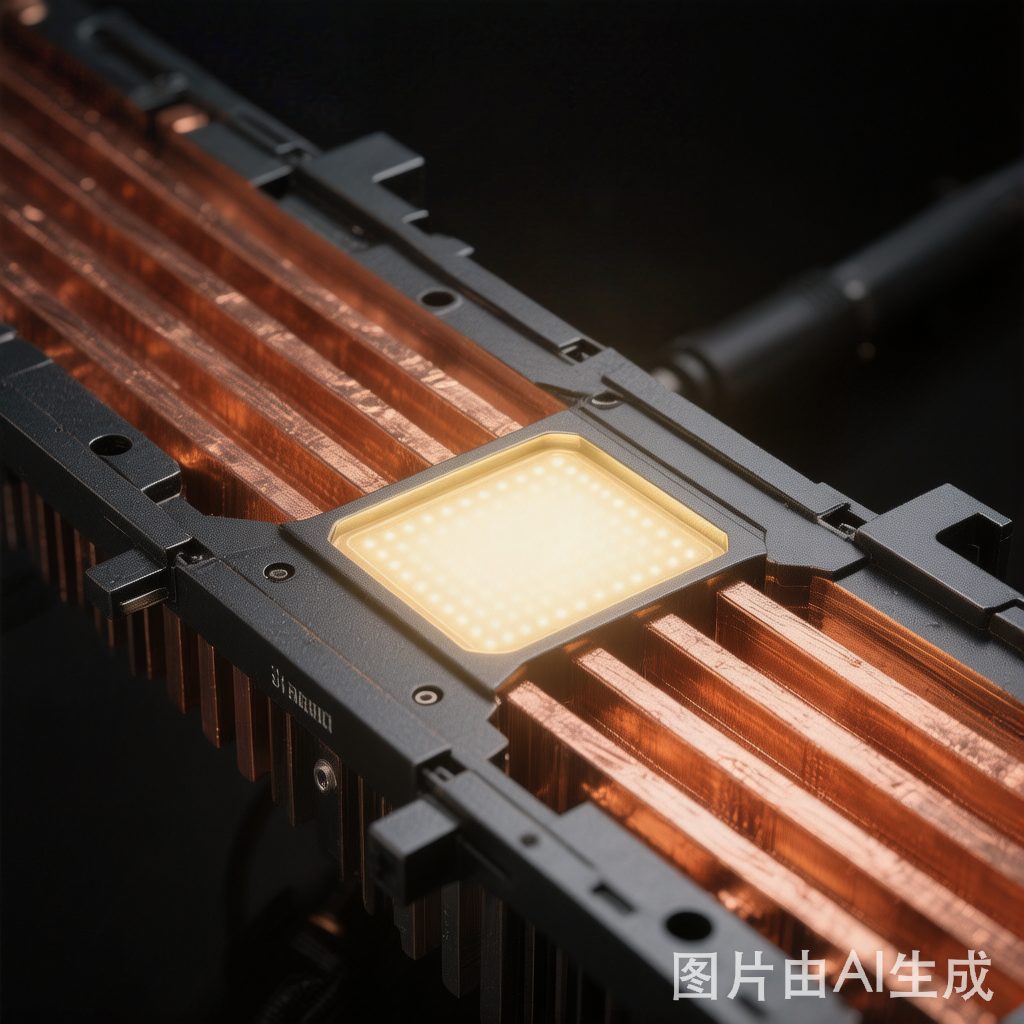
In LED downlight and spotlight applications, SMT copper shims positioned between the LED module and the heat sink create an efficient thermal bridge. The flexibility of thin copper strips also allows them to conform to uneven surfaces, maximizing contact area and heat transfer.
## Applications of SMT Copper Strips in LED Systems
### High-Power LED Modules
High-power LED modules operating at 1W to 100W+ require robust thermal management solutions. SMT copper strips serve multiple functions in these assemblies:
– Thermal interface materials: Copper shims fill gaps between the LED and heat sink, reducing thermal resistancen- Circuit traces: Copper strips carry high currents while dissipating generated heatn- Mechanical support: Copper provides structural rigidity while conducting heat away from critical areas
### LED Strip Lighting
Flexible LED strip lighting has gained immense popularity for architectural and decorative applications. In these installations, rigid aluminum backing cha
els typically provide heat dissipation. SMT copper components enhance this thermal management by creating efficient electrical co
ections between LED segments, providing solder points for wire co
ections with superior thermal mass, and enabling custom cutting and joining of LED strips with reliable thermal performance.
### Automotive LED Lighting
Automotive applications demand exceptional reliability under extreme temperature conditions. LED headlights, taillights, and interior lighting systems benefit from SMT copper thermal management solutions that withstand temperature cycles from -40°C to 125°C, maintain electrical co
ectivity despite thermal expansion, and provide EMI shielding alongside thermal performance.
## Selecting the Right Copper Strip for LED Applications
### Thickness Considerations
Copper strip thickness directly impacts thermal performance. Thicker strips provide greater thermal mass and lower resistance but may not fit space-constrained designs. For most LED applications, thicknesses between 0.1mm and 0.5mm offer optimal balance.
### Plating Options for LED Environments
The operating environment influences optimal plating selection:
– Bare copper: Maximum conductivity for inteal applicationsn- Tin-plated: Enhanced solderability for easy assemblyn- Nickel-plated: Corrosion resistance for harsh environmentsn- Gold-plated: Premium applications requiring superior contact resistance
## Installation Best Practices
Successful thermal management requires attention to installation details: surface preparation ensuring clean flat mating surfaces, thermal interface material applied appropriately between copper strip and heat source, mechanical securement using appropriate fasteners or solder joints, and electrical isolation ensuring proper insulation where copper contacts live circuits.
## The Future of LED Thermal Management
As LED efficiency improves and power densities increase, thermal management becomes even more critical. SMT copper strips continue evolving with enhanced surface treatments for improved solderability, thi
er gauges for space-constrained applications, and integrated designs combining thermal and electrical functions.
## Conclusio
Effective thermal management determines LED system performance, reliability, and lifespan. SMT copper strips provide the optimal combination of thermal conductivity, mechanical flexibility, and manufacturing compatibility for mode
LED applications. Whether designing consumer lighting, automotive systems, or industrial displays, copper-based thermal solutions deliver proven performance.
Explore our complete range of SMT copper strips designed specifically for LED thermal management applications.