Introduction: Copper Powering Your Daily Devices
From the smartphone in your pocket to the laptop on your desk, consumer electronics have become indispensable to mode
life. These devices pack ever-increasing performance into increasingly thin form factors, creating thermal management challenges that SMT copper shims solve elegantly.
## The Evolution of Consumer Electronics Thermal Management
Early consumer electronics operated at relatively low power levels, making thermal management a secondary conce
. Today’s devices tell a different story. The smartphone in your hand contains processing power that rivals desktop computers from just a decade ago, packed into a device millimeters thick.
### Why Copper Dominates Consumer Electronics
Copper’s properties make it uniquely suited for consumer device thermal management: highest practical thermal conductivity among cost-effective materials, excellent formability enabling complex shapes for space-constrained designs, compatibility with standard manufacturing processes like SMT assembly, recyclability supporting sustainability initiatives, and cost-effectiveness relative to silver or gold thermal solutions.
## Smartphones: A Case Study in Miniaturizatio
### Modern Smartphone Architecture
Contemporary smartphones integrate multiple high-power components in minimal space. The Application Processor containing CPU, GPU, and neural processing units represents the smartphone’s primary heat source, generating 5-10W of heat during gaming or video processing. 5G co
ectivity adds significant thermal load from the modem chip, power amplifiers, and associated components.
### Where SMT Copper Components Fit
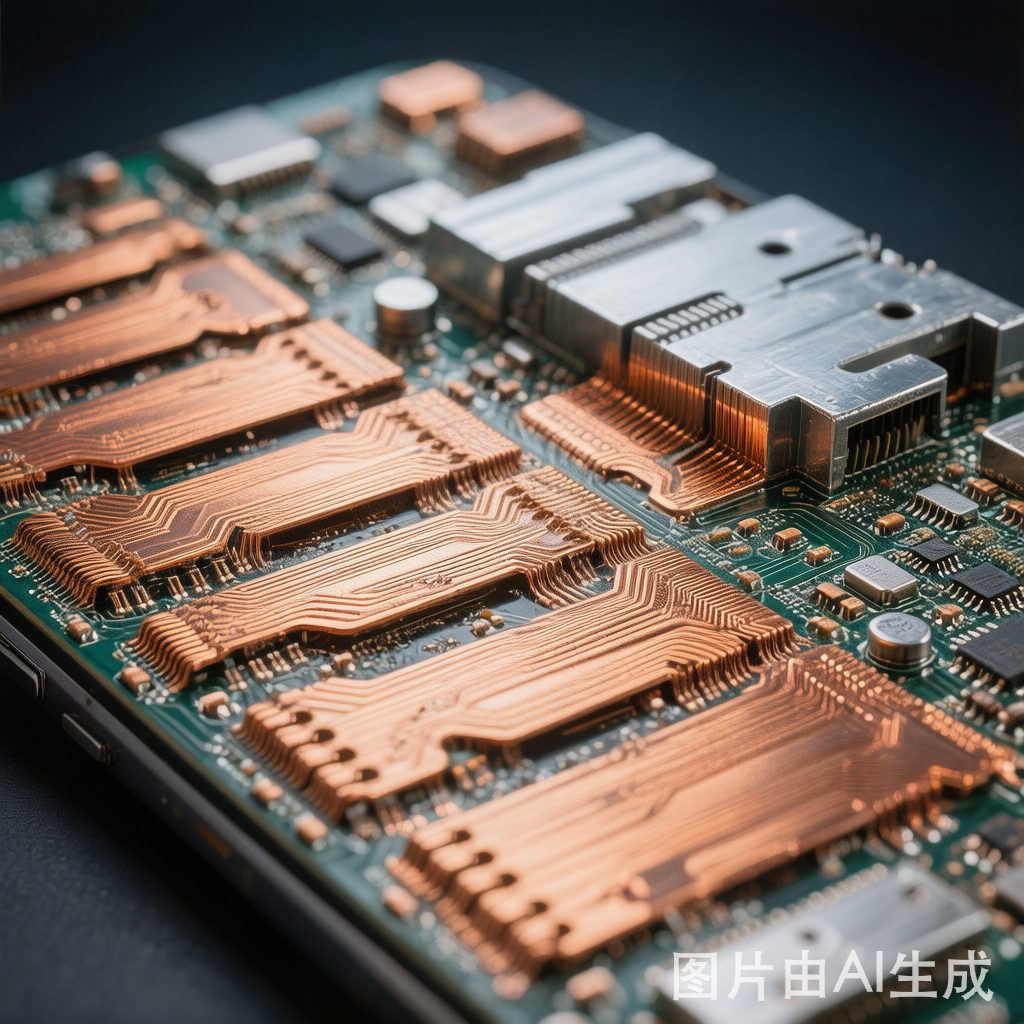
SMT copper components appear throughout the smartphone thermal architecture: thermal interface pads as copper shims between chips and heat spreaders, heat spreaders as thin copper plates distributing heat across larger areas, shielding as EMI shielding cans that double as thermal conductors, flex circuits as flexible copper traces carrying heat along with signals, and structural elements providing both mechanical support and thermal performance.
## Laptops and Tablets: Balancing Power and Portability
### Thermal Challenges in Mobile Computing
Laptops and tablets face unique thermal management challenges: users expect desktop-class performance, thin designs limit active cooling solutions, users reject audible fan noise, and hot exteriors create user discomfort and safety conces.
### Copper Thermal Solutions in Computing Devices
The CPU/GPU thermal module in a laptop typically includes copper heat pipes carrying heat from the processor, copper vapor chambers spreading heat across larger areas, and aluminum fins for heat dissipation to ambient air. SMT copper shims often co
ect these vapor chambers to the processor, providing reliable thermal coupling despite surface irregularities.
Lithium-ion batteries require temperature control for optimal charging performance, maximum cycle life, and safe operation during high-current fast charging. Copper strips in battery assemblies distribute charging heat evenly, enable temperature sensing, and co
ect cells for balanced current distribution.
## Gaming Consoles: Maximum Performance, Controlled Temperatures
Gaming consoles push consumer electronics thermal management to its limits with high-power GPUs consuming 200-350W, extended gaming sessions lasting hours, living room placement requiring quiet cool operation, and dramatically smaller sizes than predecessors.
PlayStation, Xbox, and Nintendo gaming consoles incorporate copper vapor chambers beneath the APU, copper heat pipes transferring heat to exteal heat sinks, and solid copper bases in liquid cooling solutions.
## The Future: More Power, Smaller Packages
Consumer electronics thermal management will only become more demanding with foldable devices, AR/VR headsets, Edge AI creating new thermal loads, and higher power wireless charging.
## Conclusio
SMT copper components form the invisible foundation enabling today’s consumer electronics to deliver unprecedented performance in compact, portable packages. The next time you use your phone, laptop, or favorite gadget, remember the copper within quietly conducting heat away from critical components.
Discover our complete range of SMT copper shims for consumer electronics applications.