The Growing Need for EMI Shielding in Modern Electronics
As electronic devices become more compact, more powerful, and more co
ected, electromagnetic interference (EMI) shielding has evolved from a nice-to-have feature to a critical design requirement. With 5G co
ectivity, IoT proliferation, and the miniaturization of high-frequency components, today’s electronics generate — and are susceptible to — more electromagnetic energy than ever before.
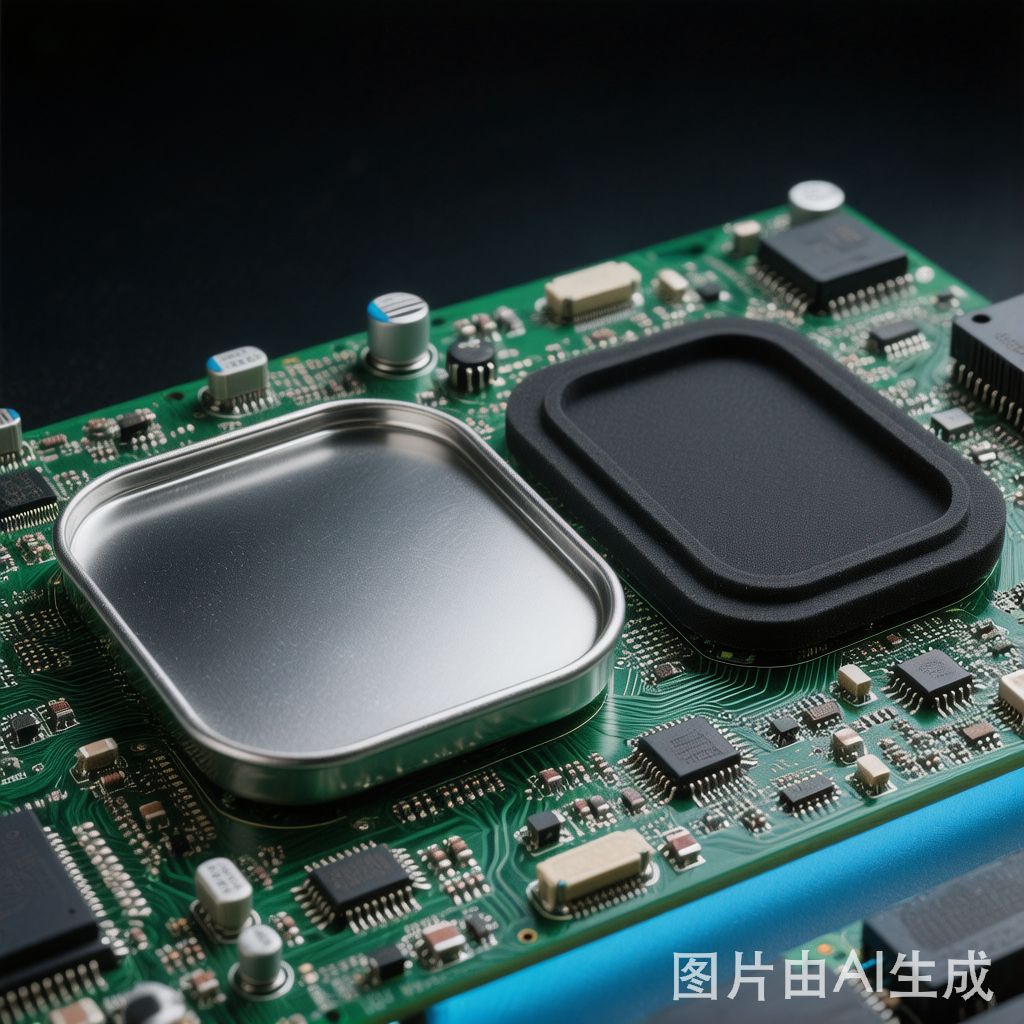
Two primary approaches dominate EMI shielding in SMT (Surface Mount Technology) assemblies: metal shielding cans and conductive gaskets. Both are widely used, but they serve different purposes and excel in different applications. Understanding their comparative strengths and limitations is essential for making informed shielding decisions.
Shielding Cans: The Rigid Solution
Construction and Materials
EMI shielding cans are rigid metal enclosures — typically made from brass, tin-plated steel, or nickel-silver alloy — that are soldered or snapped onto a PCB to create a Faraday cage around sensitive components. They provide a continuous, low-impedance shield that effectively blocks electromagnetic radiation across a wide frequency range.
Common configurations include:
- One-piece cans: Formed from a single sheet of metal, providing the best shielding integrity. No seams means no leakage points.
- Two-piece cans (fence + cover): A soldered frame (fence) with a removable cover. Allows access for testing and rework but introduces a seam that can compromise shielding at high frequencies.
- Multi-cavity cans: Single cans with internal partitions to isolate multiple circuit sections. Common in RF modules where both transmitter and receiver sections must be shielded from each other.
Shielding Performance
Well-designed shielding cans achieve excellent attenuation:
- At 100 MHz: 80-120 dB
- At 1 GHz: 70-100 dB
- At 5 GHz: 50-80 dB
- At 10 GHz: 40-70 dB
The primary performance limitation at high frequencies is seam leakage in two-piece designs. A gap of just 0.1 mm in a seam can reduce shielding effectiveness by 20-30 dB at frequencies above 3 GHz.
Conductive Gaskets: The Flexible Alternative
Types and Construction
Conductive gaskets are compressible materials that provide an electrically conductive path between two mating surfaces. They fill gaps and irregularities that would otherwise allow EMI leakage. The most common types include:
- Conductive elastomers: Silicone or fluorosilicone rubber loaded with conductive particles (silver, nickel-graphite, or aluminum). Provide 60-100 dB shielding with excellent environmental sealing.
- Metallic gaskets: Made from beryllium copper, tin-plated steel, or stainless steel fingers. Offer very high conductivity and good resiliency for repeated opening/closing cycles.
- Fabric-over-foam: Nickel-copper plated fabric wrapped around a foam core. Lightweight and cost-effective, providing 50-80 dB shielding for consumer electronics.
- Conductive foam: Carbon-loaded or metal-coated polyurethane foam. The most economical option, suitable for lower-frequency applications.
Shielding Performance
Conductive gaskets provide good but generally lower shielding than well-sealed cans:
- At 100 MHz: 60-100 dB (varies by material)
- At 1 GHz: 50-90 dB
- At 5 GHz: 40-70 dB
- At 10 GHz: 30-60 dB
The key advantage of gaskets is their ability to maintain shielding integrity across imperfect mating surfaces — they conform to surface irregularities that would create gaps with rigid shielding approaches.
Head-to-Head Comparison
Frequency Response
Shielding cans generally outperform gaskets at all frequencies, but the gap narrows at lower frequencies where both solutions provide ample attenuation. At frequencies above 3 GHz, the can’s advantage becomes significant, particularly for two-piece designs where gasket quality can make or break the shielding barrier.
Thermal Management
This is an important and often overlooked consideration. Metal shielding cans can serve dual purpose as both EMI shields and heat spreaders. A brass or copper can in direct contact with a hot component can reduce junction temperatures by 5-15°C. Conductive gaskets, particularly elastomeric types, have poor thermal conductivity and provide no thermal benefit.
Rework and Serviceability
Two-piece shielding cans with removable covers allow easy access for rework and testing. One-piece cans require desoldering, which risks damaging nearby components. Gaskets used in enclosure seams are easily removable but must be replaced if they lose compressibility.
Cost Analysis
Shielding cans are more expensive per unit than gaskets, but the total cost equation is more nuanced:
- Cans: Higher material cost ($0.10-$1.50 per unit depending on size and material). Lower assembly cost (soldered in one step during reflow). No replacement needed during product life.
- Gaskets: Lower material cost ($0.05-$0.50 per unit). May require manual assembly. May need replacement after 100+ open/close cycles. Often require a rigid housing for compression.
Application Recommendations
Based on the comparison above, here are practical recommendations for common SMT applications:
- Smartphone RF modules: Shielding cans (multi-cavity, one-piece) for maximum isolation between cellular, Wi-Fi, and Bluetooth sections.
- Automotive ECUs: Shielding cans with tin plating for thermal and corrosion resistance, combined with conductive gaskets at enclosure interfaces.
- IoT devices: Fabric-over-foam gaskets for cost-effective shielding of low-to-mid frequency interference.
- Medical electronics: Two-piece shielding cans for reworkability, with conductive elastomer gaskets at enclosure seams for environmental protection.
- Industrial controllers: Metallic finger gaskets combined with shielding cans for robust, long-life protection in harsh environments.
Conclusion
Neither shielding cans nor conductive gaskets are universally superior — the optimal choice depends on your specific application requirements for frequency range, thermal management, serviceability, and budget. In practice, many high-performance electronics use both: shielding cans for component-level isolation and conductive gaskets for enclosure-level seams. By understanding the performance characteristics, limitations, and cost trade-offs of each approach, you can make shielding decisions that optimize both EMI protection and overall product value.