What Is the ENIG Black Pad Defect?
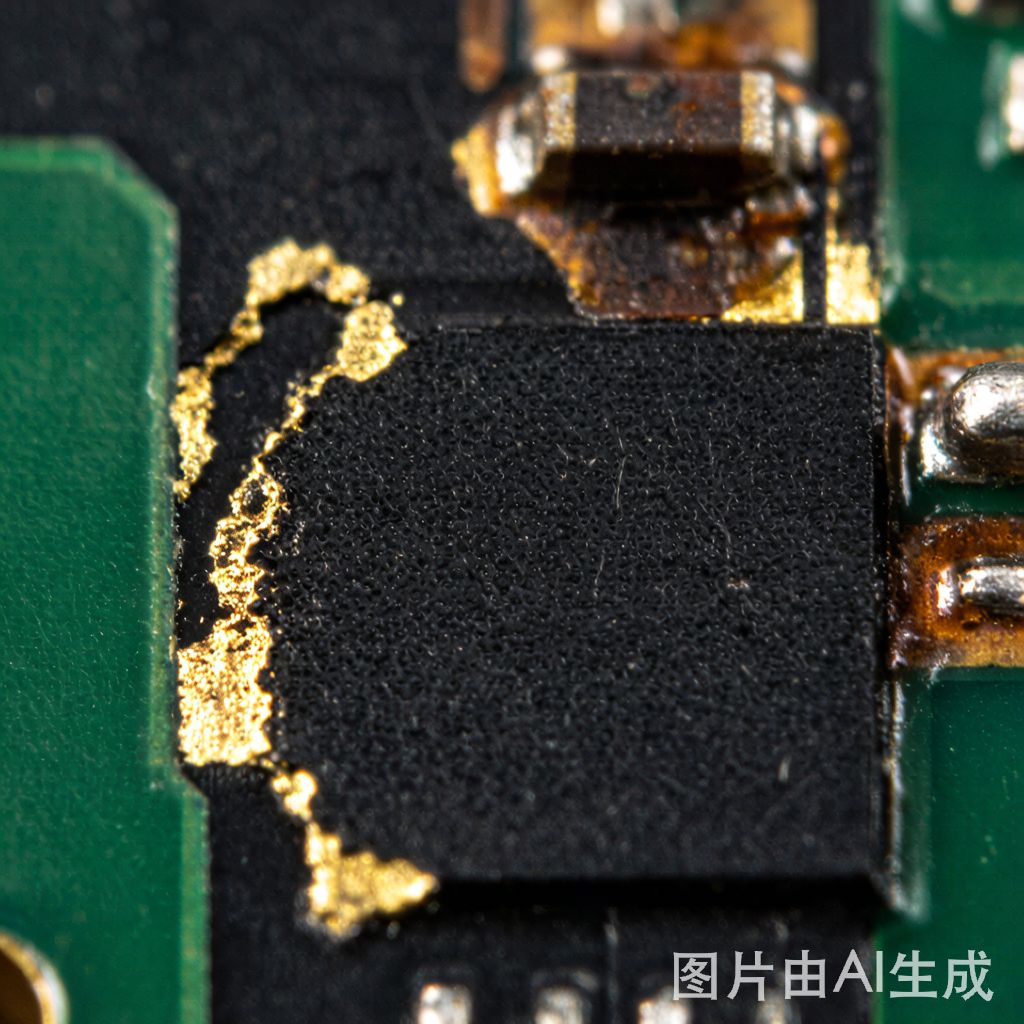
The ENIG black pad defect is one of the most critical and well-documented failure mechanisms in electroless nickel immersion gold (ENIG) surface finishes. Black pad manifests as a dark, corroded nickel surface that is exposed after the immersion gold layer dissolves into molten solder during reflow. The resulting solder joint is mechanically weak, brittle, and prone to catastrophic fracture under even moderate mechanical or thermal stress.
What makes black pad particularly dangerous is its intermittent nature — it can affect only a fraction of pads on a PCB, making it difficult to detect through routine electrical testing. A board may pass functional test at the factory only to fail in the field weeks or months later, especially under thermal cycling or vibration.
Root Cause: Nickel Corrosion During Gold Deposition
The root cause of black pad is excessive nickel corrosion that occurs during the immersion gold plating step. In the ENIG process, gold is deposited via a galvanic displacement reaction: nickel atoms at the surface dissolve (oxidize) while gold ions in solution are reduced and deposited. Under normal conditions, this reaction is self-limiting — the gold layer quickly covers the nickel surface, shutting off further nickel dissolution.
However, when process conditions are not properly controlled, the displacement reaction becomes aggressive and sustained, resulting in:
- Hyper-corrosion of nickel grain boundaries: Preferential attack along grain boundaries creates deep crevices and pits
- Phosphorus enrichment at the surface: As nickel dissolves, phosphorus accumulates at the corroding interface, forming a brittle nickel-phosphide (Ni₃P) layer
- Excessive phosphorus-rich layer thickness: A phosphorus-rich layer thicker than ~200 nm indicates severe corrosion and is a reliable predictor of black pad
- Mud-crack morphology: Under SEM, the corroded nickel surface displays a distinctive cracked-mud appearance
Key Contributing Factors
Several process variables contribute to the likelihood of black pad formation:
Nickel-Phosphorus Content
The phosphorus content of the electroless nickel layer is the single most important factor. Low-phosphorus deposits (4-6% P) have a more crystalline structure with well-defined grain boundaries that are susceptible to preferential attack. Mid-phosphorus (7-9% P) and high-phosphorus (10-12% P) deposits are increasingly amorphous, offering better resistance to grain-boundary corrosion.
Immersion Gold Bath Chemistry
Aggressive gold bath conditions accelerate nickel corrosion:
- Low pH: Baths operating below pH 4.0 significantly increase the nickel dissolution rate
- High temperature: Operating above 85°C accelerates both gold deposition and nickel corrosion kinetics
- Excessive dwell time: Leaving boards in the gold bath longer than necessary (typically >15 minutes) drives u
ecessary nickel dissolution
- Depleted or aged bath: As the gold bath ages, complexing agents break down and corrosion inhibitors lose effectiveness
Detection Methods
Detecting black pad before assembly requires sophisticated analytical techniques:
- SEM surface examination (2000-5000x): Look for mud-crack patterns, pitting, and dark intergranular regions — the most direct visual indicator
- Cross-sectional SEM/EDS: Measure the phosphorus-rich layer thickness at the Ni-Au interface; layers exceeding 200-250 nm are cause for rejection
- X-ray photoelectron spectroscopy (XPS): Quantifies the chemical state of nickel at the surface, distinguishing metallic Ni from NiO and Ni₃P
- Solder ball shear/pull testing: Per IPC-TM-650 2.4.42, abnormally low shear force or brittle fracture at the IMC interface indicates black pad
- Phosphorus content measurement by XRF/ICP: Incoming nickel bath control; maintain P% above 7% for black pad resistance
Prevention Strategies
A comprehensive black pad prevention program includes:
- Specify mid-phosphorus (7-9%) or high-phosphorus (10-12%) ENIG — never accept low-phosphorus for reliability-critical applications
- Audit your fabricator’s gold bath control procedures — verify pH, temperature, and dwell time limits are documented and enforced
- Implement incoming inspection protocols — SEM examination of each lot, with cross-section and EDS when visual inspection raises concerns
- Consider ENEPIG as an upgrade path — the palladium layer eliminates nickel exposure to the gold bath entirely
- Use accelerated aging (steam aging per J-STD-003) as a lot acceptance criterion for solderability verification
When properly controlled, ENIG remains a reliable and cost-effective surface finish. Understanding the black pad mechanism — and implementing the process controls to prevent it — is essential engineering knowledge for anyone specifying or procuring ENIG-finished PCBs.