Why Brass Alloys Dominate EMI Shielding Applications
In the world of electromagnetic interference (EMI) shielding for electronics, brass alloys have earned their place as the go-to material. They offer an optimal balance of electrical conductivity, mechanical formability, and cost-effectiveness that makes them indispensable for manufacturing shielding cans, gaskets, and enclosure components. However, not all brass alloys are created equal. Two of the most commonly specified grades — C2680 and C2600 — have distinct characteristics that can significantly impact shielding performance and manufacturing outcomes.
Understanding the differences between these two alloys is critical for electronics engineers and sourcing professionals who need to make informed material selections for EMI shielding applications.
Chemical Composition and Core Differences
Both C2680 and C2600 are copper-zinc alloys, but their zinc content differs meaningfully:
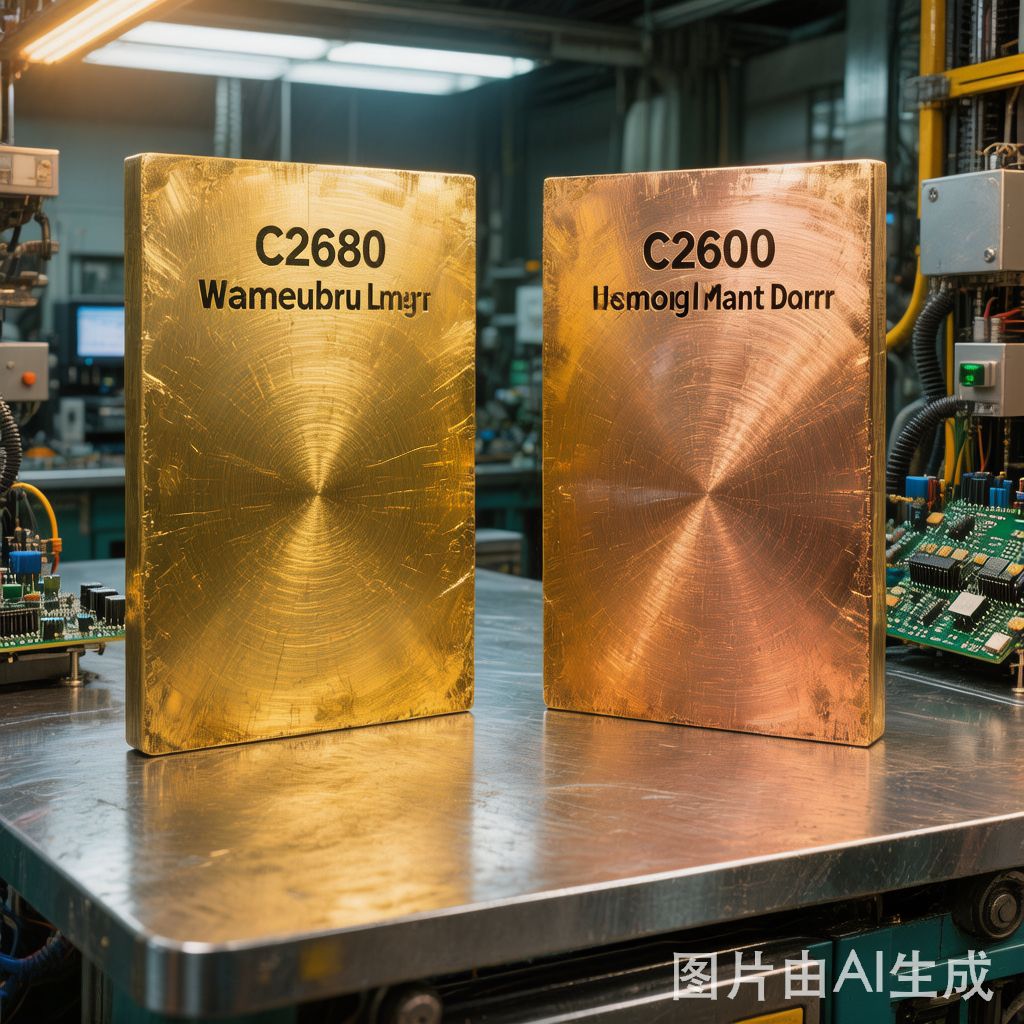
- C2680 (65/35 Yellow Brass): Contains approximately 65% copper and 35% zinc. Sometimes referred to as “extra-low leaded brass” in its free-machining variants, the standard C2680 is valued for its excellent deep-drawing capability.
- C2600 (70/30 Cartridge Brass): Contains approximately 70% copper and 30% zinc. This alloy is known by the historical name “cartridge brass” due to its widespread use in ammunition casings, a testament to its exceptional formability.
The 5% difference in zinc content may seem minor, but it produces measurable differences in mechanical properties, electrical conductivity, and corrosion behavior.
Electrical Conductivity for EMI Shielding
EMI shielding effectiveness depends heavily on the electrical conductivity of the shielding material. Higher conductivity means better reflection of electromagnetic waves:
- C2600: Approximately 28% IACS (International A
ealed Copper Standard). The higher copper content gives it a slight edge in electrical conductivity.
- C2680: Approximately 27% IACS. The additional zinc slightly reduces conductivity, but the difference is minimal in practical shielding applications.
For most EMI shielding applications at frequencies above 1 MHz, the shielding effectiveness difference between C2680 and C2600 is negligible — both provide attenuation of 60-100+ dB when properly designed with adequate wall thickness and seam integrity. The shielding performance is dominated by geometry and joint design rather than the small conductivity difference between these alloys.
Formability and Manufacturing Considerations
This is where the real difference between the two alloys becomes apparent:
C2600 — Superior Deep Drawability
C2600 is the champion of deep drawing operations. It can achieve draw ratios (blank diameter to cup diameter) of up to 2.0 without intermediate a
ealing. This makes it ideal for manufacturing:
- Deep-drawn EMI shielding cans
- Complex multi-cavity shield enclosures
- Intricate gasket profiles that require significant material deformation
C2600 maintains excellent ductility even after moderate cold working, allowing multiple forming operations without cracking.
C2680 — Good Formability with Higher Strength
C2680 offers good formability but ca
ot match C2600’s deep-drawing performance. Its typical draw ratio is approximately 1.8. However, C2680 compensates with:
- Higher tensile strength in the half-hard and hard temper conditions
- Better springback control, which is important for precision gasket manufacturing
- Superior dimensional stability after forming
For shallow-drawn shielding components, stamping operations, and applications requiring tighter dimensional tolerances, C2680 is often the preferred choice.
Corrosion Resistance
Both alloys develop a protective patina over time, but their corrosion behavior differs:
- C2600 has better general corrosion resistance due to its higher copper content. It is less susceptible to stress corrosion cracking and dezincification (selective leaching of zinc).
- C2680 is somewhat more prone to dezincification, particularly in acidic or high-chloride environments. In tropical and subtropical climates, this can be a concern for uncoated brass shielding components.
For electronics operating in humid Southeast Asian environments, both alloys typically receive surface treatments (tin plating or nickel plating) that mitigate corrosion concerns. When used bare, C2600 offers a marginal advantage in long-term corrosion resistance.
Cost Comparison
Since copper is more expensive than zinc, C2600’s higher copper content makes it slightly more expensive per kilogram than C2680. However, the price difference is typically only 3-5% and is often overshadowed by:
- Tooling and die costs for forming operations
- Scrap rates during manufacturing (C2600’s better formability can reduce scrap)
- Surface treatment costs
In volume production, the total cost difference between using C2680 versus C2600 is usually within 2-3%, making material selection primarily a technical rather than economic decision.
Recommendation by Application
| Application | Recommended Alloy | Reason |
|---|---|---|
| Deep-drawn shielding cans | C2600 | Superior draw ratio, fewer forming defects |
| Flat shielding covers | C2680 | Better flatness and dimensional stability |
| EMI gaskets (formed) | C2600 | Complex forming without cracking |
| Stamped shielding frames | C2680 | Higher strength, tighter tolerances |
| Co
ector shielding shells |
C2600 | Multi-stage deep drawing required |
| General-purpose enclosures | Either | Minimal performance difference |
Conclusion
Both C2680 and C2600 brass alloys are excellent choices for EMI shielding applications, but their optimal use cases differ. C2600 excels in deep-drawn and complex-formed components where maximum formability is needed. C2680 is the better choice for stamped components requiring higher mechanical strength and dimensional precision. For most standard shielding applications, either alloy will perform admirably — the key is matching the material to your specific manufacturing process and end-use environment.