The Thermal Bottleneck in Power Electronics
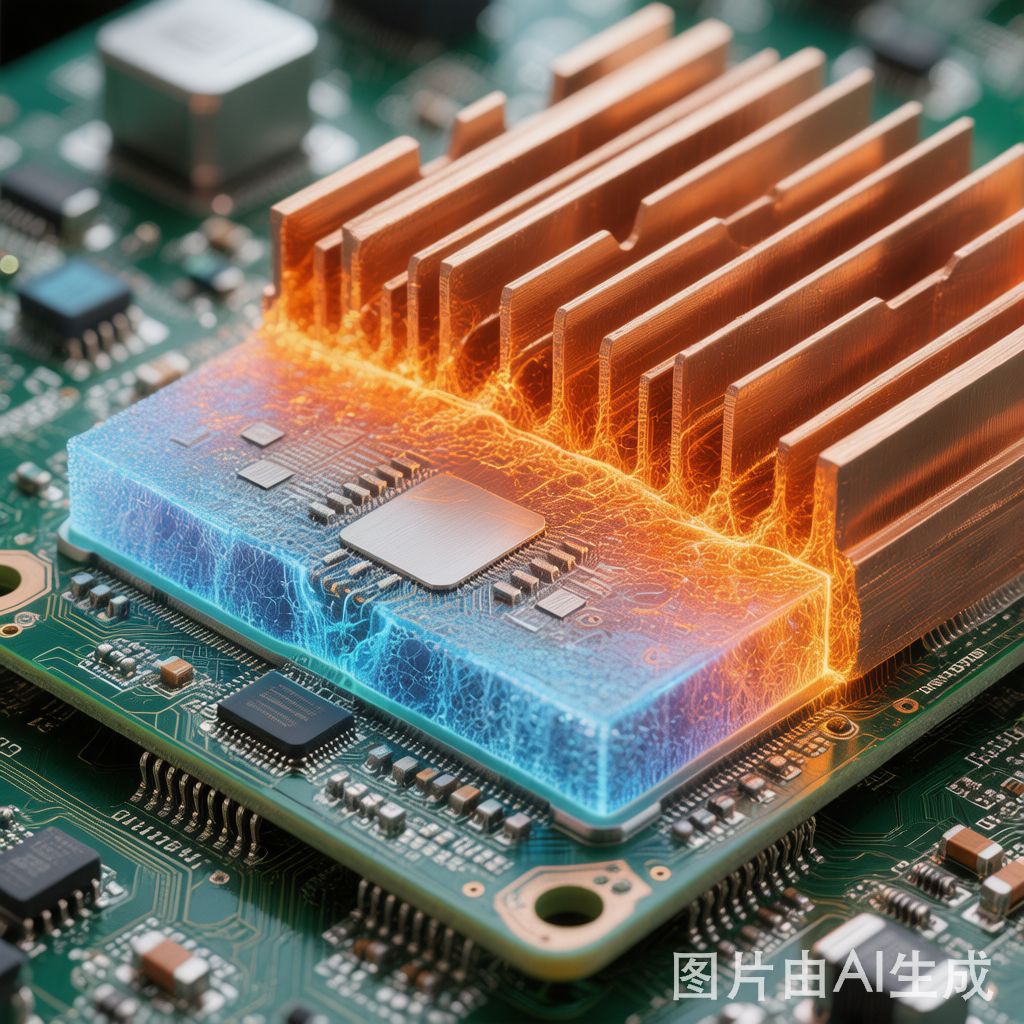
Power electronics — inverters, converters, motor drives, and power management ICs — generate substantial heat that must be efficiently transferred from the semiconductor junction to the heat sink or cooling system. The thermal interface material (TIM) sitting between the component and the heat spreader may seem like a minor detail, but it often accounts for 30–50% of the total thermal resistance in the cooling path. Choosing the wrong TIM can lead to junction temperatures that exceed safe limits, causing premature failure and reliability problems.
For SMT assemblers working on power electronics modules, TIM selection is becoming increasingly important as power densities continue to rise. SiC and GaN power devices operate at higher temperatures and switching frequencies than traditional silicon, placing greater demands on thermal interfaces.
Types of Thermal Interface Materials
Thermal Grease and Paste
Thermal grease is the most widely used TIM in electronics assembly. It consists of a silicone or non-silicone base loaded with thermally conductive fillers such as aluminum oxide, zinc oxide, boron nitride, or silver particles. Typical thermal conductivity ranges from 1 to 8 W/mK for standard formulations, with premium silver-based greases reaching 10–12 W/mK.
Advantages: Low cost, easy application, conforms well to surface irregularities, low bond line thickness (BLT) of 25–75 microns.
Disadvantages: Pump-out under thermal cycling, limited reworkability, potential silicone contamination, and performance degradation over time.
Thermal Pads and Gap Fillers
Pre-formed thermal pads are silicone or polymer elastomers filled with ceramic or metallic particles. They come in standard thicknesses from 0.5 mm to 5 mm. Thermal conductivity typically ranges from 1 to 6 W/mK, with graphite-enhanced pads reaching up to 15 W/mK.
Advantages: Clean, no pump-out, easy to handle in automated assembly, consistent bond line thickness.
Disadvantages: Higher thermal resistance than grease at equivalent thickness, limited conformability, compression set over long-term operation.
Phase-Change Materials (PCMs)
Phase-change TIMs are solid at room temperature but melt and flow at operating temperatures (typically 45–65°C) to fill microscopic gaps in the interface. Thermal conductivity ranges from 3 to 8 W/mK.
Advantages: Self-leveling at operating temperature eliminates air gaps, no pump-out after phase change, reliable long-term performance.
Disadvantages: Requires minimum contact pressure to initiate phase change, not suitable for applications where temperature remains below the phase-change point.
Thermal Adhesives and Epoxies
Thermally conductive adhesives provide both mechanical attachment and thermal conduction. Conductivity ranges from 1 to 7 W/mK for filled epoxies.
Advantages: Structural bond, fills gaps, vibration resistance.
Disadvantages: Permanent — difficult to rework, longer cure times, thermal cycling can cause delamination.
Key Selection Criteria
- Thermal conductivity (W/mK): Higher is better, but only meaningful when BLT is well-controlled.
- Bond line thickness: Thi
er is better for thermal performance.
- Thermal resistance (°C·cm²/W): The figure of merit combining conductivity and BLT. Lower values indicate better performance.
- Operating temperature range: Ensure the TIM maintains properties across the full range.
- Long-term reliability: Consider pump-out resistance, compression set, and adhesive degradation.
Application-Specific Recommendations
Automotive Power Modules
For under-hood inverters and DC-DC converters operating at 125–150°C junction temperatures, use high-performance phase-change materials or silicone-free thermal grease with ceramic fillers.
Industrial Motor Drives
Large IGBT modules benefit from thermal pads with graphite or aluminum nitride fillers, providing more consistent coverage than manually applied grease.
Consumer Power Adapters
For compact USB-C PD adapters and chargers where cost sensitivity is high, standard silicone thermal grease with boron nitride filler provides adequate performance.
Conclusion
Thermal interface material selection is a balance of thermal performance, mechanical reliability, manufacturability, and cost. By evaluating TIMs based on thermal resistance rather than just conductivity, power electronics designers can make informed decisions that maximize cooling effectiveness and product lifespan.