As electronics designs continue to combine SMT components with legacy through-hole co
ectors, power components, and transformers, assembly engineers face a recurring dilemma: selective soldering or wave soldering? Both processes solder through-hole components after the SMT reflow step, but they differ dramatically in cost, flexibility, and throughput.
Wave Soldering: The Traditional Approach
Wave soldering passes the entire underside of the PCB over a continuous wave of molten solder. The process is fast and cost-efficient for boards with high through-hole component density, but it has significant limitations for mixed-technology designs:
- Shadowing: Tall components can block solder from reaching adjacent pins.
- Thermal stress: Bottom-side SMT components must be adhesive-bonded before wave soldering, adding a process step and potential reliability risk.
- Lead-free compliance: SAC305 wave solder requires process temperatures of 255–265°C, which can damage heat-sensitive SMT components on the bottom-side.
- Pallets required: Expensive custom pallets mask bottom-side SMT components from the solder wave, adding tooling cost and changeover time.
Selective Soldering: Precision for Mixed Boards
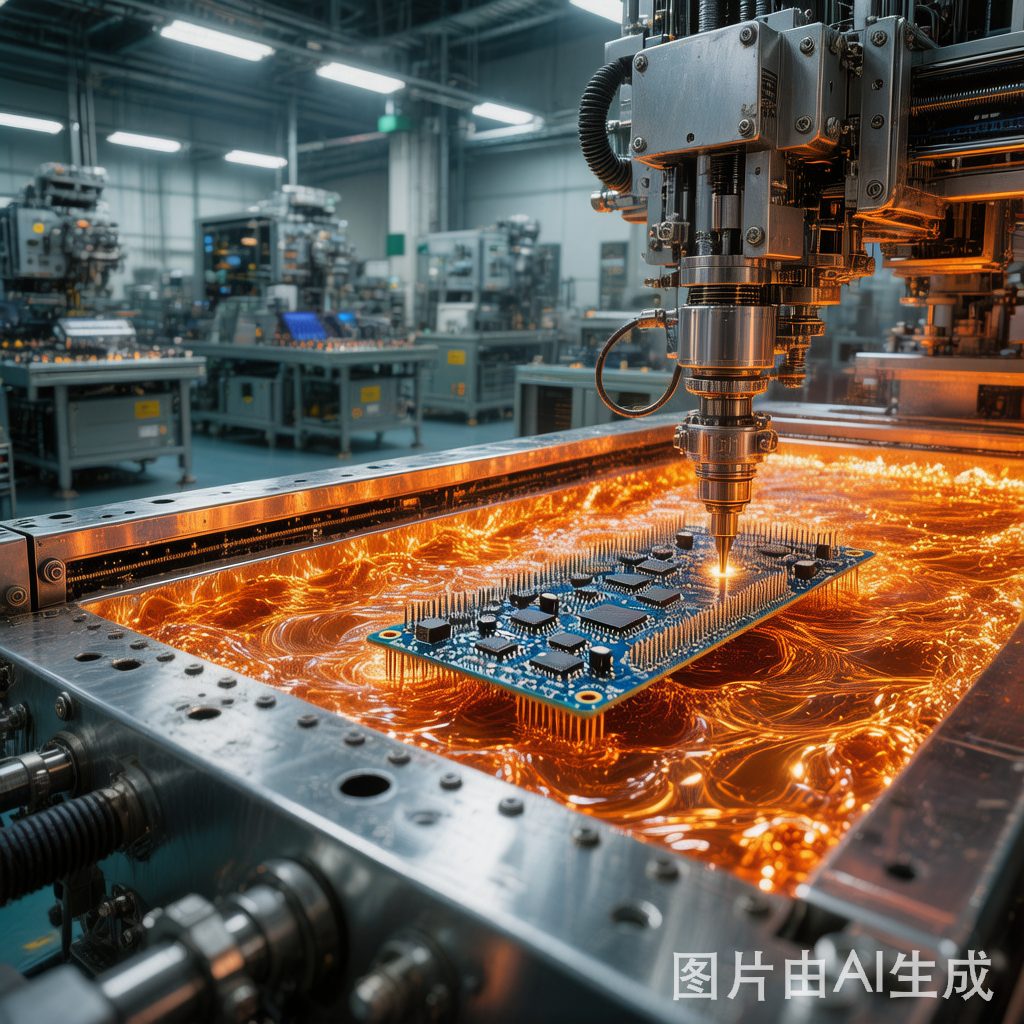
Selective soldering uses a small-diameter solder nozzle (typically 4–10 mm) to precisely solder individual through-hole pins without exposing the rest of the board to molten solder. Modern selective soldering systems offer:
- No pallets needed: The nozzle position is CNC-controlled — simply program the XY coordinates of each through-hole joint.
- Minimal thermal exposure: Only the target joint reaches solder temperature, protecting nearby SMT components.
- Lead-free compatible: Selective systems handle SAC305 reliably with smaller thermal mass per joint.
- Flexible for low-to-medium volume: Changeover requires only a program change, not new pallets.
Head-to-Head Comparison
| Factor | Wave Soldering | Selective Soldering |
|---|---|---|
| Throughput | High (full board per cycle) | Lower (joint-by-joint) |
| Setup cost | Low machine cost, high pallet cost | Higher machine cost, no pallets |
| Changeover time | 30–90 min (pallet change) | 5–10 min (program change) |
| Bottom-side SMT | Requires adhesive bonding + masking | No additional process needed |
| Component density | Limited by shadowing | Handles high-density boards |
| Lead-free suitability | Moderate (nitrogen atmosphere helps) | Excellent |
| Best for | High-volume, through-hole-heavy boards | Mixed boards, NPI, low-medium volume |
When to Choose Wave Soldering
Wave soldering remains the right choice when:
- The board has a dedicated through-hole side with no bottom-side SMT components.
- Production volume exceeds 1,000 panels per shift with stable product mix.
- Component pitch is generous (DIP, TO-220, large co
ectors) with no shadowing risk.
When to Choose Selective Soldering
Selective soldering is the better choice when:
- SMT components are present on the bottom side (typical of modern compact designs).
- Product mix is high with frequent changeovers.
- Through-hole component count is moderate (5–30 joints per board).
- Lead-free reliability requirements are strict (automotive, medical, industrial).
Implications for SMT Copper Strip Assembly
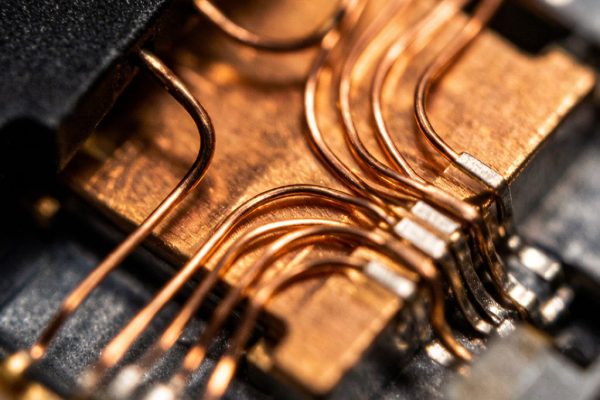
SMT copper strips used as thermal pads or grounding clips are typically reflowed in the SMT process before any through-hole operations. However, on boards that include both copper strip thermal components and through-hole co
ectors, selective soldering is strongly preferred — the controlled thermal profile prevents the copper strips from being re-melted during through-hole processing, which would compromise their positioning and thermal contact.
The decision between wave and selective soldering ultimately comes down to board architecture and production economics. For modern mixed-technology designs targeting the Southeast Asia electronics market, selective soldering increasingly wins on total cost of ownership when changeover flexibility and component protection are factored in.