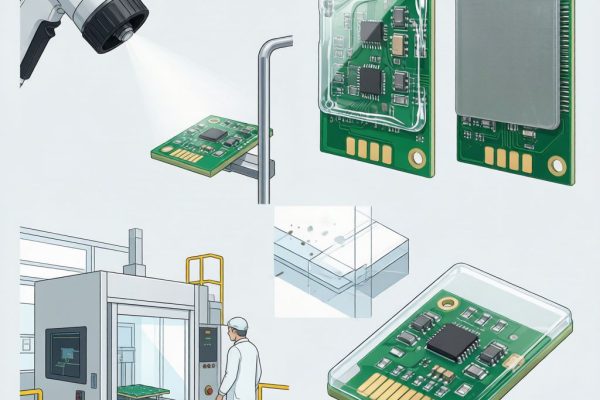
Solder paste printing is one of the most critical steps in the SMT assembly process. Studies show that up to 70% of all PCB assembly defects can be traced back to the printing process. Getting it right from the start saves time, reduces waste, and improves product quality.
The Stencil Printing Process
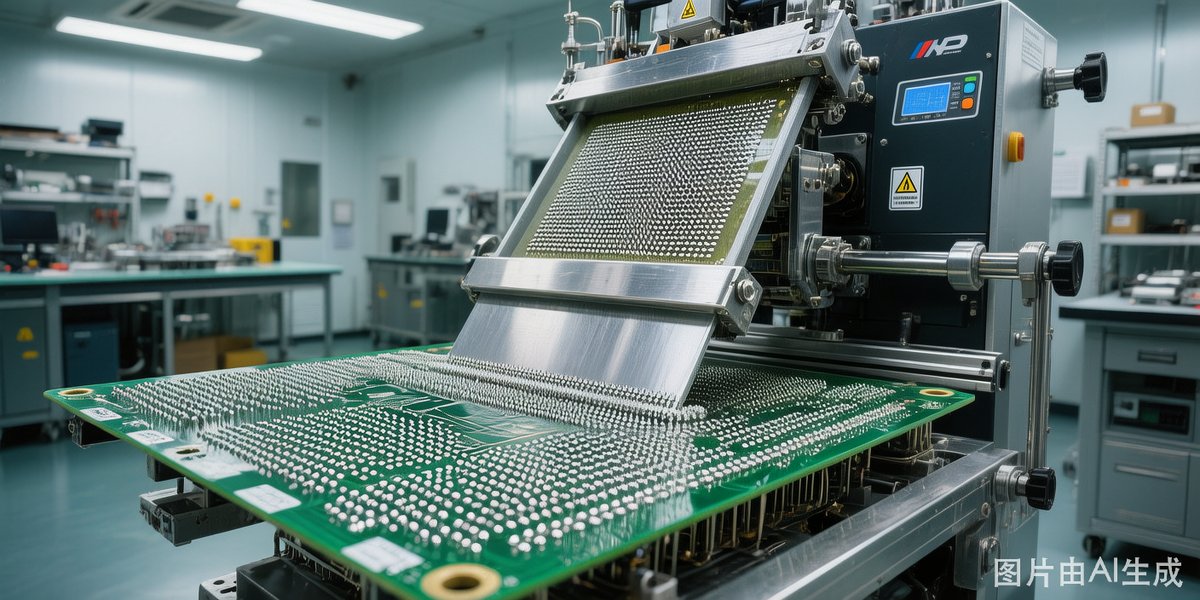
During solder paste printing, a metal stencil with laser-cut apertures is aligned over the PCB. A squeegee blade then forces solder paste through the apertures onto the corresponding pads. The stencil is then separated from the PCB, leaving precisely deposited solder paste deposits ready for component placement.
Stencil Design Considerations
- Stencil thickness: Typically 0.10mm to 0.15mm for standard components. Fine-pitch components may require 0.08mm stencils. Thicker stencils deposit more paste volume.
- Aperture size: The area ratio (aperture area / stencil wall area) should be ≥0.66 for reliable paste release. Values below 0.5 lead to inconsistent deposits.
- Aperture shape: Square apertures offer better paste release than rectangular for small components. Rounded corners improve paste separation.
- Step stencils: For boards with mixed component sizes (fine-pitch ICs + large co
ectors), step stencils provide different paste volumes in different areas.
Printer Parameters to Optimize
- Print speed: 25-75mm/sec for most applications. Faster speeds reduce cycle time but may cause paste slumping. Slower speeds improve fill for fine pitch.
- Squeegee pressure: Typically 0.3-0.4kg per 25mm of blade length. Too much pressure scrapes paste from apertures; too little leaves paste on stencil surface.
- Separation speed: Slow Z-axis separation (0.1-1mm/sec) improves paste release for small apertures.
- Snap-off distance: Modern printers use contact (zero snap-off) printing for best results.
- Cleaning frequency: Automatic stencil underside cleaning every 5-10 prints prevents paste contamination.
Solder Paste Selection
Solder paste selection depends on your application requirements. Key factors include alloy composition (SAC305 for RoHS compliance, Sn63Pb37 for leaded), powder particle size (Type 3 for standard, Type 4/5 for fine-pitch), flux type (no-clean, water-washable, or rosin), and paste viscosity for your printing equipment.
Solder Paste Inspection (SPI)
3D Solder Paste Inspection (SPI) machines use laser triangulation or structured light to measure paste height, area, and volume on every pad. This provides real-time feedback on print quality and enables immediate process corrections before defects propagate downstream. SPI is an essential investment for high-volume SMT production.
TechMart SE stocks a full range of solder paste from leading brands, as well as stencil frames, squeegee blades, and stencil cleaning solutions. Our application engineers can help you select the optimal paste for your assembly process.