Reflow soldering is the final soldering step in SMT assembly. Getting the temperature profile right is critical for producing reliable solder joints without damaging sensitive components. This guide covers everything you need to know about reflow soldering for SMT production.
Understanding the Reflow Soldering Process
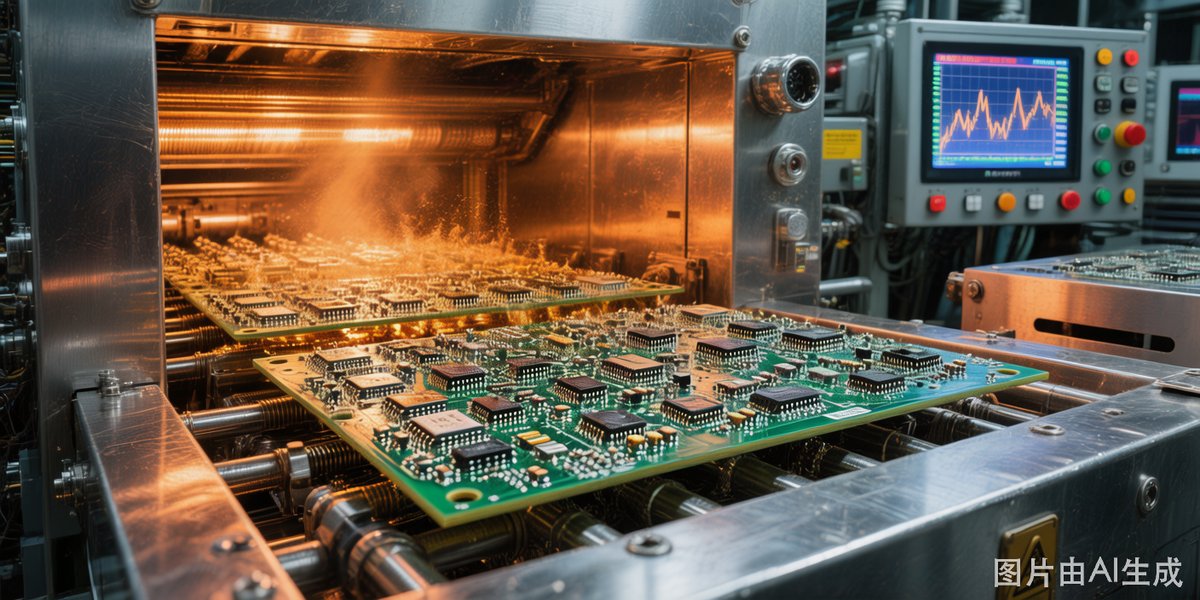
During reflow soldering, the PCB assembly travels through a conveyor oven with multiple heating zones. The solder paste — a mixture of solder alloy powder and flux — melts and flows to create electrical and mechanical bonds between component leads and PCB pads. The flux activates to remove oxides, enabling proper wetting.
The Four Stages of a Reflow Profile
- Preheat zone: Gradually raises board temperature (1-3°C/sec) to activate flux and evaporate solvents. Typically 25°C to 150°C.
- Soak zone: Holds temperature at 150-180°C for 60-120 seconds to equalize thermal mass across the board and complete flux activation.
- Reflow zone: Rapidly heats above the solder liquidus temperature (183°C for Sn63Pb37, 217°C for SAC305). Time above liquidus (TAL) is typically 30-60 seconds.
- Cooling zone: Rapid cooling at 3-6°C/sec promotes fine grain structure in solder joints for better reliability.
Lead-Free vs Leaded Solder Profiles
Lead-free solder alloys (SAC305, SAC405) require higher peak temperatures (235-260°C) compared to eutectic tin-lead solder (210-225°C peak). This creates thermal stress challenges for temperature-sensitive components. Proper profiling with a thermocouple-equipped test board is essential to ensure all components stay within their rated thermal limits.
Common Reflow Defects and Solutions
- Tombstoning: One end of a component lifts during reflow. Caused by unequal heating or solder paste imbalance. Fix: improve pad and stencil design.
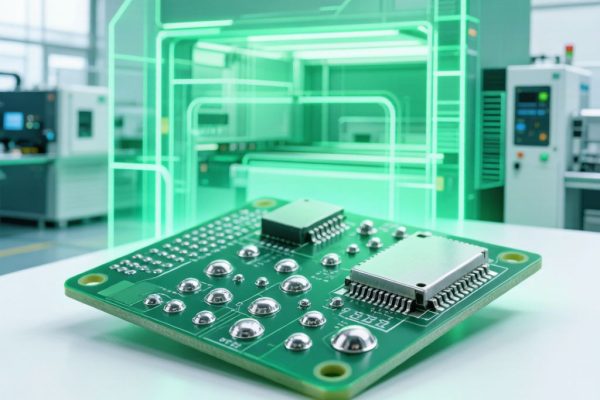
- Solder balling: Small solder balls form near joints. Caused by solder paste oxidation or moisture. Fix: check paste storage conditions.
- Cold joints: Dull, grainy solder joints due to insufficient reflow temperature or time. Fix: increase peak temperature or TAL.
- Bridging: Solder co
ects adjacent pads. Caused by excess paste or misalignment. Fix: adjust stencil aperture and paste volume.
- Voiding: Gas pockets inside solder joints visible on X-ray. Fix: optimize flux chemistry and profile for better outgassing.
Reflow Oven Types
Convection ovens are the industry standard, using forced hot air circulation for uniform heating. Vapor phase (condensation) ovens provide excellent temperature uniformity with no overshoot. Infrared ovens are lower cost but less uniform. For lead-free assembly, convection or vapor phase ovens are strongly preferred.
TechMart SE supplies solder paste, flux, and soldering consumables from leading manufacturers to help you achieve optimal reflow results. Contact our team for product recommendations tailored to your specific PCB assembly requirements.