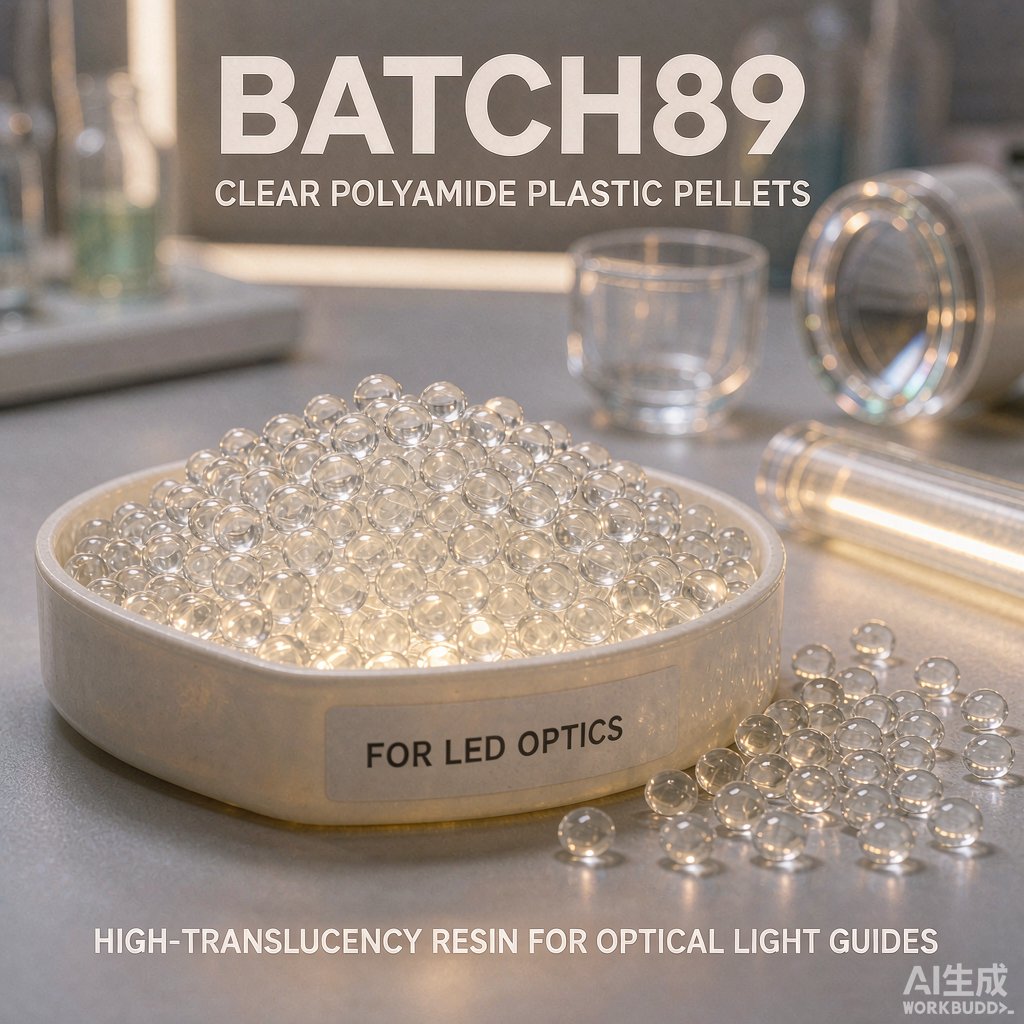
LED lighting and display manufacturers need materials that transmit light efficiently while surviving high operating temperatures and humid environments. Polycarbonate and PMMA dominate the market, but transparent nylon plastic pellets are gaining attention for their unique combination of clarity, chemical resistance, and dimensional stability. Understanding when to specify these modified plastic grades can open new design options for lenses, light guides, and indicator windows.
What Is Transparent Nylon?
Transparent nylons are amorphous or microcrystalline polyamide grades engineered to avoid the haze caused by spherulite formation in standard crystalline nylons. Common commercial families include amorphous PA12 and semi-aromatic polyamides. These materials retain much of nylon’s toughness and chemical resistance while offering light transmission above 85% in thin sections.
Optical Performance
Light transmission for transparent nylon is typically 85–90%, lower than PMMA at 92% but comparable to or better than some PC grades. Haze values can be very low in amorphous grades, making them suitable for lenses and light pipes where aesthetics matter. Refractive index is around 1.51–1.52, close to standard optical acrylics.
Thermal and Mechanical Advantages
Transparent nylons offer heat deflection temperatures from 80 °C to over 120 °C, depending on grade. They also resist stress cracking from cleaners and solvents better than PC, which is important for outdoor and industrial lighting. Impact resistance is higher than PMMA and approaches good PC grades, reducing breakage during assembly and service.
Moisture Considerations
Like all nylons, transparent grades absorb moisture, which can change dimensions and reduce clarity. Parts exposed to high humidity may swell slightly and develop surface clouding over time. Drying pellets thoroughly before molding and designing with appropriate tolerances mitigates these effects. For underwater or extremely wet applications, a hydrophobic coating may be warranted.
Moldability and Processing
Transparent nylon pellets process on standard injection molding equipment with barrel temperatures around 240–280 °C. Mold temperatures are typically 60–100 °C. Shrinkage is lower and more isotropic than crystalline nylons, which helps maintain optical surface quality and dimensional accuracy. Gate placement and wall thickness should be designed to minimize flow marks and internal stress.
Comparison with PMMA and PC
PMMA offers the best optical clarity and lowest cost but is brittle and has limited heat resistance. PC is tough and heat resistant but can yellow under UV and is prone to stress cracking. Transparent nylon sits between them, offering a balance of clarity, toughness, chemical resistance, and moderate heat performance. It is often the best choice when a part must endure both heat and occasional solvent exposure.
Applications in LED Systems
Typical uses include secondary optics, indicator light pipes, automotive interior lenses, and outdoor luminaire covers. In wearable devices and medical equipment, transparent nylon’s resistance to skin oils and disinfectants is valuable. For high-power LEDs, ensure the grade’s heat deflection temperature exceeds the worst-case junction-adjacent temperature.
Sourcing and Specification
When purchasing transparent nylon plastic pellets, request light transmission, haze, and yellowing index data. Confirm whether the grade is UV-stabilized for outdoor use and whether it meets relevant flammability standards. Moisture absorption curves help predict long-term dimensional change. Working with a compounder experienced in optical grades improves consistency batch to batch.
Conclusion
Transparent nylon plastic pellets offer a compelling middle ground among optical thermoplastics. They combine respectable light transmission with the toughness, chemical resistance, and thermal performance typical of modified plastic engineering grades. For LED optics and light guides facing harsh environments, transparent nylon deserves serious consideration alongside PMMA and polycarbonate.