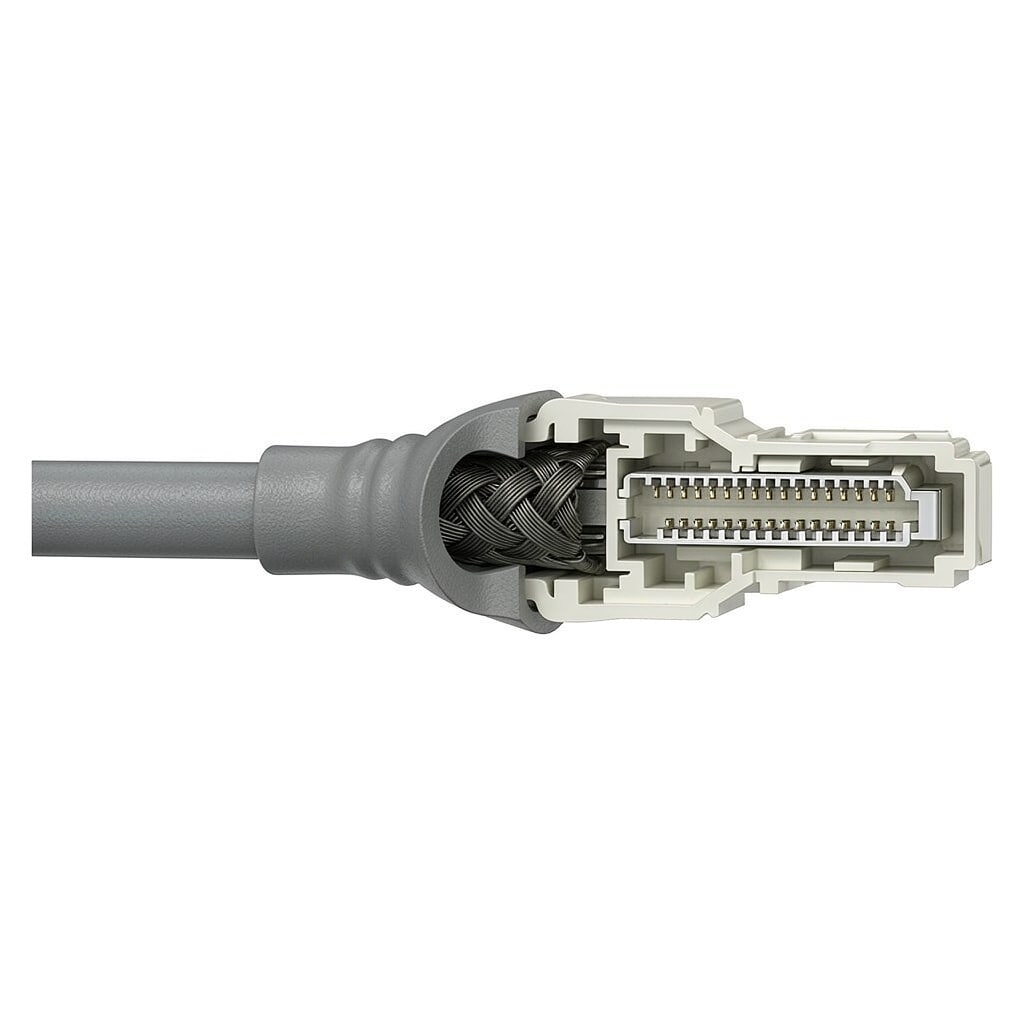
Thermoplastic elastomers, or TPEs, bridge the gap between rubber and rigid plastics. They combine the processability of thermoplastics with the flexibility and soft touch of vulcanized rubber. In SMT cable assemblies, TPE plastic pellets are widely used for strain-relief overmolding because they absorb bending stress, protect solder joints, and improve the overall durability of the finished product.
Why Strain Relief Matters in SMT Cable Assemblies
Cables attached to surface-mount co
ectors experience repeated bending, pulling, and twisting during assembly, shipping, and end use. Without proper strain relief, these forces transmit directly to the solder joints and PCB traces. Over time, this can cause solder cracks, lifted pads, or conductor fatigue. A well-designed TPE overmold distributes mechanical loads over a larger area and extends the flex life of the assembly.
How TPE Overmolding Works
TPE pellets are melted in an injection molding machine and injected around the cable exit and co
ector body. Because TPEs bond well to many cable jacket materials, they form a seamless transition that prevents moisture ingress and reduces stress concentration. The molding cycle is short, and scrap can be reprocessed, making TPE overmolding cost-effective for high-volume production.
Selecting the Right TPE Grade
Not all TPEs are suitable for SMT cable assemblies. Important selection criteria include:
- Shore A hardness, typically 60A to 90A for strain relief
- Tensile strength and elongation at break
- Adhesion to the cable jacket and co
ector housing
- Operating temperature range and aging resistance
- Flame retardancy rating, such as UL 94 V-0 for consumer electronics
- Colorability and surface finish
Common TPE families include styrenic block copolymers, thermoplastic polyurethanes, copolyesters, and polyamides. Each offers different trade-offs in elasticity, chemical resistance, and cost.
Overmolding onto SMT Co
ector Housings
When overmolding directly onto a co
ector housing, the substrate material must withstand the TPE melt temperature without warping or losing dimensional tolerance. Common SMT housing materials such as LCP, PBT, and PA9T are generally compatible. The mold design should include mechanical interlock features such as ribs or undercuts so the TPE grip remains strong even if chemical adhesion is limited.
Mold Design and Process Parameters
Successful overmolding depends on gate location, wall thickness, and cooling. A gradual thickness transition avoids sink marks and internal stress. Mold temperatures between 40°C and 80°C and melt temperatures between 180°C and 220°C are typical, though the exact window depends on the TPE grade. Low injection pressure and moderate shear rates help preserve material elasticity.
Pull and Flex Testing
After molding, cable assemblies should be tested according to the application requirements. Pull tests verify that the overmold can withstand a specified axial load without slipping or tearing. Flex tests, often run to thousands or millions of cycles, confirm that the strain relief prevents conductor breakage. TPE grades with good compression set and fatigue resistance perform best in these tests.
Environmental and Regulatory Considerations
TPE formulations for electronics often require halogen-free flame retardants, RoHS compliance, and REACH conformity. For outdoor or medical applications, UV stabilizers, antimicrobial additives, or bio-based content may be specified. Always request a full material datasheet and regulatory declaration before qualifying a new TPE grade.
Conclusion
TPE plastic pellets are an excellent choice for SMT cable strain-relief overmolding. By selecting the right hardness, ensuring adhesion, and optimizing mold design, manufacturers can produce cable assemblies that survive mechanical stress, environmental exposure, and long-term use while maintaining a premium look and feel.



