Introduction
When selecting thermal management materials for electronic assemblies, engineers and procurement specialists often face a critical decision: SMT copper shim vs aluminum shim. Both materials serve as thermal interface materials (TIMs), but their performance characteristics differ significantly. This comprehensive guide will help you understand why copper shims often outperform aluminum alteatives for heat dissipation applications in mode
electronics manufacturing.
Understanding Thermal Conductivity: The Key Differentiator
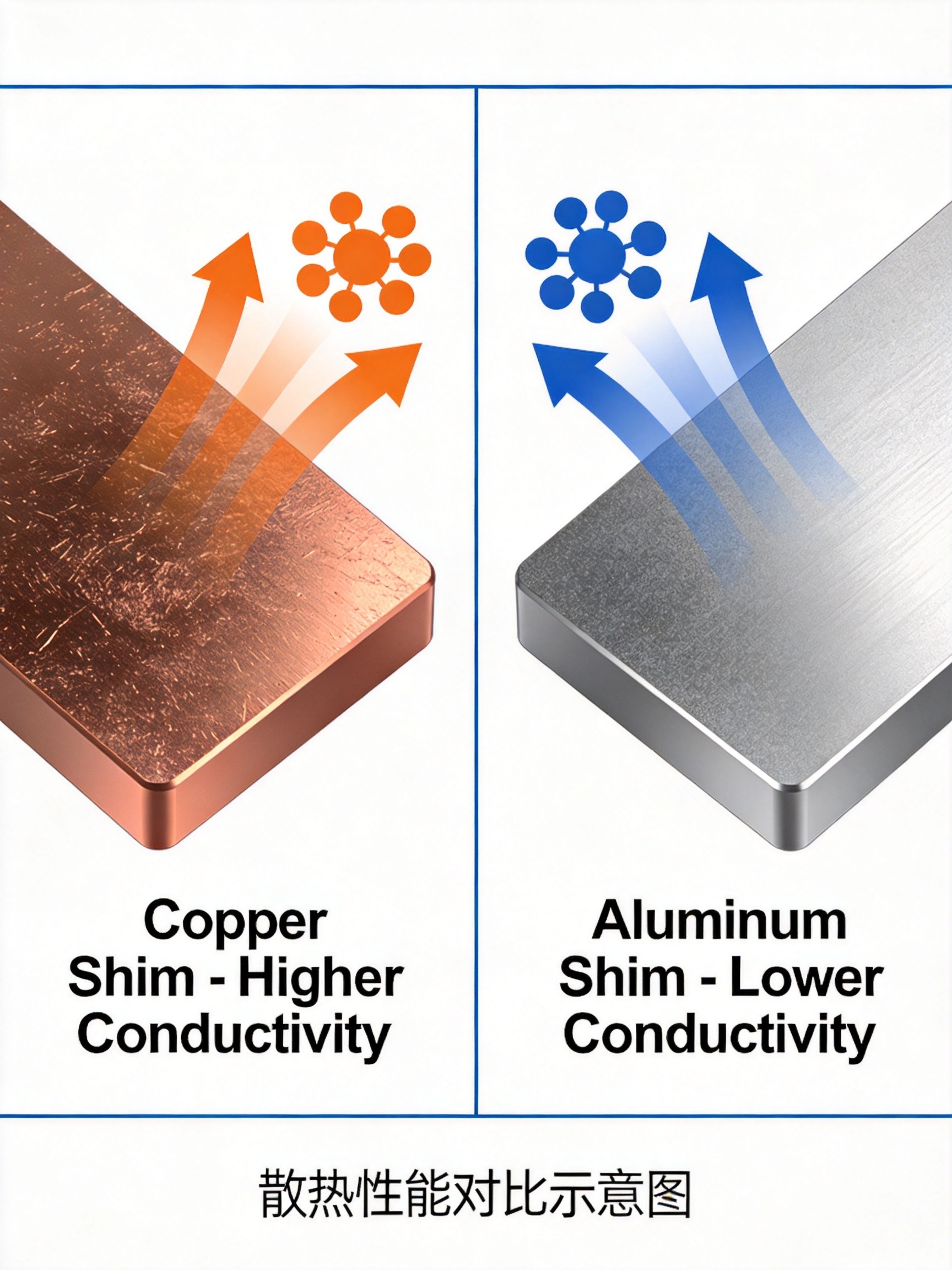
Thermal conductivity, measured in watts per meter-kelvin (W/mK), determines how efficiently a material transfers heat. Copper shims boast an impressive thermal conductivity of approximately 386-400 W/mK, while aluminum shims typically range from 150-200 W/mK. This means copper conducts heat more than twice as efficiently as aluminum.
In high-power applications such as power converters, motor controllers, and LED lighting systems, this difference translates to:
- Lower operating temperatures
- Extended component lifespan
- Improved system reliability
- More efficient heat spreading
Copper Shim vs Aluminum Shim: Performance Comparison
1. Thermal Performance
Copper shims excel in applications requiring rapid heat transfer across larger surface areas. The superior thermal conductivity of copper allows for thi
er shim applications while maintaining effective heat dissipation. This is particularly crucial in space-constrained designs common in automotive electronics and consumer devices.
2. Mechanical Properties
While aluminum is lighter (density 2.7 g/cm³ vs copper’s 8.96 g/cm³), copper offers better structural integrity and fatigue resistance. Copper shims maintain their form under thermal cycling conditions, reducing the risk of gaps or delamination that can compromise thermal contact.
3. Solderability and Assembly
Both materials can be soldered effectively, but copper’s natural wetting characteristics provide more reliable joints. Our SMT copper strips are specifically designed for reflow solder compatibility, ensuring consistent assembly yields.
Cost Considerations
Aluminum shims are generally less expensive per unit weight. However, when evaluating total cost of ownership, consider:
- Lower component failure rates with copper
- Reduced heatsink requirements due to better thermal performance
- Smaller form factors possible with copper
- Longer product service life
Applications Where Copper Shims Excel
Copper thermal shims are the preferred choice for:
- EV Battery Management Systems (BMS): Critical thermal balancing in electric vehicle packs
- Power Electronics: IGBT modules, MOSFETs, and thyristor assemblies
- Telecommunications Infrastructure: 5G base station power modules
- Industrial Motor Drives: Variable frequency drives (VFDs) and servo controllers
- LED Lighting: High-power illumination systems requiring thermal management
Making the Right Choice for Your Project
While aluminum shims have their place in cost-sensitive, low-power applications, the thermal management advantages of copper shims make them the superior choice for demanding electronic applications. The initial cost premium is often offset by improved performance, reduced system complexity, and enhanced reliability.
At TechMart SE, we offer a comprehensive range of SMT copper strips and shims designed for thermal management applications. Our technical team can help you select the optimal thickness and dimensions for your specific requirements.
Conclusion
When choosing between copper shim vs aluminum shim for heat dissipation, copper delivers superior thermal performance that often justifies its higher material cost. For applications where temperature control, reliability, and compact design are priorities, copper shims represent the smart engineering choice. Contact our sales team to discuss your thermal management requirements and discover how our copper solutions can optimize your electronic assemblies.
n