A smoking booth specified for a tropical climate fails in its first winter in ways nobody budgeted for: glass roof panels overloaded with wet snow, door seals frozen into ice blocks, ramps glazed with invisible black ice, and ventilation intakes choked with drifts. Cold-climate smoking shelter design is its own discipline, and retrofitting after the first snowfall costs far more than designing for it up front.
Snow Load and Structural Design
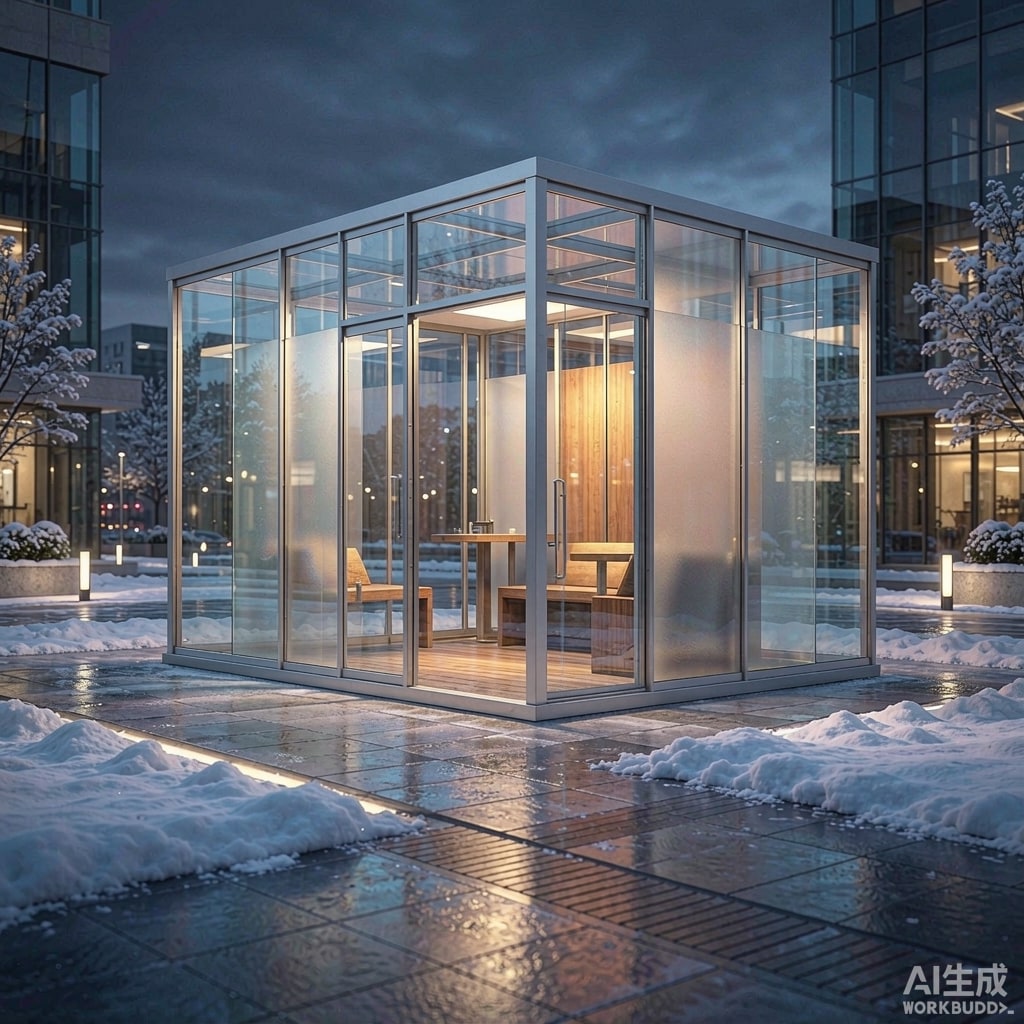
Start with the roof. Design snow load is set by local building code ground snow load maps, adjusted by roof slope, exposure, and thermal factor — a flat glass canopy accumulates far more than a 30-degree pitched roof that sheds. Wet maritime snow can exceed 4 kilonewtons per cubic meter in density, so a nominally light snowfall week can impose serious load. Two design choices pay off repeatedly. First, pitch the roof at least 15 degrees with smooth glazing and a heated drip edge, so snow sheds rather than accumulates. Second, place structural glazing so that shed snow and sliding ice ca
ot land on walkways or door swings — snow guards or an overhang extension above entrances handle this cheaply.
Glass selection matters more in winter than summer: laminated glass with adequate interlayer for the local load case, and thermally broken frames, because an aluminum frame bridging from a 20-degree interior to a minus-15 exterior will grow condensation rivers and lose heat continuously. Drift loads against adjacent walls and parapets deserve a check on any booth placed near taller structures; drifting can double or triple local snow depth.
Heating Strategy Inside the Booth
Occupants standing in winter coats do not need the booth at room temperature — 5 to 10 degrees Celsius interior is enough to make a two-minute smoke break tolerable, and heating a semi-open structure to more than that wastes energy straight through the ventilation airflow. The efficient approach is radiant: low-temperature electric radiant panels or infrared heaters mounted to warm people and surfaces directly, not the air the exhaust fan is constantly removing. Pair radiant heat with the booth’s mandated ventilation rate rather than fighting it.
The small but critical heated items are the ones designers forget. Heated door thresholds and seal cha
els prevent ice from welding doors shut — a frozen-shut smoking booth is both a safety violation and a customer service incident. Heat trace on the condensate drain and on any water line keeps plumbing alive. Ventilation intakes should face away from prevailing winter wind and sit above expected drift height, typically at least 0.5 meters above local design snow depth, with intake screens coarse enough not to blind with frost.
Ice Management on Approaches
The approach surface is where winter injuries happen. Ramps and walkways to the booth need fall-anchored, electrically heated mats or embedded hydronic loops on any accessible route, because hand-applied salt ca
ot keep up with freeze-thaw cycles and chloride corrodes stainless hardware over the years. Where heating is not budgeted, specify high-traction textured surfaces, generous handrails, and lighting that reveals frost — frosted surfaces read differently under cool-white light than warm. Load-bearing considerations: a heated mat adds trivial structural load, but the electrical supply to a remote booth site must be pla
ed at design time, not discovered by the facilities team in November.
Operations Checklist for Winter
Winter operations need their own maintenance rhythm. Before the season: verify roof anchorage and glazing gaskets, test heat trace and door seal heaters, confirm drainage is clear, and stock ice-melt product compatible with nearby materials. During the season: daily snow clearance from entrances, roof snow depth checks after major storms against the design load, monthly inspection of heated elements and GFCI protection, and monitoring for icicle formation on the drip edge — icicles over a doorway are a falling-hazard lawsuit waiting to happen and are usually cured by adjusting heat trace placement. After major storms, photograph the roof and structure; a photographic record resolves insurance disputes and reveals slow problems like differential settling.
Cold-climate smoking booths succeed on three commitments: structure sized to real snow maps, heat aimed at people and mechanisms rather than air, and a winter operations plan written before the first forecast. Do those three and the booth serves as reliably in January as it does in July.