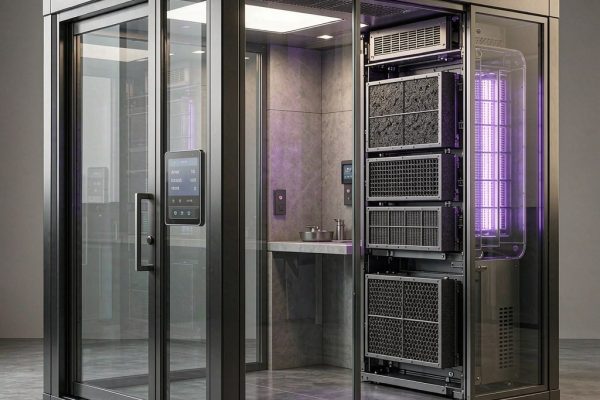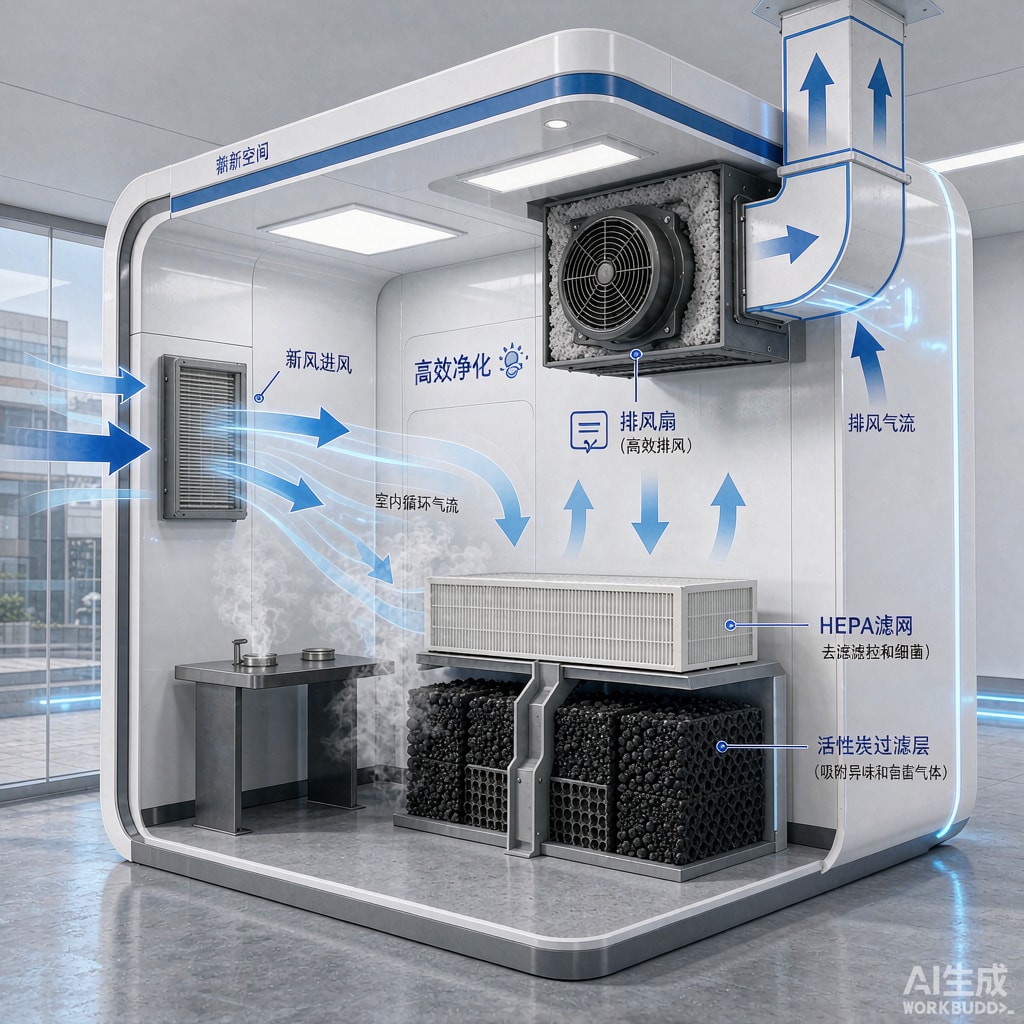
Smoking booths contain a complex mixture of airborne pollutants including particulate tar, nicotine aerosol, carbon monoxide, formaldehyde, acrolein, hydrogen cyanide, ammonia, and hundreds of volatile organic compounds responsible for persistent odor. High-efficiency particulate filtration removes visible smoke and tar droplets, but odor-causing gases pass through HEPA media unless a dedicated gas-phase filtration stage is installed. Activated carbon is the most widely used adsorbent for smoking booth odor control because of its high surface area, tunable pore structure, and compatibility with impregnation chemistries that target specific tobacco gases. This article examines the engineering principles of activated carbon filtration, filter design parameters, and replacement strategy for smoking booth applications in tropical climates.
Activated Carbon Adsorption Fundamentals
Pore Structure and Surface Area
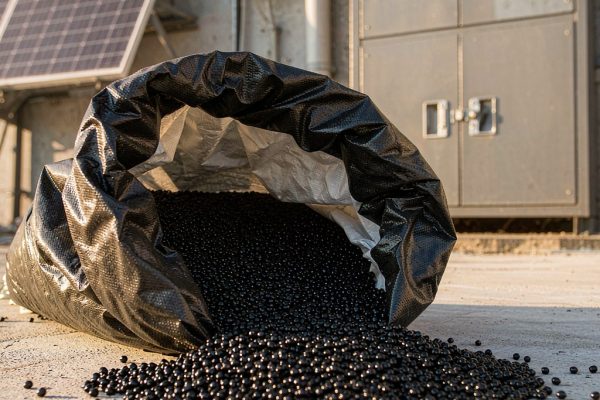
Activated carbon removes odor molecules by physical adsorption in a network of micropores, mesopores, and macropores:
- Micropores (<2 nm): Account for 90%+ of total surface area (500-1,200 m²/g); primary adsorption sites for small molecules such as formaldehyde, acetaldehyde, and hydrogen cyanide.
- Mesopores (2-50 nm): Transport pores that allow larger molecules such as nicotine and tar vapors to access micropores; 5-15% of surface area.
- Macropores (>50 nm): Bulk diffusion cha
els; important for high-velocity airflow but contribute little to surface area.
Coconut shell activated carbon offers the highest micropore volume and is preferred for small-molecule odor removal. Coal-based carbon provides a broader pore distribution and is more economical for general VOC applications. Wood-based carbon has large macropores and is better suited for color and large-molecule removal than for tobacco odor.
Tobacco-Specific Gas Targets
Impregnated Carbon Chemistries
Untreated activated carbon adsorbs non-polar organic vapors efficiently but performs poorly against polar and reactive gases common in tobacco smoke. Impregnated carbons extend performance to these compounds:
| Target Gas | Impregnant | Reaction / Adsorption Mechanism | Removal Efficiency |
|---|---|---|---|
| Formaldehyde (HCHO) | Phosphoric acid, amine, or potassium iodide | Chemisorption to form stable salts | 70-95% |
| Hydrogen cyanide (HCN) | Copper oxide / zinc oxide | Complexation and oxidation to cyanate | 80-98% |
| Acrolein (CH₂=CHCHO) | Triethylenediamine or sodium metabisulfite | Michael addition / bisulfite reaction | 75-95% |
| Ammonia (NH₃) | Phosphoric acid or citric acid | Acid-base neutralization | 80-99% |
| Nitrogen dioxide (NO₂) | Potassium carbonate or potassium iodide | Reduction and chemisorption | 60-85% |
| Benzene, toluene, xylene | None (virgin carbon) | Physical adsorption in micropores | 60-90% |
For comprehensive smoking booth odor control, a blended carbon bed containing 50-70% virgin coconut carbon and 30-50% chemically impregnated carbon provides the broadest spectrum removal. Using only virgin carbon in a smoking booth leaves formaldehyde, ammonia, and hydrogen cyanide largely untreated.
Filter Bed Design Parameters
Depth, Velocity, and Contact Time
The performance of a carbon bed depends on bed depth, face velocity, and contaminant contact time:
- Bed depth: 25-100 mm for light-duty booths; 100-200 mm for heavy-duty or high-occupancy installations.
- Face velocity: 0.3-0.6 m/s through the carbon bed; higher velocities reduce contact time and increase pressure drop.
- Contact time (residence time): 0.2-0.5 seconds minimum for effective adsorption; 0.5-1.0 seconds for high-efficiency odor removal.
- Carbon loading: 5-15 kg carbon per 100 m³/h of airflow for typical smoking booth duty.
A common design error is to install a thin 10-20 mm carbon pad in front of a HEPA filter. These pads saturate within days in a smoking booth and provide only cosmetic odor reduction. Effective tobacco odor control requires a deep, properly sized carbon bed with sufficient contact time.
Pressure Drop and Fan Sizing
System-Level Impact
Adding a carbon bed increases airflow resistance and must be accounted for in fan selection:
| Bed Depth | Typical Pressure Drop at 0.5 m/s | Impact on Booth ACH |
|---|---|---|
| 25 mm pleated carbon | 30-60 Pa | Low |
| 50 mm granular bed | 80-150 Pa | Moderate |
| 100 mm granular bed | 180-300 Pa | Significant |
| 150 mm granular bed | 350-500 Pa | Requires upgraded fan |
The exhaust fan must be selected to deliver the required air changes per hour (ASHRAE 62.1 recommends 20-50 ACH for smoking rooms) against the combined pressure drop of pre-filter, HEPA, carbon bed, and ductwork. Undersized fans lead to reduced capture velocity at the booth entrance and odor escape.
Replacement Strategy and Breakthrough Monitoring
Service Life Prediction
Carbon replacement must be scheduled before contaminant breakthrough occurs. Several monitoring approaches are available:
- Time-based replacement: Replace every 3-6 months for high-use booths, 6-12 months for low-use booths. Simple but can be conservative or late.
- Pressure-drop based: Replace when pressure drop across the carbon bed increases 50-100% above initial value; indicates particle loading and pore blockage.
- VOC sensor monitoring: Install PID or MOS VOC sensor downstream of carbon bed; trigger replacement at 20-30% of inlet concentration.
- Weight gain measurement: Weigh representative carbon samples; replace at 10-20% weight gain relative to virgin carbon.
In tropical climates with high humidity, water vapor competes with odor molecules for adsorption sites. At relative humidity above 70%, carbon capacity for non-polar VOCs can drop 20-40%. Increasing carbon bed volume by 20-30% or selecting hydrophobic treated carbon helps compensate for tropical humidity effects.
Tropical Climate Considerations
Humidity, Mold, and Insects
Southeast Asian smoking booths face additional environmental stressors:
- High humidity: Promotes microbial growth on loaded carbon; specify carbon with antimicrobial treatment or replace more frequently.
- Temperature cycling: 25-40°C daily range accelerates desorption of weakly held molecules during hot periods.
- Insect intrusion: Carbon beds can attract insects if not sealed; filter housings should have insect screens on intake and exhaust.
- Salt air: Coastal installations should use corrosion-resistant aluminum or stainless steel filter housings.
For tropical hospitality smoking booths, a robust specification includes 100-150 mm deep blended impregnated carbon, VOC breakthrough sensor, pressure-drop gauge, quarterly inspection, and carbon replacement every 3-4 months under heavy use. This proactive approach prevents odor complaints and maintains ASHRAE 62.1 compliant indoor air quality.