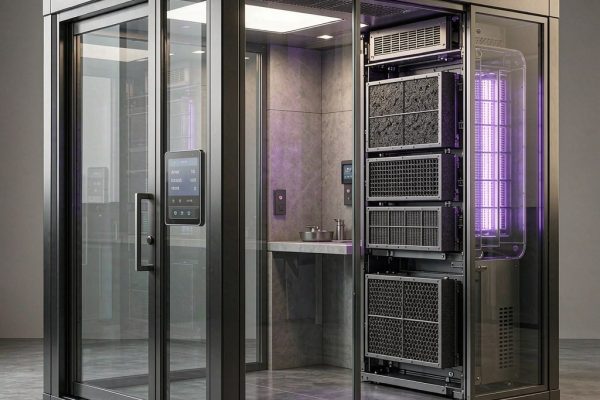
Negative pressure containment is the fundamental engineering control that prevents tobacco smoke and vape aerosol from leaking out of an indoor smoking booth into adjacent occupied spaces. Most commercial smoking booths are designed to maintain a pressure differential of 12.5-50 Pa (0.05-0.20 inch water column) between the booth interior and the surrounding room, with the exhaust fan sized to extract 20-50 air changes per hour (ACH) depending on occupancy and filtration strategy. The differential pressure sensor that monitors and controls this pressure is the single most important sensor in the system because a 5-10 Pa deviation in either direction can compromise containment or waste 30-50% of the fan energy. This article explains differential pressure sensor selection, calibration procedure, ASHRAE 62.1 compliance verification, and troubleshooting of common containment failures in commercial smoking booth installations.
Differential Pressure Sensing Fundamentals
Working Principle of Modern Sensors
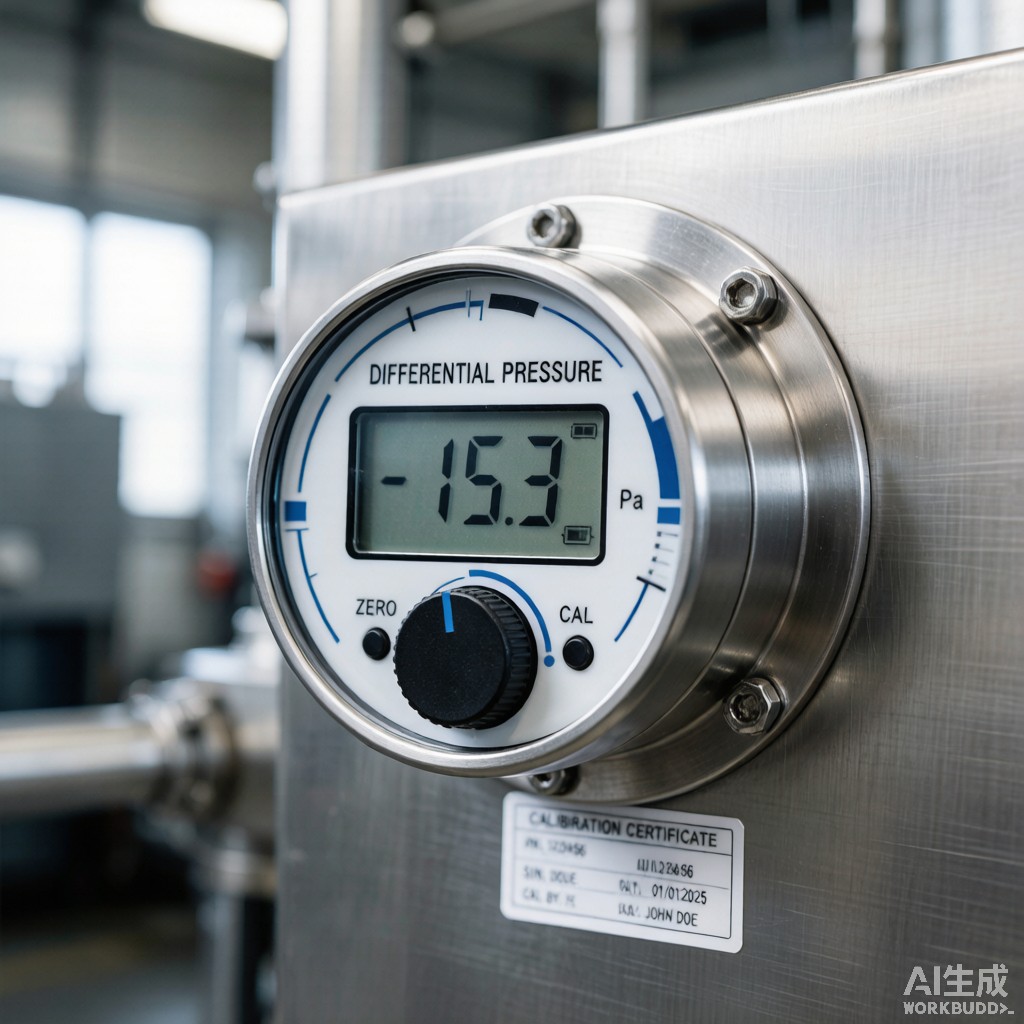
Modern differential pressure transducers for HVAC and cleanroom applications use micro-electro-mechanical systems (MEMS) silicon diaphragm technology with a capacitive or piezoresistive sensing element. Two pressure ports, one co
ected to the booth interior and one to the room, produce a pressure differential of 0-100 Pa with typical accuracy of ±0.5% full scale (±0.5 Pa for a 100 Pa range) and long-term stability of ±0.1 Pa per year. The analog output of 0-10 V or 4-20 mA is read by the building automation system (BAS) or local controller, which modulates the exhaust fan speed via a variable frequency drive (VFD) or ECM motor to maintain setpoint.
Sensor Range and Resolution Selection
For most commercial smoking booth installations, the optimal sensor range is 0-100 Pa or 0-250 Pa to provide adequate resolution at the 12.5-50 Pa operating point while allowing measurement of door-opening transients that can spike to 100-200 Pa. A 0-50 Pa range sensor provides higher resolution but saturates during door events and may be damaged by sudden pressure spikes. The sensing element should be rated for 10-15 kPa overload without permanent calibration shift to survive installation mishaps such as port blockage or hose disco
ection.
Installation and Tubing Best Practices
Piping and Tubing Materials
Both pressure ports should be co
ected to the measurement locations using 4-6 mm OD flexible tubing of polyurethane, nylon, or silicone, with maximum length of 3-5 meters to avoid time lag in the control loop. The high-pressure port (room reference) should be located in the main occupied space, not inside the booth or inside the supply air duct. The low-pressure port (booth reference) should be located at mid-height on the booth wall, away from the door swing, exhaust grille, and supply diffuser. Avoid metallic tubing because it transmits vibration and can create noise-induced sensor drift.
Orientation and Vibration Isolation
Sensors should be mounted vertically with the ports facing down or horizontally to prevent condensate from collecting in the sensing element. The body should be isolated from vibration by rubber grommets or foam tape, especially when mounted on a wall shared with mechanical equipment. Differential pressure sensors in smoking booth service should be rated for at least IP54 to withstand periodic wash-down and high humidity, and the sensing element should be field-replaceable to allow calibration without disturbing the wiring.
Calibration Procedure
Zero and Span Adjustment
A
ual calibration of the differential pressure sensor is recommended for commercial smoking booth installations. The zero adjustment is performed by co
ecting both ports to a common reference (typically room ambient) and trimming the zero potentiometer or software offset until the output reads 0.00 ± 0.05 Pa. The span adjustment requires a precision pressure calibrator or a digital manometer with ±0.1 Pa accuracy and is performed by applying a known pressure differential of 25-50% of full range (typically 25-50 Pa) and adjusting the span trim until the output reads the correct value. A three-point calibration at 0%, 50%, and 100% of range verifies linearity.
Field Verification with TSI or Magnehelic Gauge
In addition to sensor calibration, the actual pressure differential should be verified with an independent reference gauge such as a TSI 9565 or Dwyer Magnehelic during commissioning. Place one hose of the reference gauge in the booth and the other in the room, read the differential, and compare to the BAS reading. A discrepancy greater than 2-3 Pa indicates either a calibration drift, a tubing blockage, or a controller calibration error. Re-zero both the sensor and reference gauge with both hoses at the same point before each measurement.
ASHRAE 62.1 Containment Compliance
Ventilation Rate Standard 62.1 Table 6.5
ASHRAE Standard 62.1-2022 Table 6.5 specifies a minimum outdoor air rate of 60 cfm (102 m³/h) per occupant of designated smoking lounges, with the default occupancy calculated as 7 ft² (0.65 m²) per person. The corresponding negative pressure setpoint depends on the leakage area of the booth envelope, but typical values are 12.5-25 Pa (0.05-0.10 in. w.c.) for well-sealed booths and 25-50 Pa for booths with visible gaps or older construction. The pressure setpoint should be commissioned to the lowest value that maintains containment during the door opening test described below.
Door Opening Containment Test
ASHRAE 129 and NEBB procedural standards describe a door opening test in which SF₆ tracer gas or theatrical smoke is released inside the booth, and an observer outside the booth confirms zero visible escape during a standard 3-second door open-close cycle. The pressure differential during this test should not drop below 5-7 Pa at any time. If containment fails, the exhaust fan speed should be increased by 10-20% and the test repeated. The combination of continuous negative pressure monitoring and a
ual door opening test verification is the accepted compliance path in most jurisdictions.
Troubleshooting Common Containment Failures
Symptom: Pressure Drops to Zero During Occupancy
Possible causes: (1) exhaust fan failure or belt slip, (2) clogged HEPA filter causing fan to operate off its curve, (3) door held open or interlocking failed, (4) supply air balance creating positive pressure in the surrounding room that overcomes the booth exhaust. Diagnostic procedure: check fan amperage, filter pressure drop, and door interlock status; measure room pressure relative to outdoor with a separate gauge; verify the booth supply air grille (if present) is not over-sized.
Symptom: Pressure Oscillates ± 5-10 Pa
Possible causes: (1) PID controller tuning too aggressive (proportional band too narrow), (2) sensor tubing picking up air movement noise, (3) door open-close cycle interaction with the control loop, (4) supply air handler cycling on building pressure. Diagnostic procedure: increase the controller proportional band by 30-50%, add a 1-3 second time delay to the control output, and verify that the tubing is not picking up drafts from the supply diffuser or the door sweep.
A well-designed and properly calibrated differential pressure control system will maintain 12.5-50 Pa negative pressure with ±1.5 Pa accuracy for 5-7 years between calibrations, supporting full ASHRAE 62.1 containment compliance and reliable operation of the smoking booth in commercial building applications.