Outdoor smoking booths face a punishing combination: ultraviolet exposure, rain, temperature swings, coastal salt air, and constant human contact. The right material choice determines whether a smoking booth still looks professional after five years or becomes a rust-streaked liability. For facility managers specifying a smoking room or outdoor booth, comparing powder-coated steel, stainless steel, and glass — and matching each to the site environment — is the key step in controlling lifecycle cost.
Powder-Coated Galvanized Steel: The Workhorse
The most common booth construction is galvanized steel sheet and square tubing finished with polyester powder coating. The galvanizing layer protects against rust where the coating gets scratched, and the powder layer provides color, UV resistance, and a durable touch surface. Standard specifications call for 60–120 µm of polyester or polyester-epoxy powder over hot-dip galvanized or pre-galvanized steel.
Coating Quality Determines Lifespan
Coating performance varies widely between suppliers. Insist on a test report showing 500–1,000 hours of salt-spray resistance (ASTM B117) and UV aging data from QUV or Xenon exposure. In tropical sun, economy coatings chalk and fade within 2–3 years, while architectural-grade polyester retains gloss for 8–10 years. The difference in paint chemistry costs little at purchase; the difference in appearance after a few monsoon seasons is dramatic.
Stainless Steel: For Coastal and High-Traffic Sites
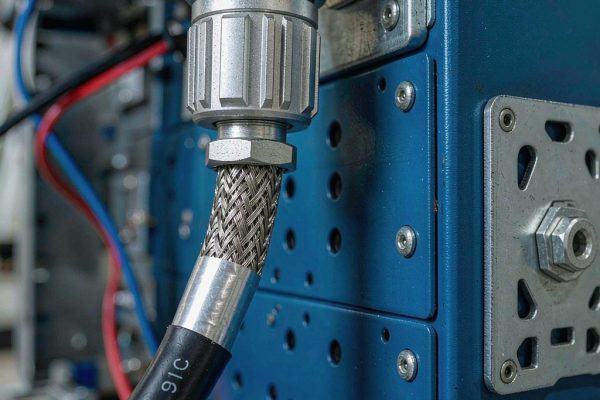
Where booths sit within a few kilometers of the ocean, near industrial emissions, or in airports and malls with 24/7 traffic, stainless steel justifies its premium. Grade 304 handles most environments; grade 316, with molybdenum added, resists chloride pitting in coastal salt spray. Brushed finishes (No. 4) hide fingerprints and minor scratches better than mirror polishes, which matters in facilities where the booth doubles as an image statement.
Welding and Finish Details
Stainless booths live or die on fabrication quality. Weld zones must be pickled and passivated to restore corrosion resistance, and contact with carbon steel tools must be avoided — iron contamination starts rust spots even on good stainless. Ask fabricators about their pickling process; it is the detail that separates decade-long finishes from stained panels within one year.
Glass and Glazing: Visibility and Wind Protection
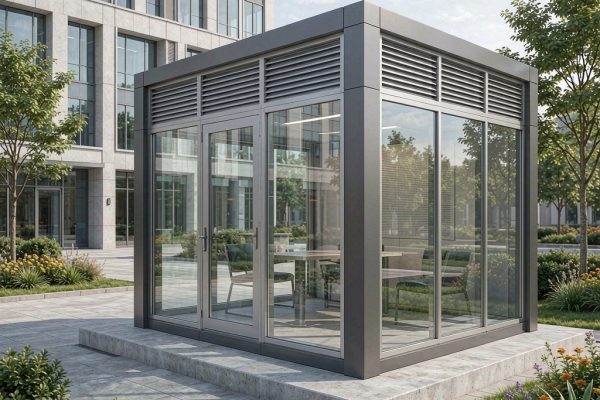
Tempered glass panels give booths light, sightlines, and a premium look while blocking wind and rain. Standard booth glazing uses 6–8 mm tempered glass; laminated glass adds security and holds fragments if broken, which matters in public venues. Polycarbonate sheets are lighter and impact-proof but scratch and yellow within a few years outdoors unless UV-coated grades are specified — acceptable for temporary installations, rarely for permanent ones.
Frame Systems for Glass Panels
Glass panels need aluminum or stainless framing with EPDM gaskets. Aluminum frames should be powder-coated or anodized; mill-finish aluminum weathers into dull gray oxidation in coastal air. Glazing gaskets must be EPDM or silicone — ordinary PVC gaskets harden and crack under UV within two years, leaking wind-driven rain into the booth floor.
Matching Materials to the Site Environment
A short selection matrix helps narrow the choice:
• Inland office parks and factories: powder-coated galvanized steel offers the best cost-to-durability balance
• Coastal resorts and waterfront developments: 316 stainless structure with tempered glass, or marine-grade coating over 316
• High-vandalism public transit sites: stainless panels with laminated lower glazing and anti-graffiti coating
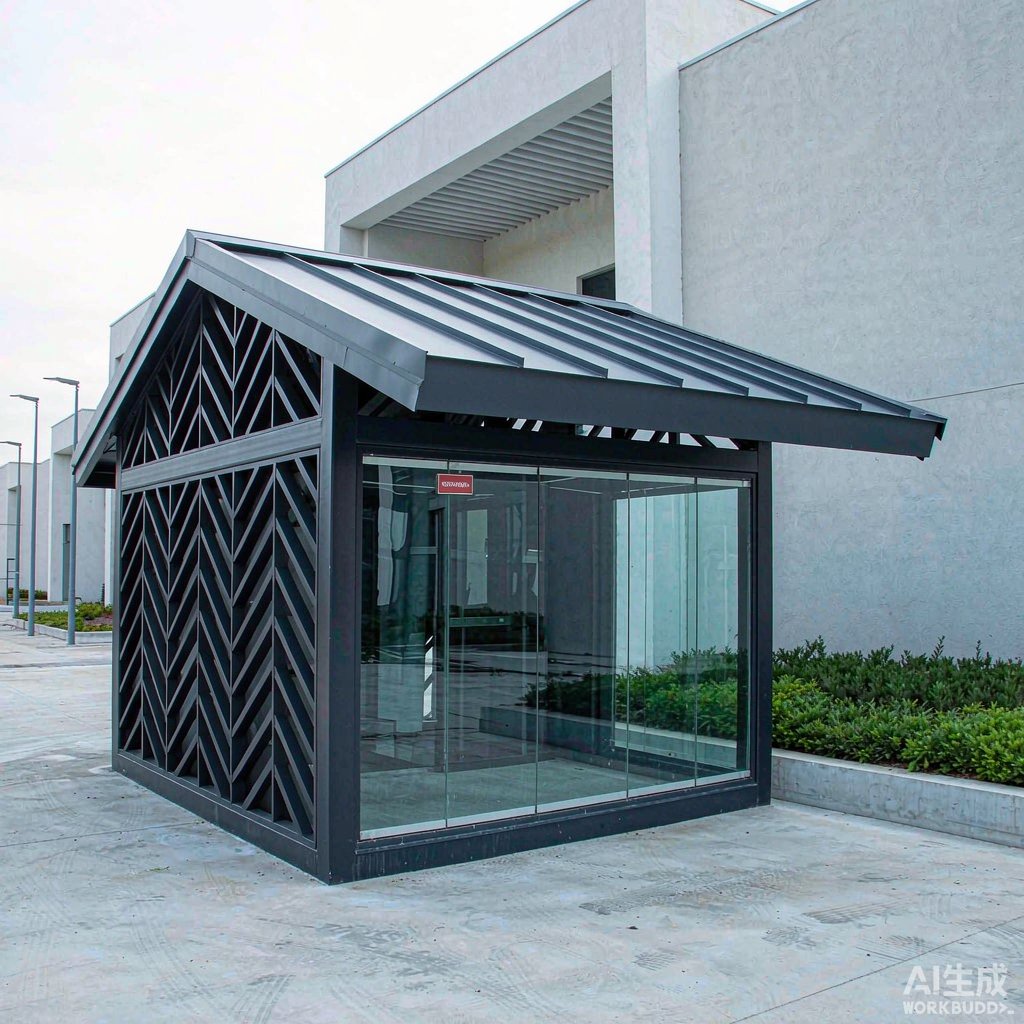
• Tropical high-rainfall climates: steep-roof designs in coated steel with generous overhangs and aluminum drainage gutters to prevent standing water
Auxiliary Components Deserve Attention
The frame is only part of the story. Benches, ashtray bins, hinges, and locks corrode faster than panels because of hand contact and ash chemistry. Specify stainless hinges and hardware even on powder-coated booths, and use replaceable stainless ash plates — these details are where budget booths visibly fail first, years before any structural issue appears.
Lifecycle Cost Comparison
Initial prices rank roughly: powder-coated steel lowest, glass-and-steel hybrids in the middle, full stainless highest. Lifecycle economics tell a longer story. A well-coated steel booth repainted at year 8 can serve 15 or more years at modest cost, while a poor coating forces panel replacement by year 4. Stainless booths rarely need refinishing, and their higher resale and brand-image value suits premium commercial properties. Calculate cost per service year — including one repaint cycle for coated steel — rather than comparing purchase prices alone.
A Practical Specification Checklist
Before ordering, require: steel grade and galvanizing weight, powder type and film thickness with salt-spray report, stainless grade certificates (3.1 material certs), glass tempering certificates, hardware material specs, and drainage details. A supplier who provides these documents willingly will likely build booths that hold up; one who resists is signaling where the corners were cut. Matching material grade to site conditions keeps the smoking booth a clean, professional facility for years rather than a maintenance burden.