Facility managers evaluating smoking booths usually see only the purchase price. The real cost picture spans installation, power, filter replacement, cleaning labor, and eventual relocation — and it differs by a factor of three between a well-specified unit and a cheap one over ten years. This breakdown gives realistic numbers for budgeting.
Purchase Price by Booth Type
Open-Air Smoking Shelters
A simple open steel-and-polycarbonate shelter (no ventilation, no filtration) costs $1,500–$5,000 for a 4–8 person unit. There is no operating cost beyond cleaning. Compliance depends on being non-enclosed, so no HVAC is needed. This is the low-capex option but offers no smoke containment — smoke drifts to entrances and neighbors complain.
Semi-Enclosed Ventilated Booths
Partial enclosure with roof-mounted exhaust but no filtration: $6,000–$15,000 installed for small units. Operating cost is fan power plus occasional cleaning. These suit outdoor locations where smoke nuisance, not indoor air quality, is the driver.
Enclosed Filtration Booths (Indoor Grade)
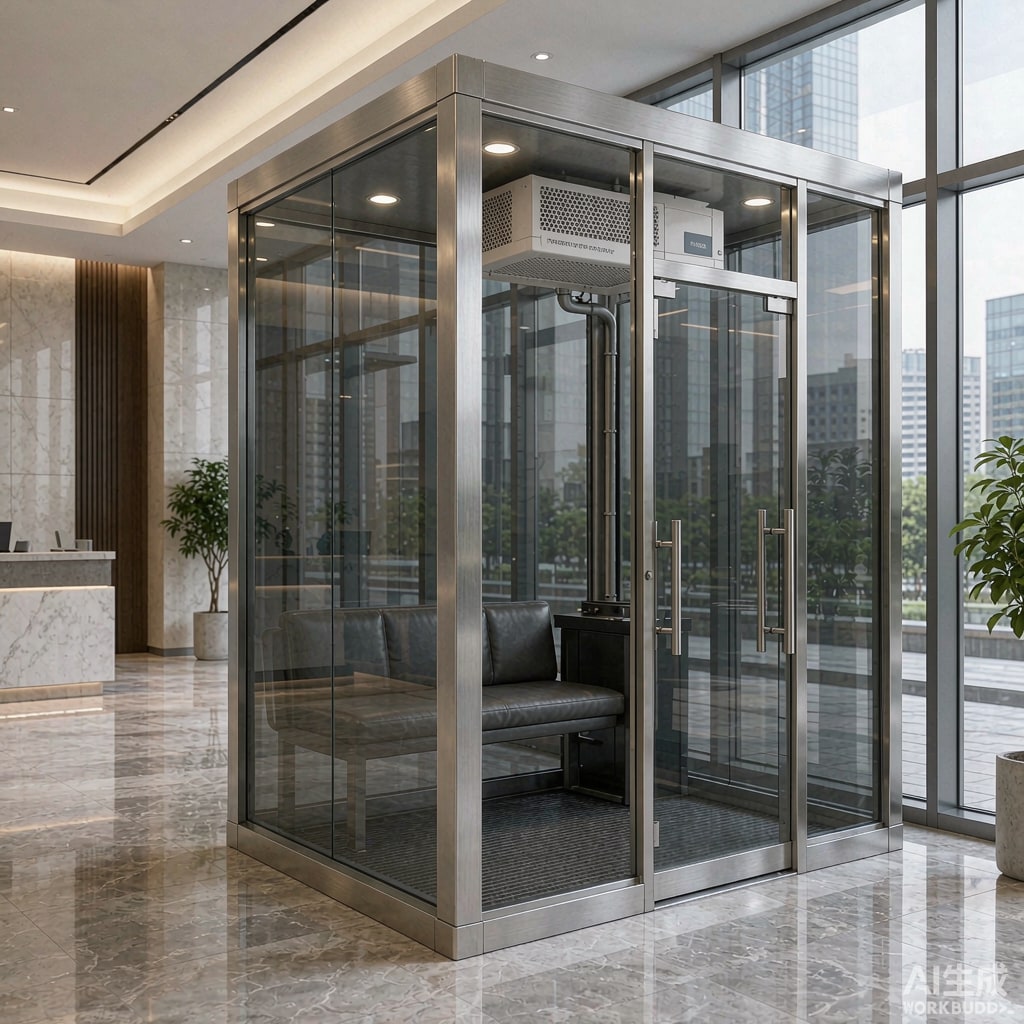
Fully enclosed booths with recirculating HEPA + activated carbon filtration: $12,000–$35,000 for 2–6 person units. Premium units with glass vestibule airlocks, automatic door operators, and PM2.5 monitoring reach $45,000–$60,000. This is the category with meaningful operating costs, detailed below.
Installation Costs
- Indoor floor-standing booth: minimal if a power outlet exists nearby. Budget $500–$1,500 for a dedicated 220–240 V circuit if required.
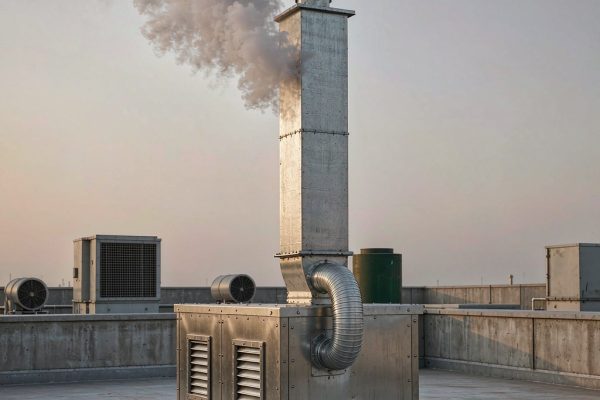
- Roof-penetrating exhaust versions: $2,000–$6,000 in ducting, roof flashing, and fan curbs — this is why recirculating filtered designs dominate indoor retrofits.
- Outdoor booths: concrete pad or deck anchoring $1,000–$3,000; wind-rated anchoring in typhoon/cyclone regions adds engineering and hardware.
- Permits and code review: $0–$2,000 depending on jurisdiction; enclosed booths often trigger mechanical ventilation review.
Lifetime Operating Costs (Enclosed Filtration Booth)
Power
A 2–4 person booth runs a 400–800 W fan plus optional 100–200 W of lighting and controls. At 600 W average and 24/7 operation, that is roughly 5,250 kWh/year — $650–$1,600/year at typical commercial tariffs. Demand-controlled ventilation (occupancy sensors slowing the fan when empty) cuts this 30–50% and pays back its $500–$800 premium within 1–2 years.
Filters
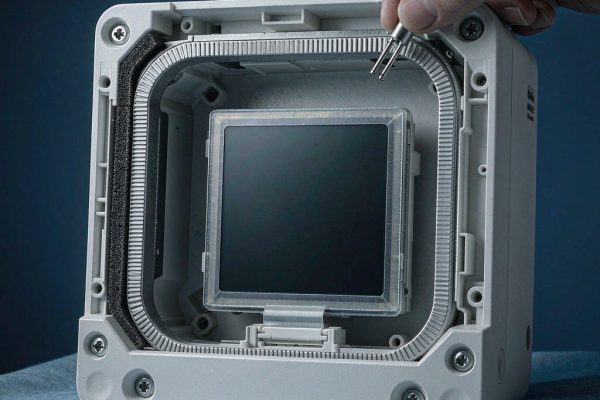
The dominant recurring cost. A typical stack: pre-filter (change monthly, $10–$20 each), fine/HEPA filter (6–12 months, $150–$400), activated carbon beds (3–6 months in heavy use, $200–$600). A
ual filter spend for a moderately used booth: $800–$2,000. Idle-when-empty controls and good pre-filtration extend carbon life significantly — carbon costs scale with air volume passed, not cigarettes burned.
Cleaning and Hygiene
Daily wipe-down, weekly glass cleaning, and quarterly deep cleaning run $1,200–$2,500/year in contracted janitorial labor, or less with in-house staff. Cigarette receptacle emptying is usually folded into existing grounds maintenance.
Repairs and Parts
Door closers, hinges, light tubes, and fan bearings are the wear items: budget $300–$800/year after the warranty period. Units with cheap door hardware spend more here than the fan ever costs.
Ten-Year Total Cost of Ownership Example
A mid-range enclosed booth at $22,000 purchase, $1,500 install:
- Power (with DCV): ~$9,000 over 10 years.
- Filters: ~$14,000 over 10 years.
- Cleaning: ~$18,000 over 10 years.
- Repairs: ~$5,000 over 10 years.
- Total 10-year TCO: roughly $69,000 — over three times the purchase price.
The implication: filter efficiency, fan power, and door durability matter more to lifetime cost than the sticker price difference between suppliers. A booth $4,000 cheaper that consumes 30% more filter volume and fails door closers a
ually is the expensive option by year five.
Cost-Saving Specifications That Work
- Demand-controlled fans (occupancy or PM sensor based): 30–50% power savings, longer filter life.
- High-capacity carbon: deeper carbon beds cost more upfront but halve replacement frequency in busy booths.
- Stainless or powder-coated interior surfaces that wipe clean without special chemicals.
- Standard filter sizes: custom filters lock you into supplier pricing; standard HEPA sizes are commodity-priced.
- Filter change subscription or service contract: converts unpredictable spend into fixed a
ual cost and guarantees changes actually happen — unmaintained booths lose filtration performance within months.
Budgeting Checklist
- Purchase price + installation (power, ducting, anchoring) + permits.
- A
ual power at real duty cycle — insist on DCV for anything used 12+ hours/day.
- Filter schedule with quantities and unit prices, in writing, before purchase.
- Cleaning labor allocation.
- Spare-parts availability commitment (door hardware, fans) for 10 years.
Built this way, a smoking booth budget survives contact with reality. The purchase price is the smallest, most negotiable line; the filter and power schedule is where suppliers differentiate, and it is the part most buyers forget to ask for.