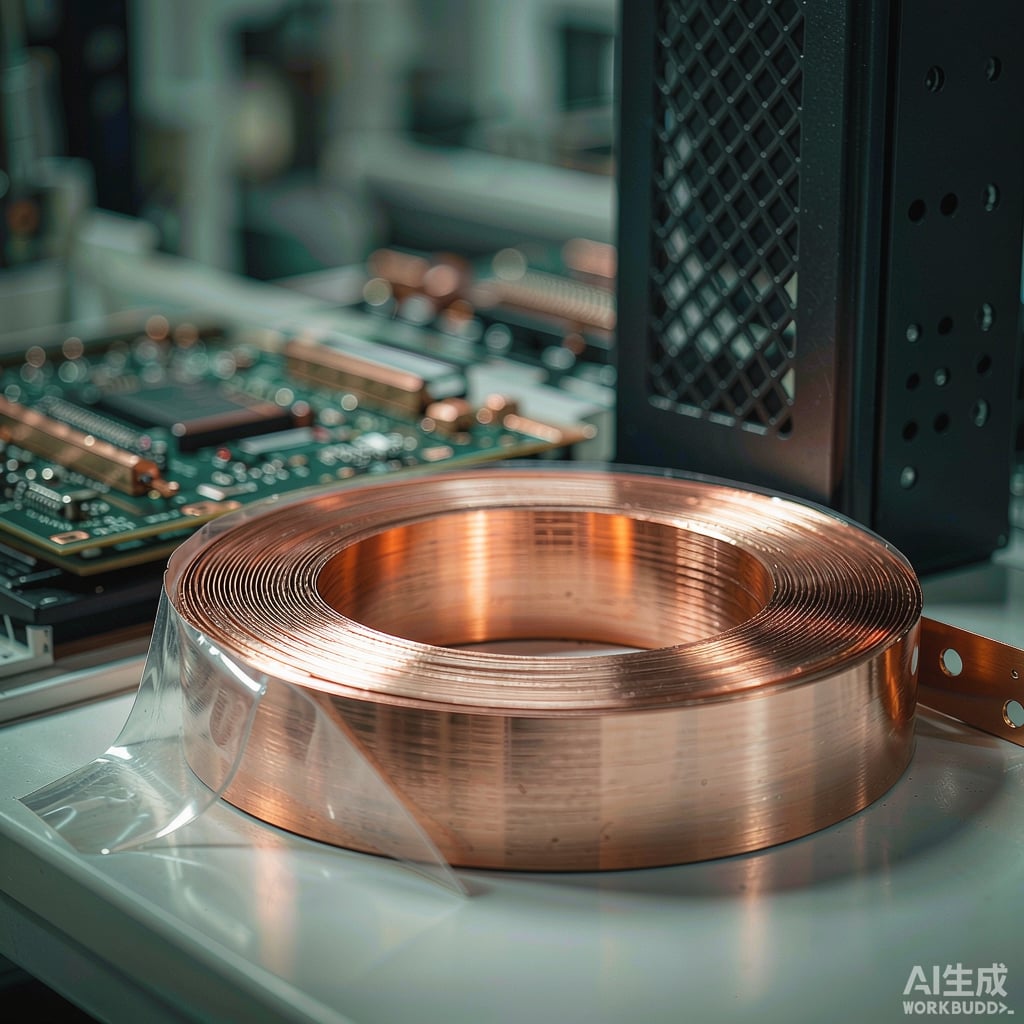
Copper remains the material of choice for high-conductivity interco
ects in surface-mount technology (SMT), yet its Achilles’ heel is rapid oxidation. When an SMT copper strip loses its bright metallic surface to a dull oxide layer, solderability drops, contact resistance rises, and automated pick-and-place systems can misfeed. For electronics manufacturers in humid tropical climates across Southeast Asia, oxidation prevention is not a secondary concern—it is a core quality issue.
Why SMT Copper Strip Oxidation Matters
Oxidation on a copper strip begins almost immediately after the final rolling or slitting step. In ambient air at 25 °C and 60 % relative humidity, a measurable oxide film can form within hours. After one week, the oxide thickness may exceed 20 nm, enough to degrade wetting balance during reflow. The result is incomplete solder joints, voiding, and in severe cases, delamination between the copper pad and the solder.
Beyond solderability, oxidation also affects:
- Electrical performance: Oxide films increase contact resistance at co
ectors and bus bars.
- Visual inspection: Discoloration triggers false rejects in AOI systems.
- Downstream plating: Nickel or gold plating over an oxide layer leads to poor adhesion and flaking.
Primary Causes of Oxidation
Humidity and Temperature
Copper oxidation follows an Arrhenius-like relationship with temperature and humidity. Storing coils near coastal zones or unconditioned warehouses accelerates oxide growth. For every 10 °C increase above 25 °C, the oxidation rate can roughly double.
Residual Surface Contaminants
Oils, fingerprints, and alkaline residues left from rolling lubricants or cleaning baths trap moisture against the surface. These micro-environments become galvanic cells that etch the copper and seed oxide nodules.
Improper Packaging
Ordinary kraft paper or unsealed polyethylene wraps allow oxygen and water vapor to circulate. Without desiccants and vapor barriers, even climate-controlled warehouses ca
ot fully protect copper during multi-week sea freight.
Prevention Strategies
1. Controlled Atmosphere Storage
Maintain storage areas below 40 % relative humidity and between 18 °C and 24 °C. If air conditioning is unavailable, use sealed cabinets with silica gel or active dehumidifiers. For long-term inventory, nitrogen-purged cabinets offer the best protection.
2. Protective Coatings
Anti-oxidation oils, benzotriazole-based passivation, and tin flash coatings extend shelf life. A 0.5–1.0 µm immersion tin layer, for example, can preserve solderability for six months or more while remaining compatible with lead-free reflow profiles.
3. Correct Handling Protocols
Operators should wear lint-free gloves and avoid dragging strips across unpainted steel tables. After each decoil, reseal the remaining material with a heat-sealed aluminum-laminated bag containing a fresh desiccant packet and a humidity indicator card.
4. First-In, First-Out Inventory Rotation
Even under ideal storage, copper is not immortal. Implement FIFO so that material older than three months is used first, and schedule incoming inspection to verify oxide thickness with a simple color chart or contact-angle test.
Testing Oxidation Severity
A quick factory-floor test is the solder dip test per IPC-J-STD-002. Dip a sample into no-clean flux and then into molten SAC305 solder at 255 °C. A wetting angle below 90° indicates acceptable surface condition. For more precision, use coulometric reduction or X-ray photoelectron spectroscopy.
Conclusion
Preventing SMT copper strip oxidation is a system-level discipline that spans purchasing, warehousing, handling, and process control. By combining humidity management, protective coatings, vapor-barrier packaging, and FIFO inventory practices, manufacturers can keep copper solderable from arrival on the dock through final assembly.