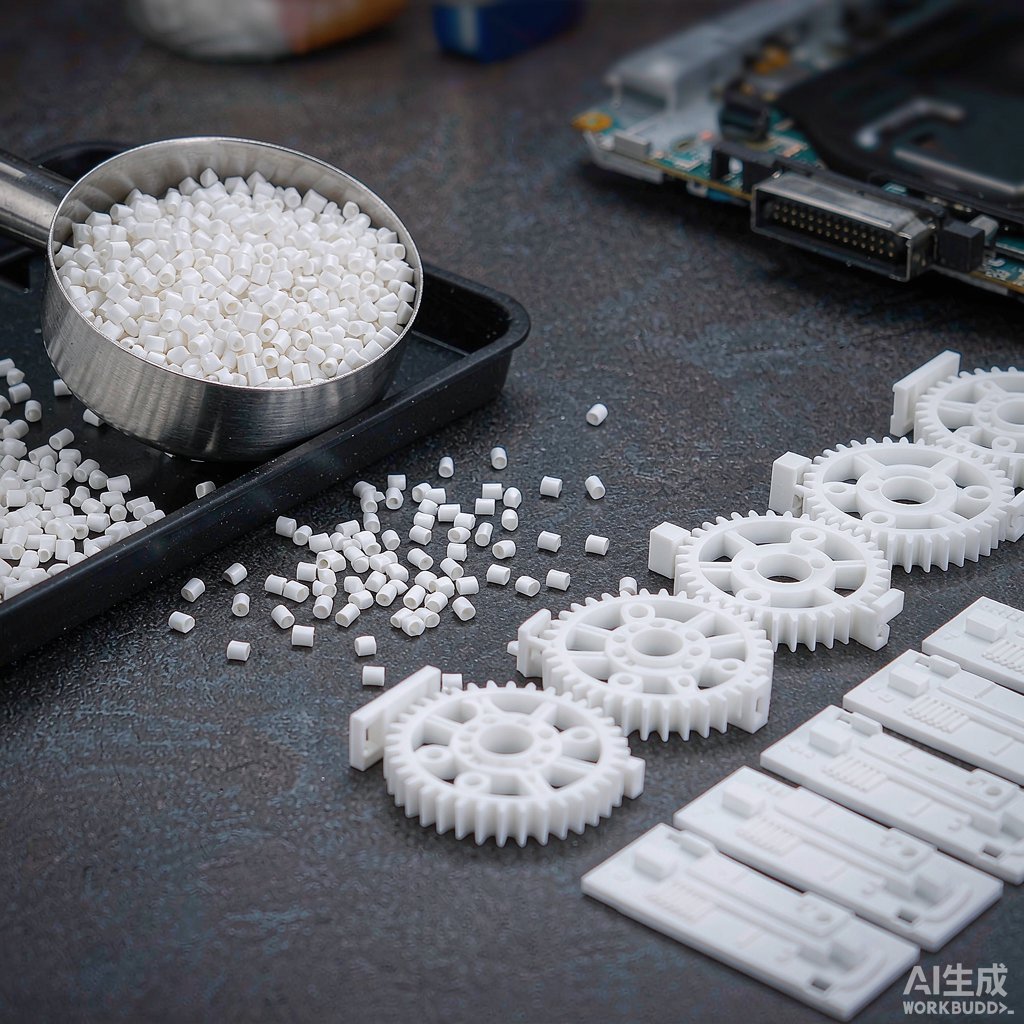
Inside printers, optical drives, smart meters, and SMT handling equipment, thousands of small plastic parts slide, click, and gear against each other every day. The material behind most of these quiet, low-friction movements is POM plastic pellets — polyoxymethylene, better known as acetal. With its self-lubricating surface, high stiffness, and tight dimensional stability, POM is the default engineering thermoplastic for precision gears, sliders, latches, and card guides. Choosing between its grades, however, requires understanding moisture behavior, crystallinity, and processing discipline.
Why POM Excels in Moving Parts
POM is a highly crystalline polymer — typically 70–80% crystallinity — which gives it a smooth, hard surface and one of the lowest coefficients of friction among unfilled engineering plastics, around 0.2–0.3 against steel and similar against itself. Wear rates stay low even in unlubricated mechanisms, and the material retains stiffness across a service range of −40 to 100 °C. Fatigue resistance is a further strength: gear teeth and snap latches molded from POM survive millions of load cycles without whitening or cracking.
Tribology: POM Versus PA and PBT
Compared with polyamide, POM absorbs far less water — about 0.2–0.3% at saturation versus 8–10% for PA6 — so its friction and dimensions barely shift with humidity, a decisive advantage for office equipment and outdoor terminals. PBT offers similarly low moisture uptake but lower toughness; POM’s combination of low friction and high impact strength keeps it the frontru
er for precision mechanisms that must feel identical on a dry February morning and a humid August afternoon.
Dimensional Stability and Precision
Precision gears often hold tolerances to ±0.02 mm. POM supports this thanks to low, predictable mold shrinkage of 1.8–2.1% and minimal post-mold creep. Two cautions apply. First, crystallinity grows with slow cooling, so parts cooled in warm molds shrink slightly differently than fast-cooled ones — consistent molding conditions are essential for tolerance control. Second, a
ealing at 120–140 °C before final inspection stabilizes parts destined for continuous service above 60 °C.
Homopolymer Versus Copolymer
Homopolymer POM delivers slightly higher stiffness, strength, and crystallinity, suiting tight-tolerance gears. Copolymer POM offers wider processing latitude, lower formaldehyde emission during molding, superior resistance to hot water and alkalis, and somewhat better long-term hydrolysis performance. Copolymer grades dominate electronics and automotive applications; homopolymer persists where maximum rigidity matters more than processing margin.
Processing Discipline for Quality Parts
POM is forgiving to mold but strict on temperature control:
• Drying is normally u
ecessary for virgin pellets — a rare convenience — though regrind-heavy blends benefit from 2 hours at 80–100 °C
• Melt temperature sits at 190–210 °C for copolymer grades; exceeding 230 °C degrades the polymer and releases formaldehyde, so barrel residence time must stay short
• Mold temperatures of 80–120 °C develop full crystallinity and dimensional stability
• Vent the mold properly — trapped formaldehyde gases cause silver streaks and burning
Gear and Slider Mold Design
Gear cavities need uniform cooling to prevent ovality; conformal cooling cha
els or beryllium copper inserts help on fine-pitch gears. Sliders and card guides benefit from gate placement that keeps weld lines away from wear surfaces. Draft angles of 0.5–1 degree are typically sufficient given POM’s low shrink adhesion, allowing fast ejection cycles in multi-cavity molds.
Grades for Electronics Applications
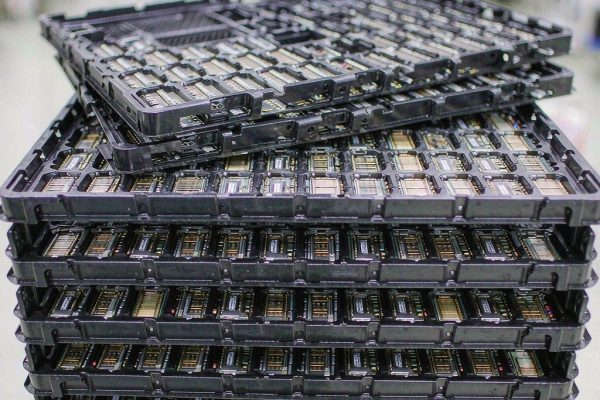
Standard copolymer grades cover most mechanical parts. For electronics assembly, three specialized families matter. ESD-safe POM modified with carbon or permanent antistatic agents serves IC trays, stick magazines, and ESD-safe card guides. Glass-bead or glass-fiber filled grades raise stiffness by 30–50% for gear housings and actuator frames. Low-wear grades modified with PTFE or silicone cut friction another 30% for high-cycle mechanisms like shutter drives and microswitch actuators.
Matching Grade to Environment
In cleanroom or sensor environments, select low-outgassing grades certified for low volatile emission. For parts near motors or reflow zones, confirm heat deflection temperature and choose grades rated for 105 °C continuous service. ESD grades should hold 10⁶–10⁹ Ω surface resistance after 1,000 humidity cycles — a key acceptance test for IC carrier applications where static discharge protection ca
ot drift with the seasons.
Sourcing and Quality Checks
When purchasing POM plastic pellets, request melt flow index certificates per lot, formaldehyde emission data for the chosen grade, and — for gear applications — a first-article molding trial to correlate shrinkage values with your mold. Consistent pellet supply with documented MFI keeps gear tolerances stable across production lots, protecting the quiet precision that end users never notice but always feel.