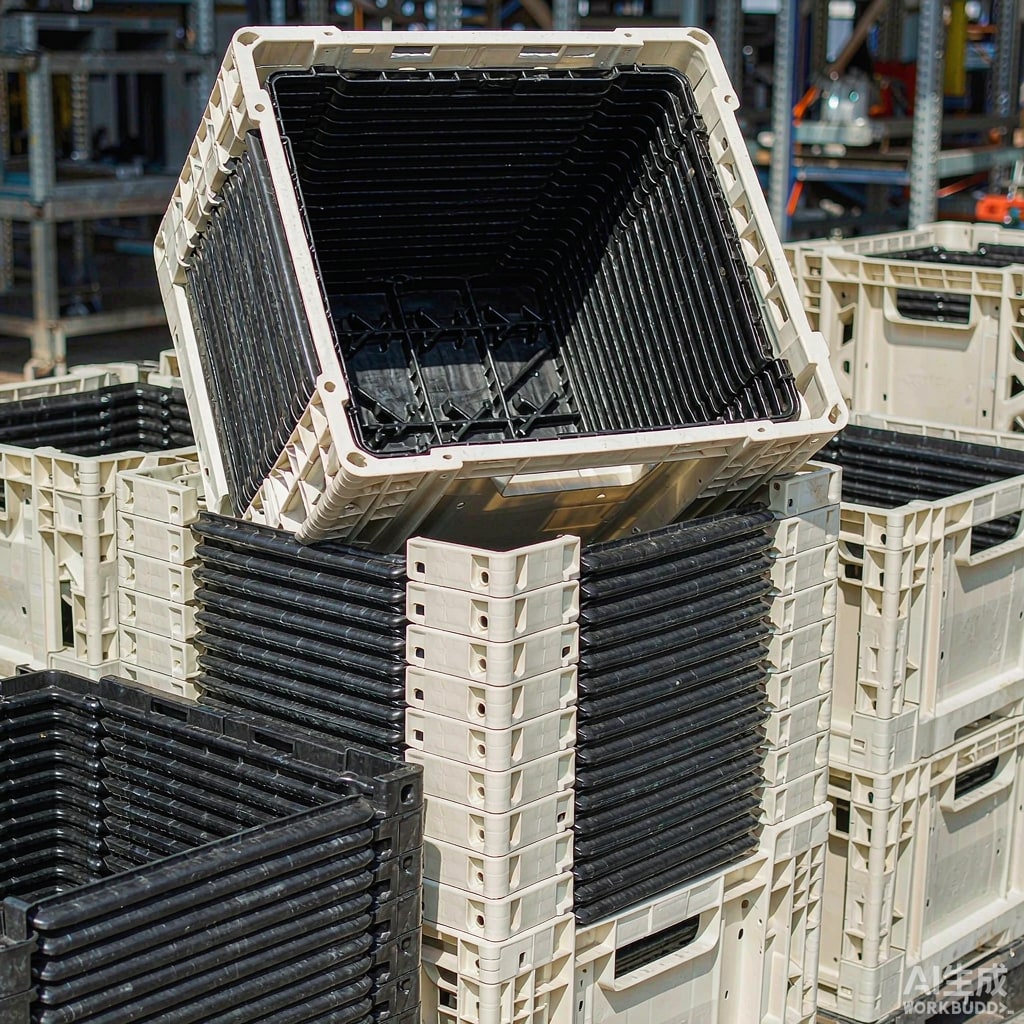
Walk through any electronics factory in Asia and the packaging moving boards between stations and buildings will mostly be polypropylene: corrugated PP sheets, injected du
age trays, stackable totes with living hinges. Impact copolymer PP earns that dominance through a rare combination of toughness, chemical inertness, low cost, and near-infinite foldability. This guide covers how to select PP copolymer pellets for packaging applications and how to process them.
Homopolymer vs Random vs Impact Copolymer
- Homopolymer PP is stiff and cheap but brittle below about 5 °C and poorly suited to drop-prone packaging.
- Random copolymer PP (with 2–5 percent ethylene) offers clarity and a lower melting point — good for consumer packaging, not for du
age.
- Impact copolymer PP (7–15 percent ethylene in a dispersed rubber phase) is the packaging workhorse: notched impact strength two to five times homopolymer, usable from −20 °C, while retaining 90 percent of the stiffness.
For electronics packaging — trays that get dropped, boxes stacked in non-climate-controlled warehouses — specify impact copolymer unless you have a specific reason not to.
Melt Flow Rate Selection
| Application | MFR (230 °C/2.16 kg) | Notes |
|---|---|---|
| Corrugated sheet extrusion | 2–6 | High melt strength for stable sheet |
| Thermoformed du
age trays |
4–10 | Deep draws need higher flow |
| Injection-molded totes and boxes | 8–25 | Thin-wall stacking boxes: 20–40 |
| Living-hinge closures | 10–20 | Molecular orientation matters more than MFR |
Higher MFR eases filling but reduces impact strength — the rubber phase particles get smaller and less effective at very high flows. For thin-wall stackable boxes, choose a dedicated high-flow impact copolymer rather than pushing a mid-flow grade harder.
ESD and Conductive Grades
SMT boards require static-safe packaging per ANSI/ESD S20.20 and IEC 61340-5-1. Three PP routes exist:
- Surface-treated dissipative PP (10⁹–10¹¹ Ω): topical antistats migrate to the surface and work by attracting humidity — they fade in dry climates and after washing.
- Carbon-filled conductive PP (10³–10⁶ Ω): permanent, but black and slightly more brittle; the standard for corrugated PP board and molded trays for PCBs.
- Permanent intrinsic-dissipative copolymers (10⁸–10¹⁰ Ω, non-black): block copolymers with a permanent antistatic phase — premium option when color or transparency matters.
Key decision: if packaging must last through dozens of washing cycles (common in cleanroom returnable logistics), migrate away from topical antistats to carbon-filled or permanent-dissipative grades. Topical treatments can shed particles, which is itself a contamination concern for Class 1000 environments.
The Living Hinge Advantage
PP’s fatigue resistance is unique among commodity plastics: a properly designed and molded PP hinge survives 100,000+ flex cycles. Design rules:
- Hinge thickness 0.25–0.5 mm for boxes up to 300 mm wide.
- Hinge must be molded with flow across it, never against it — gate placement determines hinge life more than resin choice.
- Flex the hinge several times immediately after molding (or within 24 hours) to strain-orient the polymer and extend life.
Low-Temperature and UV Limits
Impact copolymer PP is fine to −20 °C, but air-freight packaging hitting −40 °C holds will crack. For cold-chain electronics logistics, specify a special low-temperature impact grade (ethylene content above 12 percent) or switch to ABS or HDPE. UV is the other enemy: PP degrades rapidly outdoors. Any packaging stored on docks or used in outdoor events needs 1–2 percent carbon black or a HALS package.
Processing Notes
- Drying: PP is non-hygroscopic; a hopper at 80 °C for 1–2 hours to remove surface condensation is sufficient.
- Melt temperature: 200–240 °C for injection; 190–230 °C for sheet extrusion. Overheating above 260 °C degrades the rubber phase and embrittles parts.
- Mold temperature: 20–40 °C for totes; raise to 50–60 °C for cosmetic surfaces.
- Shrinkage: 1.2–1.8 percent, higher in flow direction; account for it in stacking tolerances.
- Recycled content: post-industrial regrind up to 25 percent is standard and invisible in non-cosmetic packaging; keep regrind out of ESD-critical layers unless conductivity is re-verified.
Conclusion
Impact copolymer PP hits the packaging sweet spot: tough at warehouse temperatures, cheap at volume, endlessly foldable, and available in static-safe grades that satisfy SMT handling standards. Choose the MFR for your process, the ESD mechanism for your wash-and-reuse cycle, and pay attention to hinge gating and UV exposure — the two failure modes that most often shorten packaging life in real factories.



