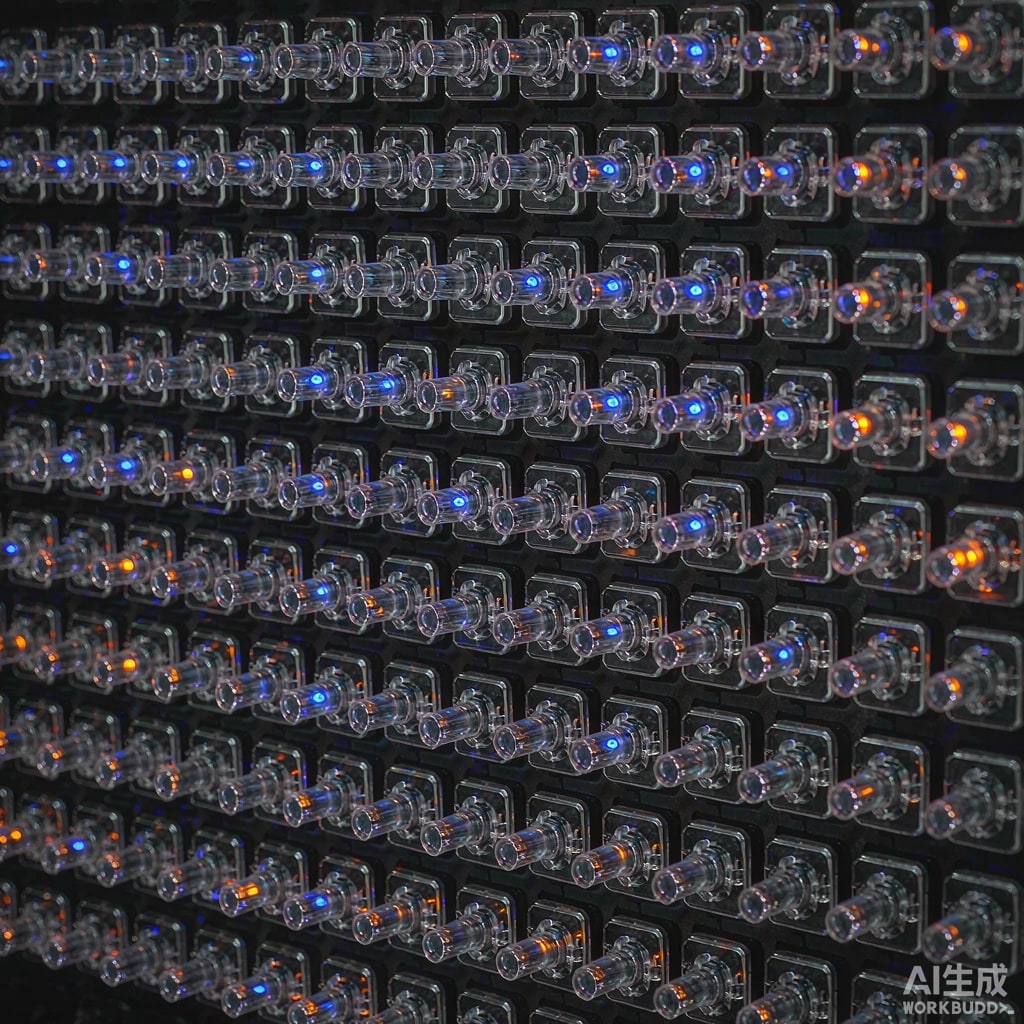
LED light pipes and indicator lenses sit at the intersection of optics and thermal stress: they must transmit light efficiently, hold precise optical geometry, and survive the 80–110°C environment that LED junction heat and reflow-adjacent processes create. Polycarbonate (PC) and polymethyl methacrylate (PMMA) each cover part of that envelope; PC/PMMA alloys and co-extruded blends cover more of it. For buyers sourcing optical-grade plastic pellets, understanding what the blend actually buys you matters.
The Baseline Materials
PMMA: The Optical Benchmark
Cast and optical-grade PMMA delivers total luminous transmittance of 92–93% with haze below 1%, a refractive index of 1.49, and famously low birefringence — which keeps polarization-clean light paths and crisp edges. Its weaknesses: heat deflection temperature around 85–100°C (HDT at 1.8 MPa in the 90–100°C range for standard grades), brittleness in thin sections, and modest scratch resistance despite surface hardness better than PC.
PC: The Toughness and Heat Champion
Optical-grade PC transmits 88–90% with haze 1–2%, refractive index 1.585, and HDT from 125–135°C (modified optical grades somewhat lower). It tolerates 120–130°C continuous service and survives impact that would shatter PMMA. Its costs: higher birefringence (visible as stress rings around gates and LEDs), yellowing under UV without stabilization, and slightly lower intrinsic transmittance.
What the PC/PMMA Blend Buys
PC/PMMA alloys (typically 50/50 to 70/30 PC-rich for optical grades) position between the parents: transmittance 89–91%, HDT typically 105–125°C, dramatically improved flow for thin light pipes, reduced birefringence versus pure PC, and better UV color stability than unmodified PC because the PMMA phase and appropriate stabilizers suppress yellowing. A common commercial form is co-extruded PC/PMMA sheet and pellet compounds for injection-molded lenses, where a PMMA-rich skin provides scratch and weather resistance over a PC core providing toughness. For light pipes molded from pellets, ask suppliers whether the grade is a true compatibilized alloy (single Tg between the parents) or a physical blend (two Tgs, domain morphology) — the former gives more predictable optical uniformity, the latter can haze if morphology is shear-mangled during molding.
Choosing by Application
Use PMMA When
- Operating temperature stays below ~70°C continuous, e.g., front-panel indicators on room-temperature appliances.
- Maximum light extraction matters more than impact: edge-lit panels, diffuser covers.
- Surface gloss and scratch appearance are customer-facing priorities.
Use PC When
- The light pipe sits near a power LED: junction temperatures push the lens above 100°C, and PMMA will warp or craze.
- Reflow-adjacent assembly or brief excursions to 125°C+ occur (select reflow-capable optical PC grades explicitly).
- Impact or vandalism resistance matters — outdoor equipment, industrial panels.
Use PC/PMMA Alloy When
- You need 90–110°C capability with better flow than PC and less birefringence — automotive cluster indicators, smart-meter displays, appliance status windows.
- A scratch-resistant weatherable surface over a tough core is required (skin-core grades).
- Thin-wall light pipes (<1 mm) need filling without extreme injection pressures that stress-birefringe pure PC.
Molding Guidelines That Protect Optics
Drying
Both PC and PC/PMMA absorb enough moisture to cause splay and silver streaks that destroy optical clarity: dry PC at 110–120°C for 3–4 h, PC/PMMA at 100–110°C for 3–4 h, targeting residual moisture below 0.02%. PMMA-rich compounds dry at 80–90°C. Do not exceed PMMA drying temperatures — sticking pellets ruin the dryer.
Temperature and Injection
Melt temperatures: PMMA 220–250°C, PC 280–320°C, PC/PMMA alloys typically 250–290°C (follow the supplier’s window — molding an alloy at PC temperatures degrades the PMMA phase and yellows the part). Mold temperatures: 50–70°C for PMMA, 80–110°C for PC and alloys; higher mold temperature reduces residual stress and birefringence around the LED light entry. Use slow fill speeds for optical surfaces, generous gate and ru
er sections to avoid shear-induced streaks, and locate gates so weld lines never cross the critical viewing or light-path region. Amorphous shrinkage is low (0.4–0.7%), which helps hold lens radius tolerances.
Post-Mold Handling
A
ealing PC optics at 110–120°C for 1–2 h reduces birefringence for polarized-light applications. Add UV stabilizer packages (benzotriazole or triazine absorbers) for any outdoor or sunlight-exposed indicator — unstabilized PC yellowing is measurable within months.
Spec Sheet Checklist for Buyers
- Total luminous transmittance (ASTM D1003) and haze — insist on measured, not nominal, values at 3 mm thickness.
- HDT at 1.8 MPa and continuous service temperature with UV package noted.
- Alloy type: compatibilized single-Tg vs blend, and whether optical grades are supplied in sealed moisture-barrier packaging.
- Lot-to-lot color consistency (ΔE target) and yellow index, since indicator lenses sit next to each other on panels.
- Food/UL/RoHS certifications where panels are consumer-facing.
With the right grade and disciplined molding, PC/PMMA optical compounds deliver near-PMMA clarity with far better heat margin — a practical middle path for the majority of indicator and light-pipe designs.



