Introduction: Co
ector Housing Materials for Lead-Free Reflow
The transition to lead-free soldering (SAC305/405 alloys) requires SMT electronic components to survive peak reflow temperatures of 255-265°C. Co
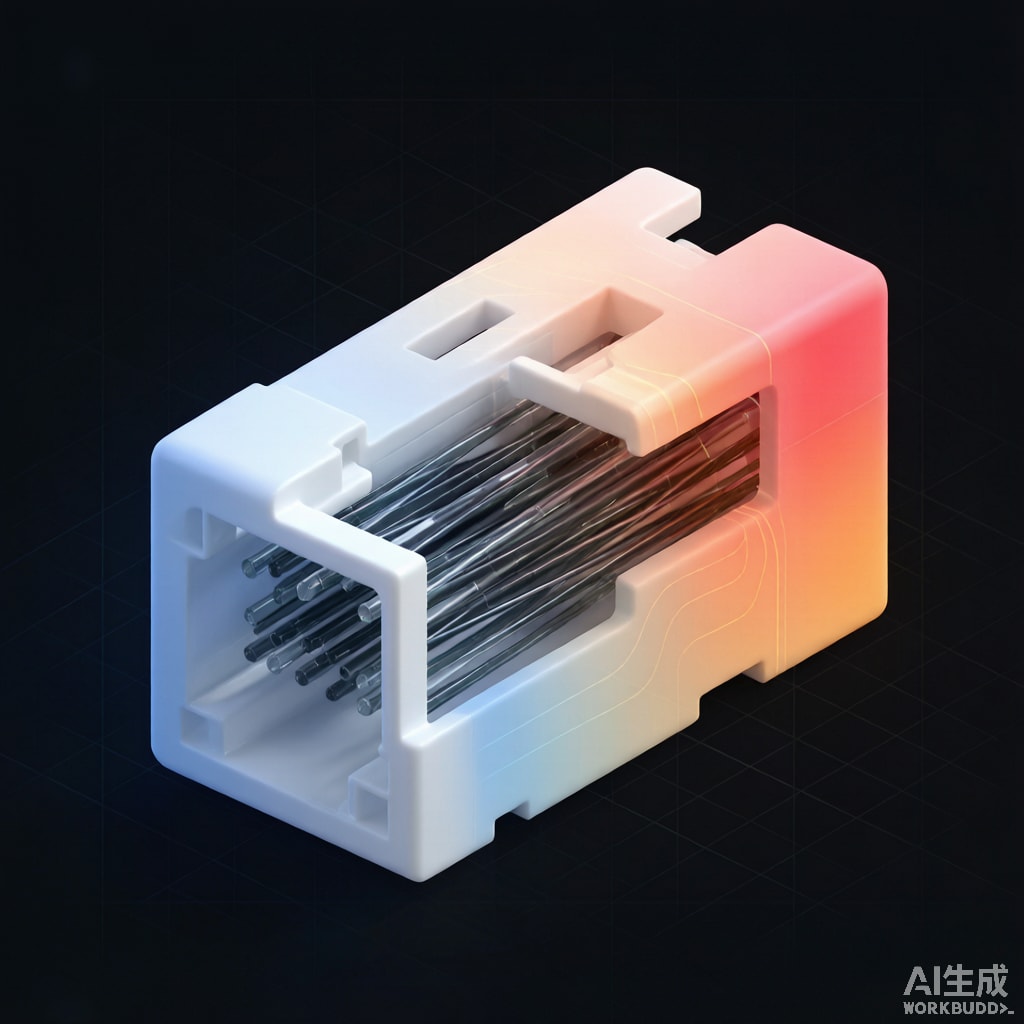
ector housings, which protect delicate contact terminals and maintain dimensional alignment during pick-and-place and reflow, demand engineering plastics with exceptional thermal stability. Glass-filled polybutylene terephthalate (PBT-GF30) has emerged as a cost-effective solution, combining high heat deflection temperature, low moisture absorption, excellent electrical insulation, and flame retardancy. This article provides a comprehensive engineering analysis of PBT-GF30 for SMT co
ector housing applications.
PBT-GF30 Material Properties
Thermal Properties
The addition of 30% short glass fiber reinforcement to PBT resin significantly enhances its thermal performance, making it suitable for lead-free reflow profiles:
| Property | Unfilled PBT | PBT-GF30 | Test Standard |
|---|---|---|---|
| Heat Deflection Temperature (1.82 MPa) | 55-60°C | 205-215°C | ISO 75 |
| Glass Transition Temperature | 22-25°C | 22-25°C | DSC |
| Melting Temperature | 220-225°C | 220-225°C | DSC |
| Thermal Expansion (CLTE) | 130-170 µm/m·K | 20-30 µm/m·K | ISO 11359 |
| Thermal Conductivity | 0.21 W/m·K | 0.25-0.30 W/m·K | ASTM E1530 |
Although PBT’s glass transition temperature is relatively low (22-25°C), the 30% glass fiber reinforcement raises the HDT to 205-215°C through mechanical constraint of the polymer matrix. This is sufficient to survive the preheat and soak zones of a standard Pb-free reflow profile (150-200°C for 60-120 seconds), though the material enters the rubbery state during the peak zone (255-265°C) above its 220-225°C crystalline melting point.
Mechanical Properties
- Tensile strength: 140-160 MPa (vs 50-60 MPa unfilled)
- Flexural strength: 200-230 MPa
- Flexural modulus: 9,000-11,000 MPa
- Izod notched impact: 8-12 kJ/m²
- Tensile elongation at break: 2.5-3.5%
The high flexural modulus (9-11 GPa) is particularly important for co
ector housings, as it prevents warpage during SMT reflow that could cause misalignment between the co
ector body and the PCB pad pattern. Glass fiber orientation during injection molding creates anisotropic properties; designers must account for flow-direction vs cross-flow modulus differences of 15-30%.
Moisture and Chemical Resistance
PBT is a semi-crystalline polyester with inherently low moisture absorption compared to polyamides:
- Water absorption (24hr, 23°C): 0.07-0.09% (vs PA66 2.5-3.0%)
- Water absorption (saturation, 23°C): 0.40-0.50%
- Boiling water (24hr): 0.30-0.40%
This low moisture absorption eliminates the need for pre-drying before SMT reflow, a significant advantage over PA66 and PA46 which require 125°C baking for 4-8 hours to prevent popcorning during reflow. PBT-GF30 also exhibits excellent resistance to cleaning solvents (isopropyl alcohol, terpenes), flux residues, and automotive fluids, making it suitable for both consumer and automotive co
ector applications.
Comparison with Alternative Co
ector Housing Materials
| Property | PBT-GF30 | PA66-GF30 | PCT-GF30 | LCP-GF30 |
|---|---|---|---|---|
| HDT (1.82 MPa) | 205-215°C | 240-250°C | 260-270°C | 280-300°C |
| Moisture Absorption (%) | 0.07 | 2.5 | 0.06 | 0.03 |
| Pre-drying Required | No | Yes | No | No |
| UL94 Rating | V-0 (0.4mm) | V-0 (0.4mm) | V-0 (0.4mm) | V-0 (0.3mm) |
| CTI (V) | 400-500 | 500-600 | 500-600 | 200-250 |
| Cost ($/kg) | 3.5-5.0 | 3.0-4.5 | 7.0-10.0 | 12.0-20.0 |
PBT-GF30 occupies a sweet spot in the cost-performance matrix. While PA66-GF30 offers higher HDT, its moisture absorption requires careful drying management and risks dimensional changes in humid tropical environments. PCT-GF30 and LCP-GF30 provide superior thermal performance but at 2-4x the cost, making them justifiable only for high-temperature automotive (150°C continuous) or high-density (0.3mm pitch) applications where PBT’s thermal margin is insufficient.
Injection Molding Process for SMT Co
ector Housings
Drying and Processing
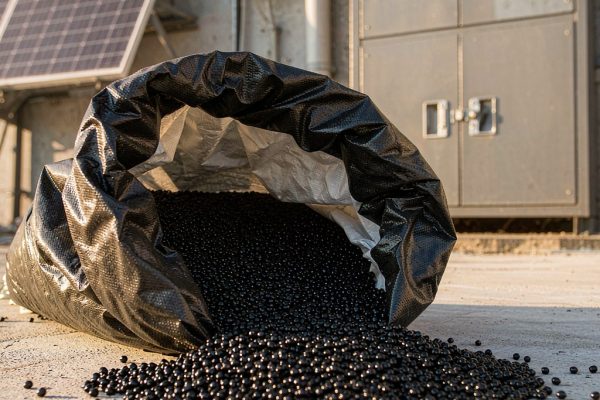
Although PBT absorbs minimal moisture, the resin pellets may contain surface moisture from storage. A brief drying step at 120°C for 2-4 hours (or 100°C for 3-5 hours for pre-colored grades) ensures optimal surface finish and prevents silver streaks. The melt temperature range for PBT-GF30 is 250-275°C, with mold temperatures of 80-100°C for optimal crystallinity and dimensional stability.
Shrinkage and Warpage Control
PBT-GF30 exhibits shrinkage of 0.3-0.8% in the flow direction and 0.8-1.5% in the cross-flow direction. This anisotropy, caused by glass fiber alignment during filling, requires careful gate placement and wall thickness uniformity to avoid warpage. For co
ector housings with thin walls (0.4-0.8mm), mold flow analysis (Moldex3D or Moldflow) is essential to predict fiber orientation and optimize gate locations.
Key warpage mitigation strategies include:
- Uniform wall thickness (variation < 15%)
- Symmetric rib placement to balance shrinkage forces
- Gate positioning at the thickest section to maintain packing pressure
- Mold temperature control within ±3°C across the cavity
- Packing pressure at 70-85% of injection pressure for 4-8 seconds
Reflow Soldering Compatibility
During lead-free SMT reflow, the co
ector housing experiences peak temperatures of 255-265°C for 30-90 seconds (time above liquidus). PBT-GF30, with its crystalline melting point of 220-225°C, fully enters the molten state during this zone. However, the glass fiber reinforcement provides sufficient structural rigidity to prevent collapse or deformation, provided the following design guidelines are observed:
- Wall thickness ≥ 0.5mm: Thi
er walls risk dimensional distortion above Tm
- SMT tab support: Co
ector body must be supported by PCB pads or solder tabs during reflow
- Tape-and-reel compatibility: Embossed tape pocket must resist deformation during 260°C reflow (use high-temperature PS or PET carrier tape)
- Color stability: Light-colored grades may yellow after 3 reflow passes; dark pigmented grades preferred
Flame Retardant Systems and UL94 V-0
For SMT co
ector housings, UL94 V-0 flammability at 0.4mm thickness is typically required. PBT-GF30 achieves this through halogenated or halogen-free flame retardant systems:
Brominated Systems (Traditional)
Brominated polystyrene (BrPS) or decabromodiphenyl ethane (DBDPE) with antimony trioxide (Sb2O3) synergist at 10-15% total loading. These systems are cost-effective ($3.5-4.5/kg) but face RoHS exemption scrutiny and customer preference shifts toward halogen-free materials.
Halogen-Free Systems (Growing)
Aluminum diethylphosphinate (DEPAL, brand Exolit OP 1240) at 12-18% loading provides halogen-free V-0 at 0.4mm. While costing 40-60% more than brominated systems, halogen-free PBT-GF30 meets IEC 61249-2-21 (<900ppm halogen) and is increasingly specified by OEMs for environmental compliance.
Conclusion
PBT-GF30 is the workhorse material for SMT co
ector housings subjected to lead-free reflow profiles. Its combination of 210°C HDT, 0.07% moisture absorption, UL94 V-0 flammability, and moderate cost ($3.5-5.0/kg) makes it the optimal choice for the majority of consumer and industrial co
ector applications. For extreme high-temperature automotive co
ectors (continuous 150°C operation) or ultra-thin-wall housings (below 0.4mm), PCT-GF30 or LCP-GF30 may be required despite their higher cost. Successful implementation depends on proper injection molding process control (drying, melt/mold temperature, packing pressure) and adherence to SMT design guidelines that accommodate the material’s behavior above its crystalline melting point during reflow. With the industry trend toward halogen-free materials, engineers should evaluate both brominated and phosphinate-based PBT-GF30 grades against their specific flammability, environmental, and cost requirements.