The Workhorse of SMT Plastic Components
While high-end thermoplastics like PEEK, PPS, and LCP grab headlines for extreme environments, the majority of SMT insulators, bobbins, and co
ector housings are made from a more humble material: polyamide 66 with 30% glass fiber reinforcement, commonly known as PA66 GF30. This glass-filled nylon combines mechanical strength, thermal endurance, and cost-effectiveness in a way few other engineering plastics can match.
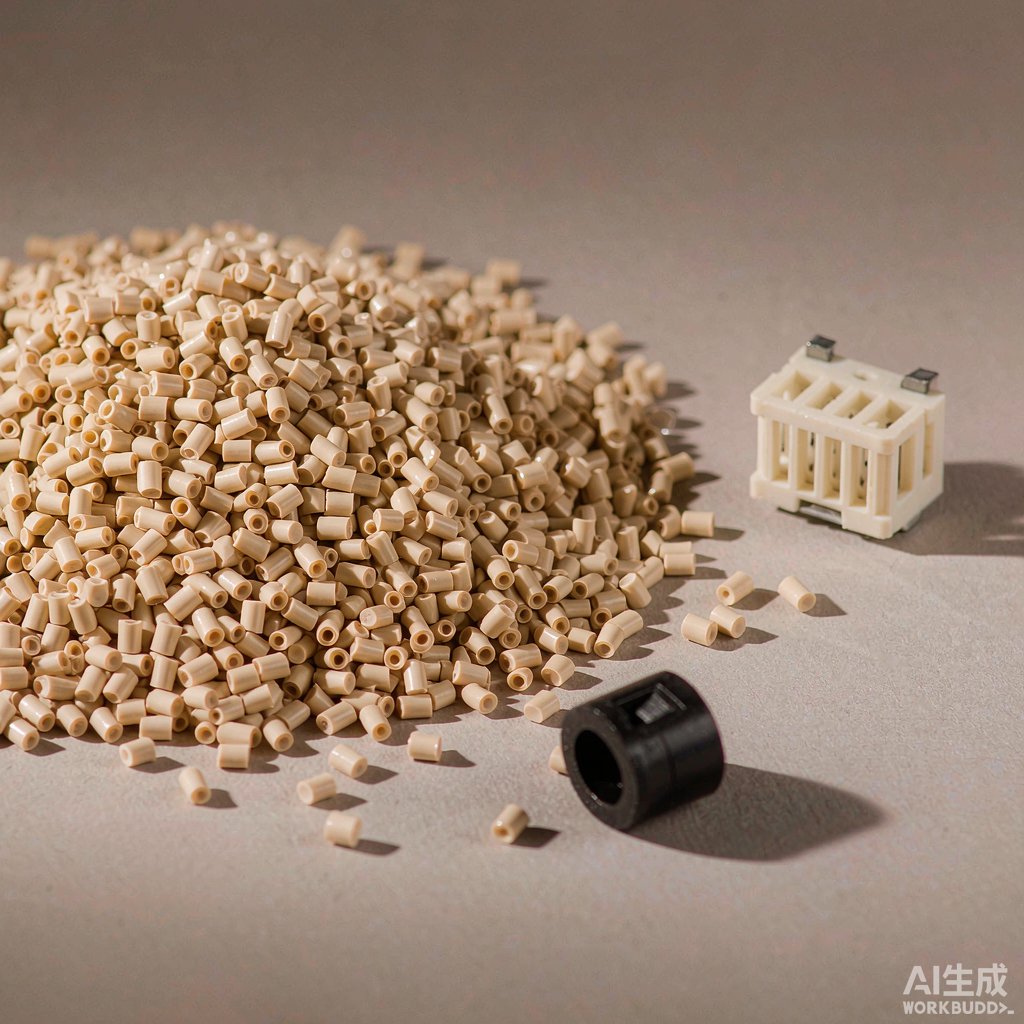
PA66 GF30 pellets feed easily into injection-molding machines, flow through thin walls, and produce dimensionally stable parts at high yields. For surface-mount bobbins, coil formers, relay housings, and co
ector insulators, PA66 GF30 is often the first material engineers evaluate.
Why PA66 GF30 for SMT Applications
Mechanical Strength and Stiffness
Adding 30% glass fiber to PA66 raises tensile strength from about 80 MPa for neat PA66 to over 170 MPa. Flexural modulus jumps from 3 GPa to 9 to 10 GPa, giving the molded parts the rigidity needed to hold tight tolerances during reflow soldering and field use. For SMT bobbins carrying wound wire, this stiffness keeps the magnetic geometry stable under thermal cycling.
Thermal Performance
PA66 GF30 offers a continuous use temperature near 150 degrees Celsius with a heat deflection temperature above 240 degrees Celsius at 1.8 MPa. This allows molded parts to survive lead-free reflow profiles peaking at 245 to 260 degrees Celsius. For wave soldering on through-hole sections, the material’s short-term thermal capacity is more than adequate.
Electrical Insulation
With a dielectric strength of 20 to 25 kV/mm and a comparative tracking index (CTI) of 600 V, PA66 GF30 provides reliable insulation between current-carrying conductors in bobbins and co
ector bodies. Tracking resistance is acceptable for most consumer and industrial applications but should be checked for high-voltage automotive and solar products.
Key Processing Considerations
Moisture Sensitivity
PA66 is hygroscopic and absorbs up to 2.5% water at room conditions. Moisture causes hydrolysis during molding, producing silver streaks, brittleness, and poor surface finish. Always dry PA66 GF30 pellets at 80 to 100 degrees Celsius for 4 to 8 hours before injection molding. Keep dried pellets in a sealed hopper with desiccant and process them within an hour to avoid moisture regain.
Melt Temperature and Mold Design
Recommended melt temperature is 280 to 300 degrees Celsius with a mold temperature of 80 to 100 degrees Celsius. Glass-fiber-filled materials are abrasive; use hardened tool steel or bimetallic barrels and screws to extend equipment life. Gate design should minimize weld lines near functional features like pin holes and mounting posts.
Shrinkage and Warpage
Glass fiber orientation causes anisotropic shrinkage, typically 0.3 to 0.5% in the flow direction and 0.7 to 1.0% across the flow. For high-precision SMT parts, design symmetric walls and use balanced gates. Critical dimensions on bobbins, such as i
er diameter and pin spacing, may need post-mold machining or insert molding for the tightest tolerances.
Flame Retardancy and Regulatory Compliance
UL94 V-0 Grades
Most SMT applications require UL94 V-0 flammability rating. PA66 GF30 is available with halogen-free flame retardant packages based on red phosphorus or nitrogen-phosphorus chemistry. These grades maintain mechanical performance while passing the 960 degree Celsius glow-wire ignition test demanded by IEC 60335-1 for household appliances.
RoHS, REACH, and Eco Labels
Specify halogen-free, red-phosphorus-free grades for products sold in regions with strict chemical regulations. Avoid brominated flame retardants in consumer electronics. Many automotive suppliers require IMDS (International Material Data System) registration for PA66 GF30 grades.
Application Snapshots
SMT Bobbins and Coil Formers
PA66 GF30 is the standard material for SMT-compatible transformer bobbins, inductor formers, and choke coils. Its stiffness holds the wire winding geometry, while its thermal endurance survives vapor-phase and infrared soldering. For high-frequency power magnetics, lower-loss grades with mineral fillers can reduce core losses.
Relay and Contactor Housings
Automotive relays, HVAC contactors, and industrial control relays use PA66 GF30 for their housings and yokes. The material’s creep resistance maintains spring force on internal contacts over years of thermal cycling.
Co
ector Insulators
Headers, sockets, and terminal block insulators often use PA66 GF30 when LCP or PPA would be over-engineered. The molded bodies hold plated copper alloy pins in precise locations through thousands of mating cycles.
Design Tips for PA66 GF30 SMT Parts
Keep wall thickness between 0.8 and 3 mm to balance flow, cycle time, and mechanical strength. Avoid thick sections above 4 mm because internal voids and sink marks become likely. Use generous draft angles of 1 to 1.5 degrees to ease ejection, and specify surface texture in non-functional areas to hide minor weld lines. For SMT-compatible parts, design pick-and-place features into the mold for automated assembly.
PA66 GF30 may not be the most exotic material, but its balance of cost, strength, thermal endurance, and processability keeps it at the center of SMT plastic part design. Specifying the right grade and processing it correctly produces millions of reliable components that quietly underpin modern electronics.