Nylon is one of the most useful engineering plastics – and one of the least forgiving at the molding machine. PA6, PA66, and their glass-filled cousins absorb moisture from the air rapidly, and processing wet pellets causes hydrolysis, splay, brittle parts, and scrap. Drying nylon properly is the cheapest quality investment a molder can make. This guide covers target moisture levels, the chemistry of hydrolysis, dryer selection, and the handling habits that keep dried pellets dry.
Why Moisture Ruins Nylon Processing
Hydrolysis and Molecular Weight Loss
Nylon’s amide bonds react with water at melt temperatures. In the barrel, moisture cleaves polymer chains – hydrolysis – cutting molecular weight and with it toughness, elongation, and fatigue life. The damage is chemical and permanent: no amount of later a
ealing restores lost chain length. A batch dried carelessly can mold shiny parts that pass visual inspection yet fail impact or flex-fatigue testing weeks later. Viscosity loss is measurable on a capillary rheometer, but the practical symptom is flash where there was none before and parts that break with a glassy, brittle fracture instead of a ductile one.
Splay, Bubbles, and Weld-Line Defects
In the mold, moisture flashes to steam. The visible results are splay – silvery streaks radiating from gates – and small bubbles in thick sections. Steam also disrupts flow fronts, creating weak weld lines where two melt fronts fail to knit. These defects usually appear before hydrolysis does serious mechanical damage, so treat any splay on nylon as an immediate drying alarm rather than a cosmetic issue to polish away.
Moisture Limits by Application
General-purpose nylon molding tolerates roughly 0.1 to 0.2 percent moisture. Precision and high-impact applications, glass-filled structural parts, and anything load-bearing should be dried to 0.05 percent or below; semiconductor and electrical grades often specify 0.02 percent. Glass-filled grades deserve extra care because fibers amplify anisotropy – wet processing shrinks the matrix differently around fibers and the parts warp. Measure moisture with a Karl Fischer titrator for accuracy; a loss-on-weighing balance overestimates drying need for nylon because it also reads volatiles, though it remains useful for quick floor checks.
Dryer Types and Selection
Desiccant Dryers
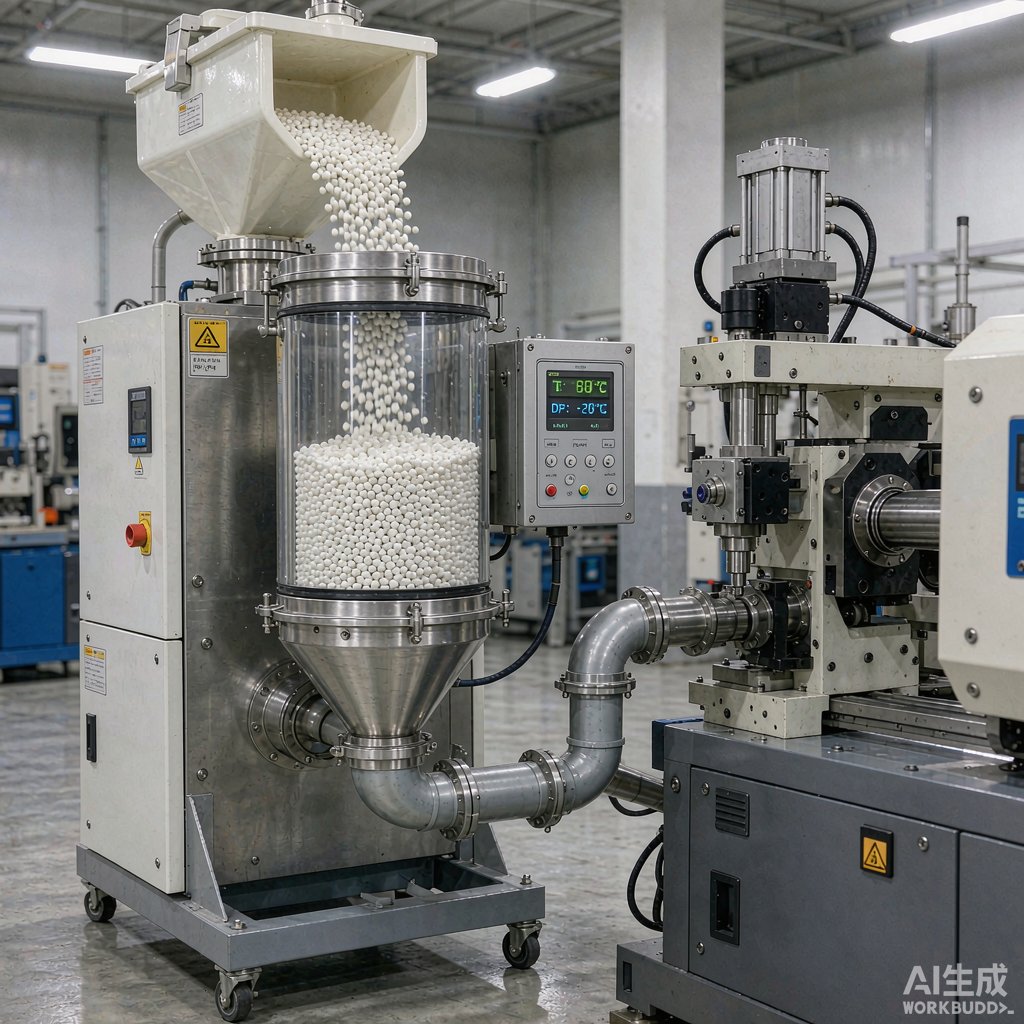
Desiccant dryers push air through molecular-sieve beds, achieving dew points of -40 degrees C and below – the standard for nylon. Size the hopper for at least 4 to 6 hours of residence at the required throughput, and verify the heater can hold 80 to 90 degrees C through the pellet bed. Twin-tower or multi-bed units regenerate offline so drying never pauses. Check desiccant condition a
ually; saturated beds silently raise dew point and are the most common hidden cause of wet nylon.
Compressed-Air and Vacuum Dryers
Membrane compressed-air dryers are compact and simple, reaching dew points near -20 degrees C – adequate for less demanding nylon work but marginal for 0.02 percent targets. Vacuum dryers pull water off directly at lower temperatures, drying faster and using less energy, and they shine for heat-sensitive colors and regrind blends. For high-volume nylon, a central desiccant system feeding multiple hoppers with dew-point monitoring at each hopper gives the best cost per kilogram dried.
Drying Parameters That Matter
Typical unfilled PA6 dries in 3 to 4 hours at 80 degrees C; PA66 and glass-filled grades take 4 to 6 hours at 80 to 90 degrees C. Dew point matters more than temperature – a hot, humid dryer does nothing – so monitor dew point at the hopper inlet, not just at the machine. Do not exceed about 100 degrees C for long periods: nylon oxidizes and yellows in hot air, and pellets can agglomerate. Dried pellets left in the hopper over a weekend re-absorb moisture; either blanket the hopper with dry air or re-dry before use.
Handling Practice After Drying
Drying is undone by exposure. Limit open-air transfer, use sealed or dry-air-purged conveying between dryer and machine, and keep hopper lids closed. Regrind is a moisture trap: it absorbs faster than virgin pellets because of its larger surface area, so dry regrind with the virgin blend and verify with a floor moisture check. Train operators to treat a moisture meter reading like a temperature reading – a process parameter, not a suggestion.
Conclusion
Nylon forgives almost everything except moisture. Know the target – 0.1 percent for commodity parts, 0.02 percent for demanding ones – choose a dryer that genuinely reaches the dew point you need, respect residence times, and protect dried pellets from the air. Consistent drying turns nylon’s strength and toughness from a datasheet promise into a daily reality.