Marine, coastal, and tropical electronics enclosures for satellite communications, radar, shipboard controls, offshore oil platforms, and port automation must maintain electromagnetic interference (EMI) shielding effectiveness while resisting salt fog, high humidity, ultraviolet radiation, and biofouling. Nickel-graphite filled conductive elastomer gaskets have emerged as a preferred sealing solution because they combine broadband EMI shielding, environmental sealing, and corrosion resistance at a lower cost than silver-aluminum or silver-copper filled elastomers. This article examines the material composition of nickel-graphite conductive elastomers, their shielding effectiveness across frequency bands, corrosion mechanisms in marine environments, accelerated test methods, and design practices for long-term reliable enclosure sealing.
Nickel-Graphite Conductive Elastomer Composition
filler Morphology and Loading
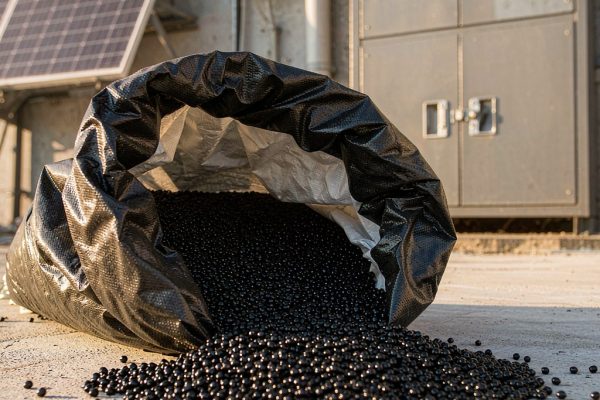
Nickel-graphite fillers are composite particles consisting of a graphite core coated with a thin, continuous layer of nickel metal. The graphite core provides electrical conductivity and reduces filler density compared to solid metal particles, while the nickel coating protects the graphite from oxidation and contributes magnetic permeability that improves low-frequency shielding. Typical silicone elastomer compounds contain 55-75% by volume nickel-graphite filler to achieve sheet resistance below 0.1 Ω/sq and volume resistivity below 0.01 Ω·cm. The balance between filler loading and elastomer matrix determines compression set, closure force, and shielding performance.
Material Options and Trade-Offs
| Filler Type | Volume Resistivity (Ω·cm) | Typical Shielding (dB @ 1 GHz) | Relative Cost | Best Use Case |
|---|---|---|---|---|
| Nickel-graphite / silicone | 0.005-0.02 | 80-110 | 1.0× | Marine, coastal, general outdoor |
| Silver-aluminum / silicone | 0.001-0.005 | 100-120 | 3.0-5.0× | Military, aerospace, high SE |
| Silver-copper / silicone | 0.0005-0.003 | 110-130 | 5.0-8.0× | Highest shielding, corrosive if exposed |
| Silver-glass / silicone | 0.005-0.02 | 90-115 | 4.0-6.0× | Chemical processing, galvanic compatibility |
Marine Corrosion Mechanisms
Salt Fog and Galvanic Interaction
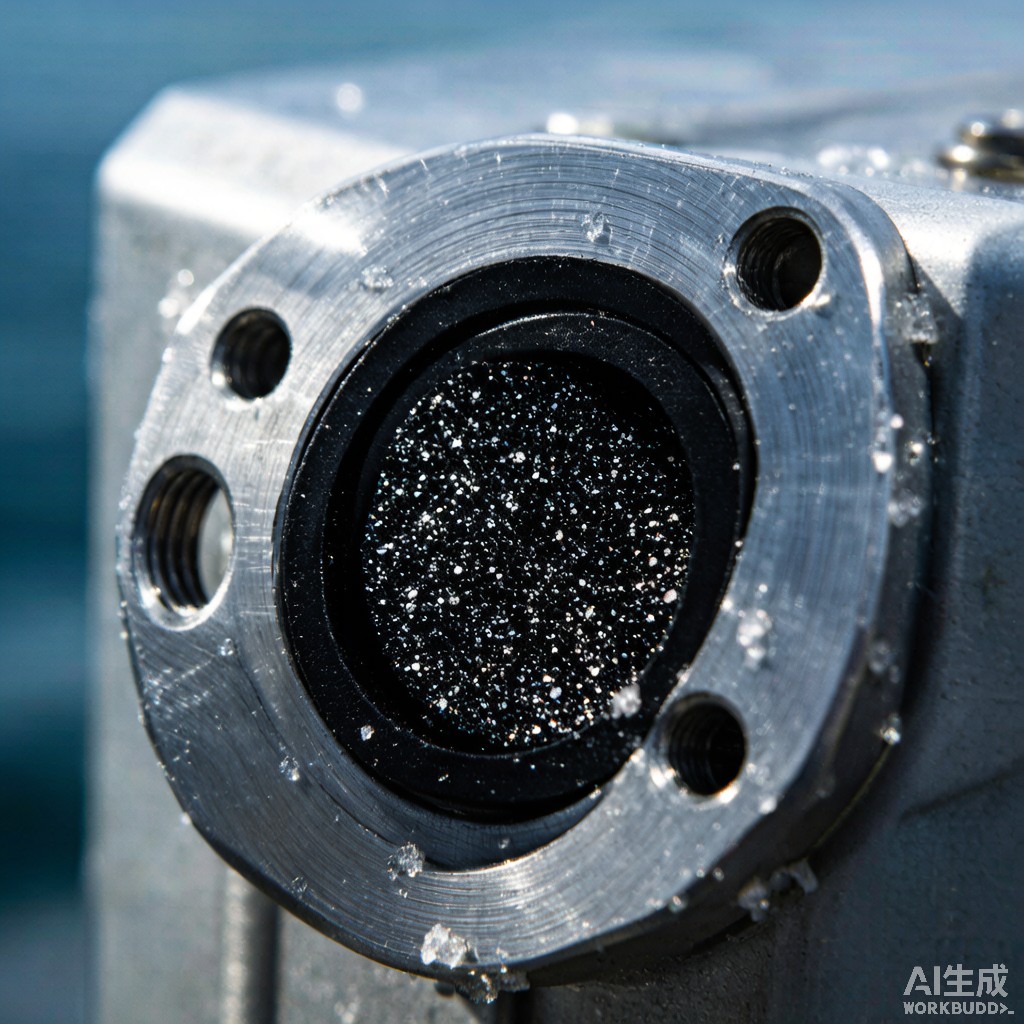
In marine atmospheres, chloride ions penetrate elastomer seals and deposit on conductive gasket surfaces. Nickel forms a passive oxide film that is generally stable in neutral and mildly acidic chloride environments, giving it better corrosion resistance than silver-copper fillers that can form non-conductive copper oxide or silver sulfide. However, if the nickel coating is discontinuous or damaged during cutting or compression, the underlying graphite can be exposed and promote localized galvanic cells between the gasket and the aluminum enclosure flange. This can lead to pitting of the enclosure metal and increased contact resistance across the seam.
Hydrogen Sulfide and Industrial Pollution
Port facilities, oil refineries, and wastewater treatment plants often contain hydrogen sulfide (H₂S) and sulfur dioxide (SO₂). Silver-based fillers suffer rapid sulfidation, forming insulating silver sulfide that degrades shielding by 10-30 dB within months. Nickel-graphite gaskets show much slower sulfidation kinetics and maintain stable shielding effectiveness for years in moderate H₂S environments. For severe sour-gas exposure, fluorosilicone or EPDM matrix materials may be combined with nickel-graphite filler to improve chemical resistance.
EMI Shielding and Environmental Sealing
Shielding Effectiveness by Frequency
Nickel-graphite gaskets provide broadband attenuation from 30 MHz to 18 GHz, with magnetic-field shielding enhanced by nickel’s relative permeability of 50-100 at low frequencies. Typical measured shielding effectiveness for a properly compressed gasket in a flange seam is 80-100 dB at 1 GHz and 60-80 dB at 10 GHz. At millimeter-wave frequencies above 18 GHz, surface roughness, groove tolerances, and number of contact points become increasingly important; precision-molded or extruded profiles with fine surface finish outperform hand-cut strips.
Compression-Deflection and Gasket Groove Design
Achieving both EMI shielding and IP65/IP67 environmental sealing requires controlling compression percentage. Silicone nickel-graphite gaskets are typically compressed 15-30% of their original height. Groove design guidelines include 0.2-0.4 mm width tolerance, 20-35% compression target, and avoidance of over-compression that causes permanent set. For marine enclosures, a double-seal geometry with an i
er EMI gasket and outer weather seal can provide redundant protection against water ingress.
Testing and Qualification
ASTM B117 and MIL-STD-810
Accelerated corrosion testing per ASTM B117 (salt fog, 5% NaCl, 35°C) and MIL-STD-810 Method 509 are standard for marine electronics. A 500-1,000 hour salt fog exposure followed by shielding effectiveness measurement per IEEE 299 or MIL-DTL-83528 validates long-term performance. Acceptable degradation is typically <10 dB reduction in shielding and no visible corrosion products bridging the gasket-to-flange interface.
UV and Ozone Resistance
Tropical sunlight subjects outdoor enclosures to UV-B and UV-A radiation that degrades standard silicone. Addition of carbon black or UV stabilizers, or selection of fluorosilicone matrix, extends outdoor life from 2-3 years to 10+ years. ASTM G154 and G155 accelerated weathering tests with 2,000-4,000 hours exposure are used to qualify gaskets for tropical rooftop, coastal, and ship-deck installations.
Summary
Nickel-graphite conductive elastomer EMI gaskets offer an excellent balance of shielding effectiveness, environmental sealing, and marine corrosion resistance for electronics enclosures in tropical and coastal applications. Compared to silver-based fillers, they resist sulfidation and chloride attack at significantly lower cost. Proper groove design, compression control, and qualification testing per ASTM B117 and IEEE 299 ensure reliable performance over a 10-20 year service life.