SMT pin headers used in PCB-to-board and PCB-to-cable interco
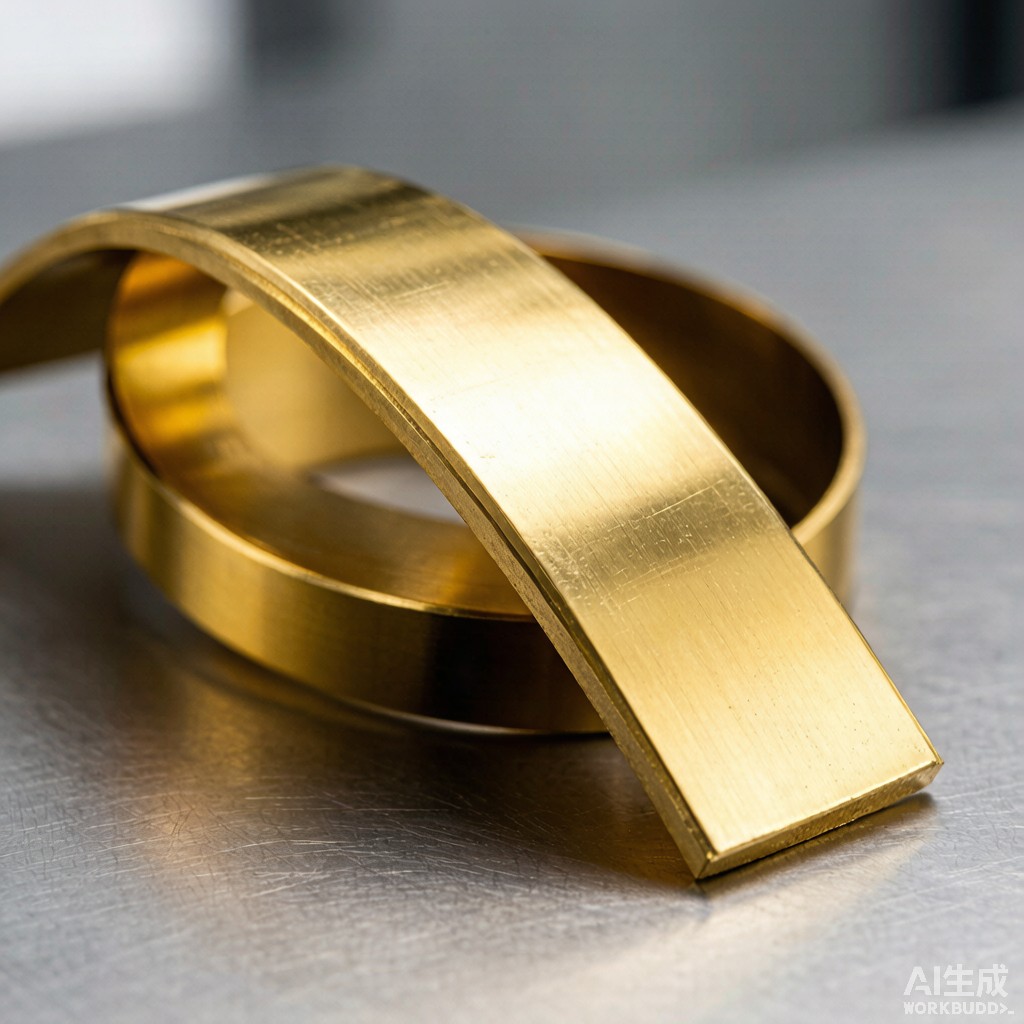
ect applications are traditionally machined from C36000 free-machining brass containing 2.5-3.7% lead to provide the chip-breaking behavior and high cutting speed (300+ m/min) required for cost-effective volume production. The RoHS Directive (2011/65/EU) and its subsequent amendments restrict lead content in homogeneous materials to a maximum of 0.1% (1,000 ppm), creating a compliance gap for legacy C36000 brass in commercial and industrial electronics. C69300 silicon-brass containing 0.5-1.5% silicon, 0.4-1.0% lead (still RoHS compliant when controlled), and 73-77% copper has emerged as a lead-free or low-lead alternative that maintains acceptable machinability while meeting RoHS, ELV, and similar substance regulations. This article examines the engineering comparison between C69300 and C36000 for SMT pin header manufacturing in RoHS-compliant electronics.
Alloy Chemistry Comparison
Composition and RoHS Status
The compositional differences between C36000 and C69300 directly affect machinability, mechanical properties, and regulatory compliance:
| Element | C36000 (Free-Machining Brass) | C69300 (Eco Brass / Silicon Brass) |
|---|---|---|
| Copper (Cu) | 60-63% | 73-77% |
| Zinc (Zn) | 35-37% | 20-25% |
| Lead (Pb) | 2.5-3.7% | 0.4-1.0% (or <0.1% true lead-free) |
| Silicon (Si) | — | 0.5-1.5% |
| Phosphorus (P) | — | 0.04-0.15% |
| Nickel (Ni) | — | 0.2-0.8% (optional) |
| RoHS Status | Non-compliant (>0.1% Pb) | Compliant (Pb < 1,000 ppm typically) |
| Dezincification Resistance (DZR) | Poor | Excellent (DZR rating per ISO 6509) |
The C69300 alloy was developed by Mitsubishi Shindoh (Japan) and Wieland (Germany) specifically to provide lead-free brass for potable water fittings and electrical co
ectors, and has gained adoption in SMT pin header production for medical, automotive, and consumer electronics where RoHS compliance is mandatory.
Machinability Performance
Chip Formation and Tool Life
The machinability rating directly determines tool life, surface finish, and achievable cutting speeds in CNC turning of SMT pin contacts:
| Machining Parameter | C36000 | C69300 |
|---|---|---|
| Machinability Rating (% of C36000 = 100%) | 100% (reference) | 75-85% |
| Chip Shape | Small, curled, free-breaking | Slightly longer, requires chip breaker |
| Cutting Speed (m/min, carbide tool) | 300-400 | 200-280 |
| Tool Life (pieces per edge, 0.4 mm pin) | 50,000-80,000 | 30,000-50,000 |
| Surface Finish Ra (µm) | 0.4-0.8 | 0.6-1.2 |
| Built-Up Edge Tendency | Low (Pb acts as lubricant) | Moderate (requires coated tools) |
The 20-30% reduction in cutting speed and 30-40% reduction in tool life for C69300 directly translates to higher machining cost per part. However, the absence of lead enables higher permissible feed rates in finishing passes and eliminates the lead-contamination risk in cleanroom manufacturing environments (e.g., medical device assembly).
Mechanical and Electrical Properties
Strength and Conductivity
SMT pin header pins require sufficient yield strength for press-fit or compliant-pin termination, plus adequate electrical conductivity for signal integrity:
| Property | C36000 (H02 temper) | C69300 (H02 temper) |
|---|---|---|
| Tensile Strength (MPa) | 400-500 | 450-550 |
| Yield Strength 0.2% (MPa) | 300-400 | 350-450 |
| Elongation (%) | 15-25 | 10-20 |
| Hardness (HV) | 120-150 | 140-180 |
| Electrical Conductivity (% IACS) | 26-28 | 15-20 |
| Thermal Conductivity (W/mK) | 115 | 50-60 |
| Density (g/cm³) | 8.5 | 8.7 |
The 40-50% lower electrical conductivity of C69300 (15-20% IACS) compared to C36000 (26-28% IACS) is a notable disadvantage for high-frequency or high-current pin header applications. For low-power signal pin headers operating below 1 A and below 100 MHz, the conductivity difference is rarely significant. For power pin headers carrying 5-10 A per pin, the contact resistance rise may require larger cross-section pins to compensate.
Corrosion and Reliability
Dezincification and Stress Corrosion
C69300 offers significantly superior corrosion resistance through silicon-stabilized alpha phase that resists dezincification in humid and chloride-containing environments:
- ISO 6509 Dezincification Test: C36000 shows 200-500 µm dezincification depth after 24h exposure; C69300 shows <50 µm depth (often below detection limit).
- Salt Spray ASTM B117: C69300 pin headers typically achieve 500-1,000 hours to first oxide, vs 200-400 hours for C36000.
- Ammonia Vapor Test (ISO 6957): C69300 passes at moderate severity; C36000 frequently fails without stress-relief a
eal.
- Thermal Aging at 150°C: C69300 retains 90%+ tensile strength after 1,000 hours; C36000 retains 75-85%.
For SMT pin headers deployed in tropical Southeast Asian environments at 35-40°C and 80-95% relative humidity, the superior dezincification resistance of C69300 directly extends service life by 2-3x in field applications where C36000 would develop green patina and contact resistance drift within 12-24 months.
Manufacturing Cost Analysis
Total Cost Comparison
While C69300 brass strip raw material costs 15-25% more per kg than C36000, the total manufacturing cost equation must account for tooling, yield, and regulatory compliance:
| Cost Component | C36000 (Index) | C69300 (Index) |
|---|---|---|
| Raw material strip | 1.00 | 1.18 |
| Machining time per pin | 1.00 | 1.30 |
| Tool consumption | 1.00 | 1.45 |
| Plating rejection rate | 1.00 | 0.85 |
| Regulatory documentation | 1.00 | 0.70 |
| Total cost per finished pin | 1.00 | 1.15-1.22 |
The 15-22% total cost premium for C69300 is often justified by RoHS compliance, longer field life, and the ability to sell into EU and North American markets without regulatory exception. For SMT co
ector manufacturers serving medical, automotive, and industrial customers with strict compliance mandates, the C69300 specification has become the default rather than the alternative.
Application Selection Guidelines
Choose C69300 silicon brass for RoHS-required pin headers, medical electronics, automotive underhood co
ectors, and applications in tropical/marine environments where dezincification resistance is critical. C36000 remains acceptable for industrial equipment where RoHS exemption 6c applies (lead as alloying element in copper for machining purposes with <4% Pb), legacy products, and cost-sensitive consumer electronics with shorter design life. The transition from C36000 to C69300 represents a material specification evolution that balances regulatory compliance, manufacturing cost, and long-term reliability in modern SMT pin header production.