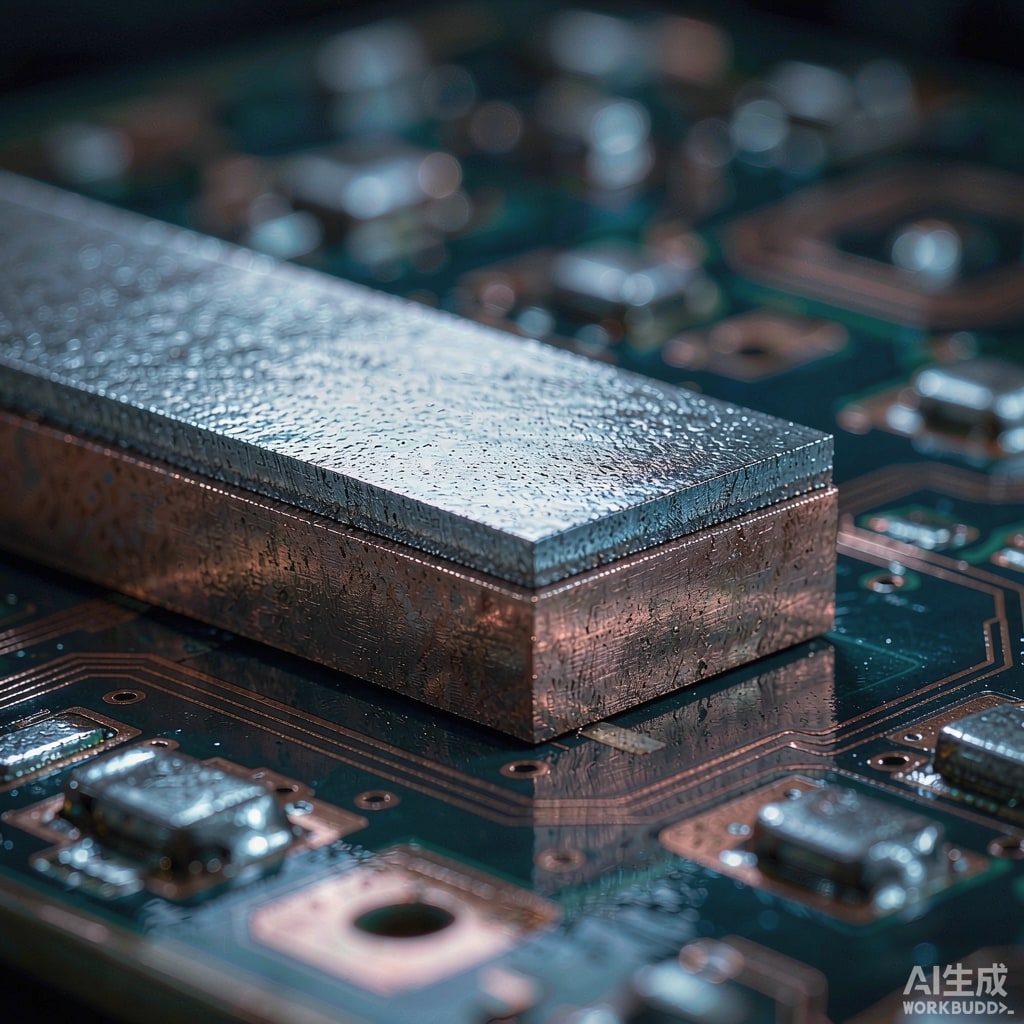
Surface-mount assemblies rely on consistent solder wetting to form reliable joints between stamped copper terminals, busbar tabs, and PCB lands. One of the most cost-effective ways to guarantee that wetting is to specify hot-dip ti
ed copper strip rather than bare copper. The tin coating acts as both a solderable finish and an oxidation barrier, simplifying storage, extending shelf life, and improving first-pass yields in high-volume SMT lines.
Why Hot-Dip Ti
ing Beats Bare Copper for SMT
Bare copper begins to form oxide and sulfide films within hours of cleaning, especially in humid Southeast Asian factories. Those films reduce wetting force and increase the risk of poor fillet formation during reflow. Hot-dip ti
ing immerses the cleaned copper strip in molten tin or tin alloy, depositing a dense, metallic coating that wets readily with SAC305, SAC405, or SnPb solder pastes.
Unlike electroplated tin, which can be porous and sometimes contains organic brighteners, a well-controlled hot-dip coating is typically 1.0–3.0 µm thick and has a matte or satin appearance. The process also forms a thin intermetallic compound (IMC) layer at the tin-copper interface, anchoring the coating mechanically and providing a ready solder reservoir.
Intermetallic Compound Growth and Control
The IMC layer is essential for adhesion, but excessive IMC growth embrittles the joint and raises contact resistance. During reflow or service life, Cu6Sn5 and Cu3Sn compounds grow according to diffusion kinetics. At typical SMT reflow peak temperatures of 245–260°C, the IMC can thicken from less than 1 µm to several micrometres in a matter of minutes.
To keep IMC growth under control, specify:
- Coating thickness ≥ 1.5 µm so enough free tin remains after IMC consumption.
- Low-copper tin alloys such as Sn-0.7Cu or Sn-3.0Ag-0.5Cu to slow diffusion.
- Moderate reflow profiles with peak temperature at the lower end of the process window when hot-dip ti
ed parts are used.
- Aging limits: hot-dip ti
ed strip stored for more than 12 months may show thicker IMC and reduced solderability.
Coating Appearance and Inspection
Hot-dip tin coatings should be continuous, free of dendrites, and uniform across the strip width. Dull or streaky surfaces may indicate flux residues, contamination, or poor cleaning. Visual inspection under diffuse light, combined with solderability wetting balance testing per IEC 60068-2-69 or MIL-STD-202 Method 208, is the best way to verify lot quality.
Applications in SMT Terminals and Busbars
Hot-dip ti
ed copper strip is widely used for fuse clips, battery tabs, co
ector terminals, and low-voltage busbars. The coating allows direct solder attachment without additional plating, reduces the need for nitrogen reflow atmosphere, and provides a consistent, lead-free-compatible finish. For high-current parts, specify heavier coatings toward the upper end of the range to accommodate the larger solder fillets and longer reflow times.
Procurement Checklist
When buying hot-dip ti
ed copper strip, ask the mill for base alloy, coating weight or thickness, reflow compatibility, solderability test reports, and shelf-life recommendations. Store coils in a dry environment and avoid handling with bare hands to prevent chloride contamination that accelerates tin pest or corrosion.



