The Latent Failure Mode in SMT Copper Strip Stamping
In the SMT copper strip industry, the average tool life claimed by press-shop operators is 1 to 2 million strokes before the cutting edge flakes and burr size pushes the part out of specification. At TechMart SE we routinely exceed 5 million strokes on the same tooling by combining high-speed camera diagnostics, optimized clearance, and diamond-like carbon (DLC) coatings. The result for our customers is a 50 to 70 percent reduction in tooling cost per million parts and a measurable improvement in solder joint yield downstream of the SMT line.
Why Copper Strip Is Tougher Than Mild Steel
Copper in its a
ealed C11000 form has 220 to 280 MPa tensile strength and 60 to 80 percent elongation, which sounds soft, but the high stamping speed generates enormous adiabatic heating at the cutting edge. The cutting zone can flash to 300 degrees Celsius inside 50 milliseconds, well above the copper recrystallization threshold of 200 to 230 degrees Celsius. Uncoated tool steel M2 or D2 begins to lose edge hardness above 540 degrees Celsius, but the tool never reaches that point; the real failure is micro-adhesion of copper to the tool surface and progressive built-up edge formation.
High-Speed Camera as a Diagnostic Tool
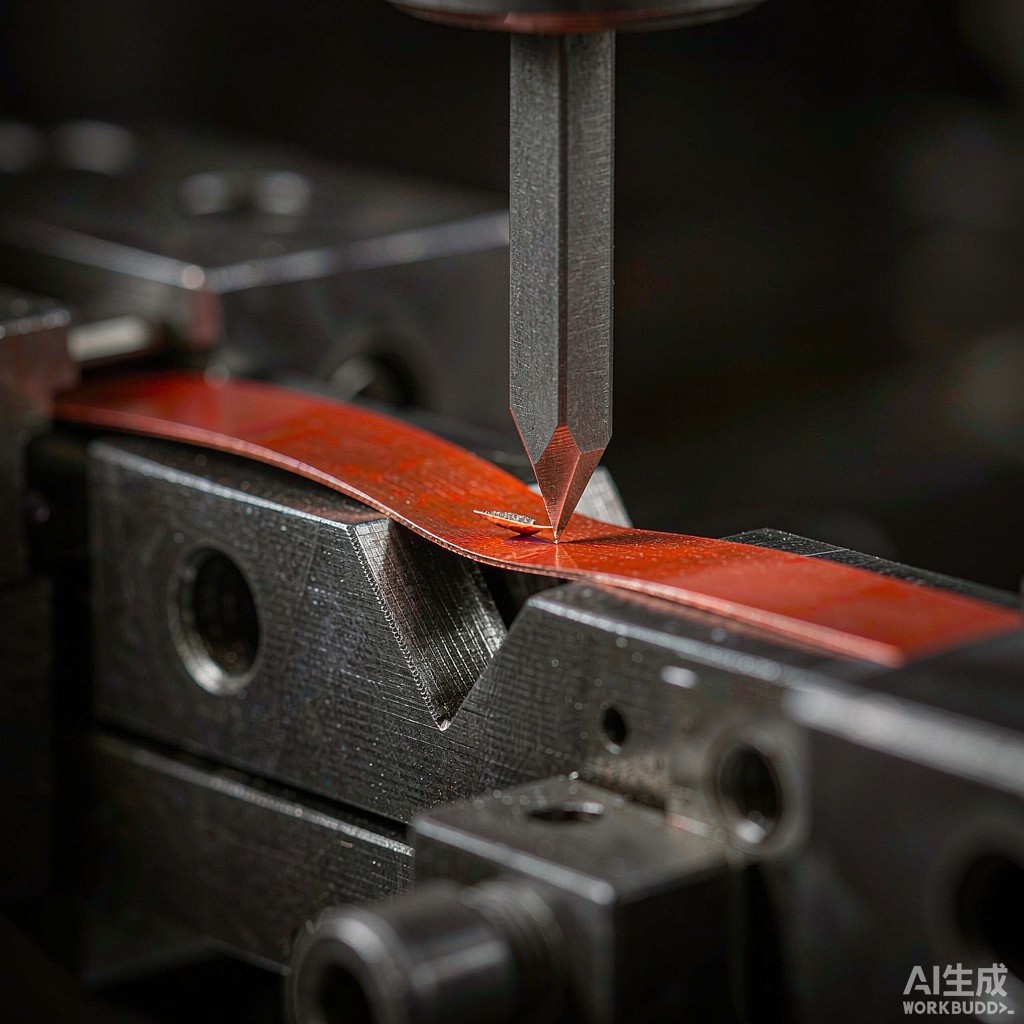
Installing a Photron SA-X2 or equivalent high-speed camera at 5 000 to 20 000 frames per second above the die reveals the actual mechanics of burr formation. With proper lighting and a 50 to 100 mm macro lens, one can see the rolled burr compressing, then springing up, then shearing as the punch retracts. The first 50 to 150 microseconds of punch-strip contact are critical for burr initiation. Observations show that abrasive buildup on the die edge during this window correlates one-to-one with part burr size on the line.
Clearance Tuning and the Rule of Five to Eight Percent
Standard stamping clearance for C11000 copper strip thickness 0.20 to 0.50 mm is 5 to 8 percent of the material thickness per side. With 0.30 mm copper, the recommended die clearance is 15 to 24 micrometres per side. Tightening clearance below 4 percent pushes the cut into a compression regime that increases the punch load and produces a serrated edge; loosening above 10 percent produces a tear edge with a pronounced burr. Our factory default is 6 to 7 percent per side, calibrated to the strip temper and a
eal state of each batch.
DLC Coating: Three Micrometres That Save the Tool
Diamond-like carbon coatings applied by plasma-enhanced chemical vapor deposition deposit a 2 to 4 micrometre amorphous carbon layer with Vickers hardness 1 800 to 2 800 HV. The film also reduces the friction coefficient to 0.10 to 0.15 versus 0.6 to 0.8 for uncoated M2 tool steel against copper. Production data shows tool life extension of 3 to 5 times for the same stroke count, and burr formation reduces from typical 30 to 60 micrometres to 8 to 18 micrometres at the same clearance setting. Cost adder per tool is 200 to 350 USD but pays back across the first 1 million strokes.
Strip Lubrication and Drawing Compound
Even with DLC, the lubricant film is critical. We apply a thin layer of Cler-1 or Zok Z-7 synthetic water-based lubricant that leaves only 8 to 12 mg per square metre of residue. Lower residue is required because the strip moves downstream into plating baths or SMT assembly, and any lubricant residue will be flagged in the post-strip cleaning protocol. Lubricant-free stamping works only with specially polished DLC tools and at speeds below 200 strokes per minute, unsuitable for high-volume production.
The Path to Five Million Strokes
Combining high-speed camera diagnostics, clearance set at 6 to 7 percent per side, DLC coating on the punch and die, and a controlled lubricant film, our progressive dies consistently reach 5 million strokes between sharpenings, and 8 to 12 million strokes before full tool replacement. Tool life per million parts drops from 0.50 USD on uncoated tooling to 0.15 USD on DLC tools, with the additional saving in burr-related rejection rate giving the customer a 30 to 50 percent reduction in total cost of ownership on the supply contract.
Process Window Validation Before Production Release
A new SMT strip production line should be validated in three steps before commercial release. First, run a 10 000-stroke qualification at the pla
ed operating speed and confirm burr height stays below 25 micrometres throughout the run, with no dimension drift on critical features. Second, perform a 50 000-stroke run measuring tool wear, burr evolution, and dimensional change on the strip; if the burr trend is non-linear or tool wear accelerates, adjust coating, clearance, or lubrication. Third, run a 1 million-stroke trial to lock the longest economically viable maintenance interval. At TechMart SE we publish the validated process window with every new tooling contract so the customer can match internal standard practice and hand the process to the line workers with confidence.