Climate Loads on Guard Booths
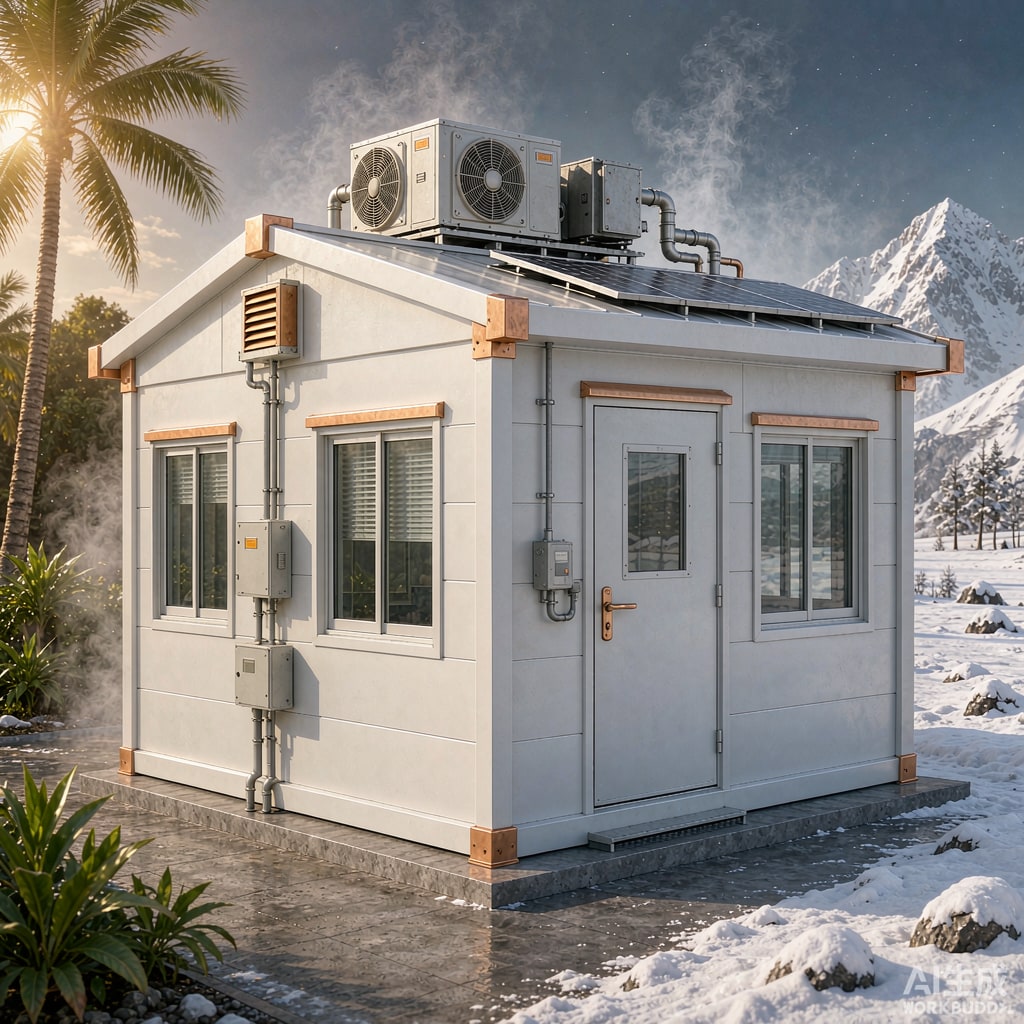
Guard booths and security shelters are often placed at gates, parking entrances, and remote perimeters where they are exposed to full sun, heavy rain, dust, and freezing temperatures. Without proper thermal design, internal temperatures can exceed 45 °C in tropical climates or drop below 5 °C in cold regions, making the space uncomfortable for operators and risking condensation damage to electronics, access-control panels, and surveillance equipment.
Insulation Materials and Wall Build-Up
The most common guard booth walls use steel or aluminum skins over a rigid core. Insulated sandwich panels with polyurethane (PUR) or polyisocyanurate (PIR) foam typically achieve thermal conductivity below 0.025 W/m·K and wall U-values of 0.3–0.5 W/m²·K. Mineral wool is preferred where fire resistance is critical because it does not melt or emit toxic fumes at high temperatures. For coastal or corrosive environments, the outer skin should be 304 or 316 stainless steel, and insulation must be sealed against moisture ingress.
Roof and Window Design
Flat roofs absorb the most solar radiation and should be insulated to a higher standard than walls, often with a ventilated air gap or reflective coating on top. Windows should use double-pane tempered glass with low-emissivity coating to reduce solar heat gain while maintaining visibility. The glazed area should be limited to what is operationally necessary; large south-facing windows can turn a booth into a greenhouse in summer. External overhangs or perforated sunshades cut direct solar gain without blocking sightlines.
HVAC Sizing and Equipment Selection
A typical 2 m × 2 m guard booth in a hot climate may require 1.5–2.5 kW of cooling capacity after insulation and glazing are optimized. Mini-split air conditioners are popular because they separate the compressor from the interior unit, reducing noise. In cold climates, a small heat pump or electric heater sized for the design outdoor temperature maintains comfort. Ventilation should provide at least 15–20 m³/h per person of fresh air, with the intake filtered to protect equipment from dust and insects.
Condensation and Air Sealing
Condensation forms when warm, moist indoor air contacts cold surfaces. A vapor barrier on the warm side of the insulation, combined with continuous seals around windows, doors, and cable penetrations, prevents moisture from reaching cold framing. In very humid climates, a dehumidistat-controlled exhaust fan or a standalone dehumidifier helps keep relative humidity below 60%, protecting electronics and improving operator comfort.
Conclusion
Thermally effective guard booths combine insulated sandwich panels, controlled glazing, properly sized HVAC, and careful air sealing. Whether deployed in tropical heat or freezing winters, a climate-resilient booth protects both perso
el and security systems while keeping operating energy reasonable.