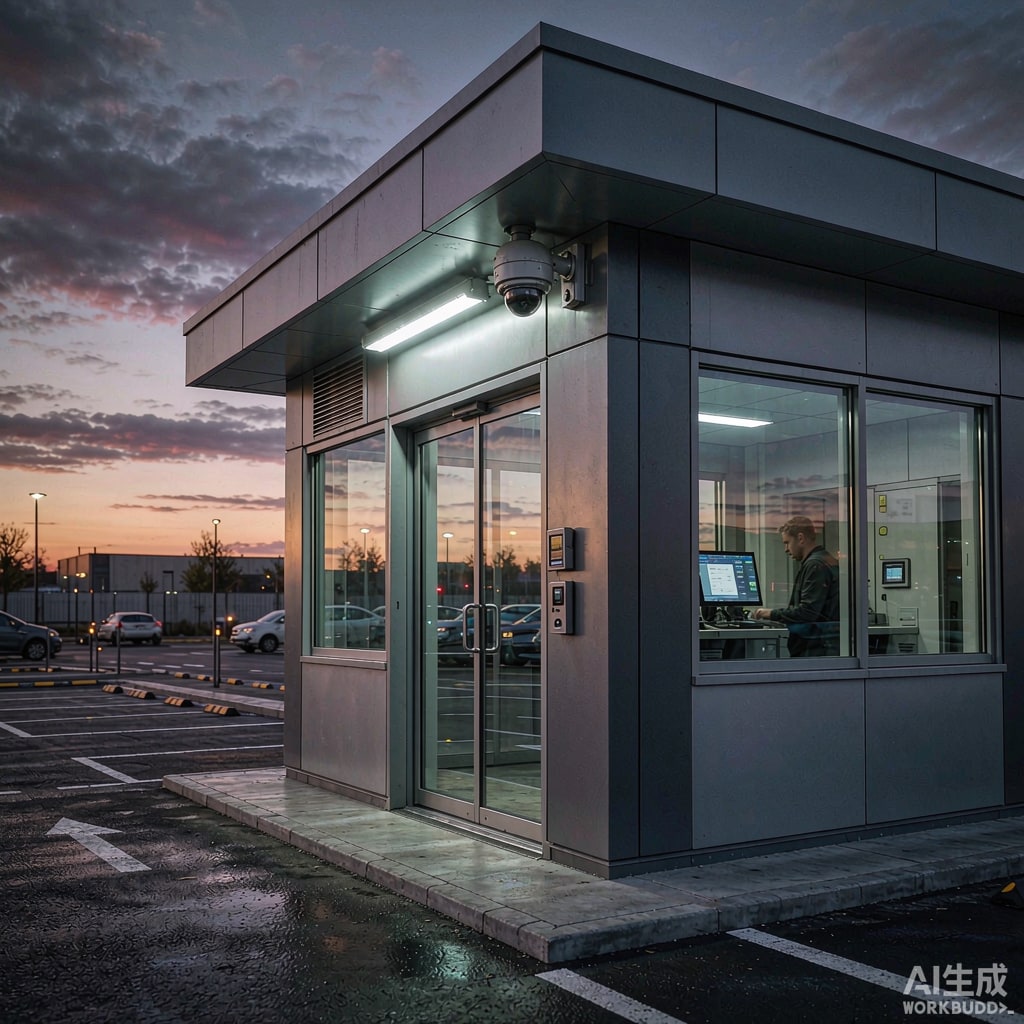
A guard booth is only as effective as the surveillance system that supports it. Cameras that are poorly positioned, inadequately lit, or mounted within easy reach create blind spots and maintenance headaches. Whether the booth protects a factory, warehouse, campus, or residential complex, thoughtful camera placement improves situational awareness, reduces liability, and helps security staff respond faster. This article covers the key design rules for coverage, lighting, and vandal resistance.
Camera Height and Angle
The ideal mounting height balances two goals: capturing usable facial detail and keeping the camera out of easy tampering range. For vehicle entry points, cameras are typically mounted 3.5–5 meters above ground and aimed slightly downward to capture license plates and driver faces. For pedestrian approaches near the booth, 2.5–3.5 meters is common, providing enough angle to see faces without excessive vertical distortion.
Avoid mounting cameras too high. A steep downward angle makes identification harder and wastes pixels on the ground. Also avoid placing cameras directly above doors or windows, where backlighting from the booth interior can silhouette people in the doorway. Use wide dynamic range cameras or position the lens to the side of the entry.
Field of View and Coverage Overlap
Each camera should cover a clearly defined zone: approach path, entry gate, booth perimeter, and parking or loading area. A general rule is to allow 20–30% overlap between adjacent camera fields of view so that no person or vehicle disappears between coverage zones. For license plate recognition, the camera should view the plate head-on within 15–20 degrees of perpendicular.
Use a site plan during design. Mark camera locations, lens focal lengths, and pixel density targets. A common benchmark is 80 pixels per meter for detection, 125 for recognition, and 250 for identification. PTZ cameras can supplement fixed cameras for tracking moving subjects, but they should not replace fixed coverage because they may be pointing elsewhere when an incident occurs.
Lighting and Night Performance
Most guard booth incidents happen at night or during low-light conditions. Cameras should be selected with low-light lux ratings appropriate for the scene, and the site should include supplemental lighting. White-light LED illuminators improve color accuracy and can act as a deterrent, while infrared illuminators allow covert night viewing in monochrome.
Be careful with backlight from streetlights, vehicle headlights, or the booth interior. Position cameras so that bright sources are behind or to the side of the lens. If that is not possible, use true WDR cameras with 120 dB or greater dynamic range. Also consider the glare from wet pavement or reflective signage, which can trigger false motion alarms.
Vandal Resistance and Environmental Protection
Outdoor cameras near a guard booth are exposed to tampering, weather, and dust. Choose vandal-resistant dome or turret housings rated IK10 for impact resistance. The enclosure should also carry an IP66 or IP67 rating for water and dust protection, especially in tropical climates with heavy rain.
Cable entry should be concealed or routed through tamper-resistant conduit. Exposed cables invite cutting and can be used to pull a camera out of alignment. Use security screws and consider adding a tamper alarm that notifies operators if the camera housing is struck or repositioned.
Integration with Access Control and VMS
Modern guard booth security works best when cameras, intercoms, barriers, and access readers share a single platform. Video management systems can trigger recordings when a card is swiped, a license plate is recognized, or a motion event occurs at the perimeter. This integration reduces the time guards spend switching between screens and creates a searchable event log.
Consider edge storage or a local network video recorder in addition to central storage. If the network link to a remote data center fails, the booth retains continuous recording. A typical retention target is 30 days at full frame rate, with longer archival for incidents.
Maintenance Access
Finally, design for maintenance. Cameras mounted on the booth roof or on poles should be reachable with a standard ladder or maintenance platform. Remote focus and zoom lenses reduce the need for on-site adjustments. Schedule lens cleaning and firmware updates quarterly, more often if the booth is near construction sites, dusty roads, or coastal salt air.
Conclusion
Effective guard booth surveillance is a combination of good camera placement, proper lighting, rugged hardware, and integration with the broader security system. By designing coverage before installation and choosing vandal-resistant, weatherproof equipment, site owners can create a reliable first line of defense that supports guards rather than overwhelming them with blind spots and false alarms.