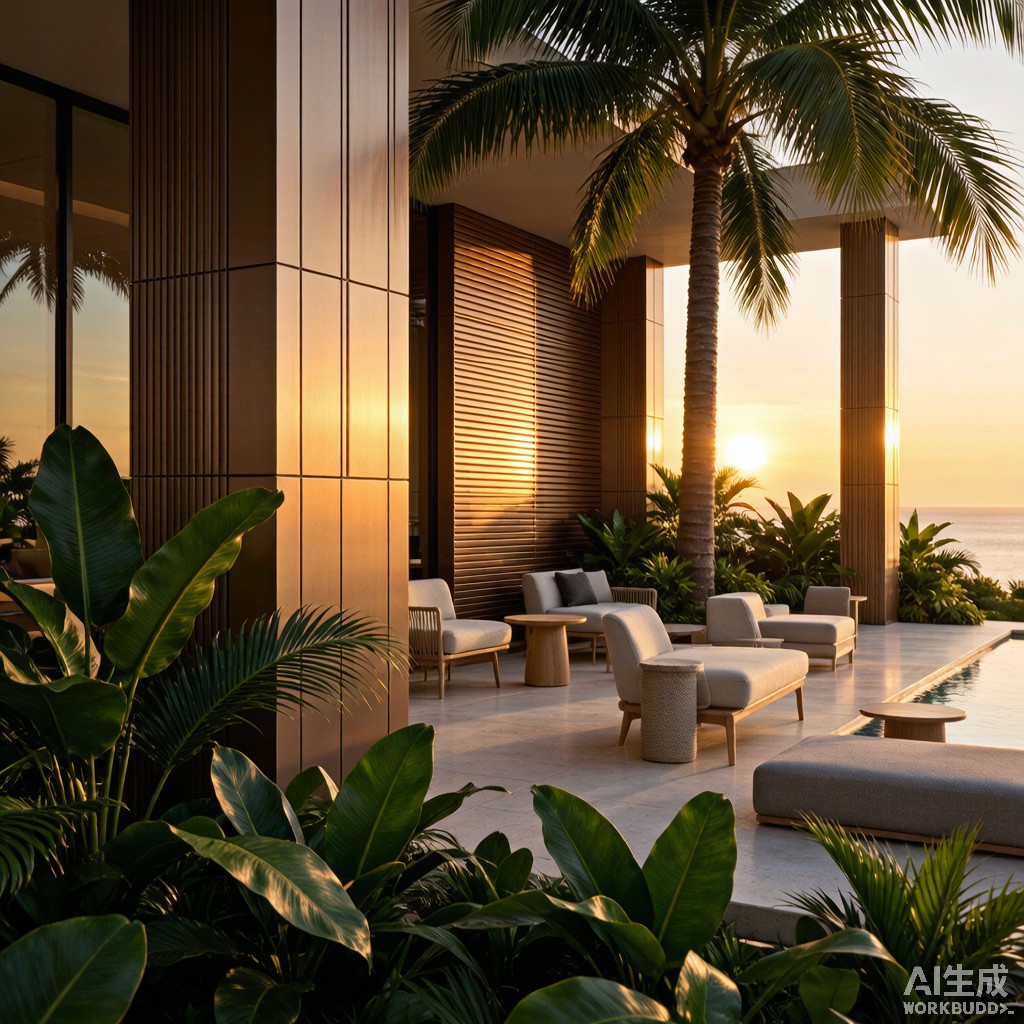
Outdoor lounge structures in tropical resort, hotel, and hospitality settings frequently incorporate aluminum composite panel (ACP) cladding for columns, feature walls, ceiling soffits, and decorative facades. ACP offers weather resistance, design flexibility, and rapid installation that match the demanding construction schedule of tropical hospitality projects. However, post-2014 changes to building codes in Singapore (BCA), Malaysia (UBBL), Hong Kong (BD PNAP APP-118), and other Southeast Asian jurisdictions restrict combustible cladding materials on specified building types and heights following the Grenfell Tower fire (London, 2017) and earlier Lacrosse Docklands fire (Melbourne, 2014). For outdoor lounge structures within or attached to hotel and resort buildings, fire-rated ACP with certified FR (fire-retardant) core is now mandatory in most ASEAN jurisdictions. This article examines the engineering principles, fire test methodology, and material selection for fire-rated ACP cladding in outdoor lounge tropical applications.
ACP Construction and Fire Risk
Standard vs Fire-Rated Core Comparison
ACP consists of two 0.3-0.5 mm aluminum face sheets bonded to a 2-5 mm core. The core material determines fire performance:
| Core Type | Chemistry | Fire Rating (ASTM E84) | Heat Release (kW/m², ASTM E1354) | Code Status in SE Asia |
|---|---|---|---|---|
| PE (polyethylene) | Low-density polyethylene | FSI 75-110, SDC 200-450 | 800-1,200 | Ba
ed in most high-rise; restricted in low-rise |
| FR polyethylene | PE + 60-70% ATH/MDH filler | FSI 25-40, SDC 30-75 | 200-400 | Limited acceptance, varies by jurisdiction |
| Mineral-filled FR | PE + 70-80% mineral filler | FSI 15-25, SDC 10-30 | 80-150 | Acceptable for most low/mid-rise |
| FR-A (fire-retardant A) | Modified polymer + 80-90% mineral | FSI 0-15, SDC 0-10 | 30-80 | Acceptable for high-rise (Class A1/A2) |
| A2-s1, d0 mineral core | 100% inorganic (calcium silicate, magnesium hydroxide) | Class A1 (non-combustible) | <20 | Required for high-rise and high-occupancy |
FR-A and A2-rated ACP products now dominate the specifier market in Singapore, Hong Kong, Malaysia, and the UAE. The 80-90% mineral filler content in FR-A products makes them effectively non-combustible when tested to EN 13501-1 with heat release below 50 kW/m² and no flaming droplet generation.
Fire Test Standards and Acceptance Criteria
Single-Burner vs Large-Scale Assembly Tests
ACP fire performance is evaluated at three levels of increasing severity:
- ASTM E84 Steiner Tu
el (single panel):
7.3 m long tuel, 88 kW burner, 10 minutes; reports Flame Spread Index (FSI) and Smoke Developed Index (SDC). Class A requires FSI ≤25, SDC ≤50. This is a small-scale screening test; does not evaluate assembly performance.
- EN 13501-1 Single Burning Item (SBI): European single-burner test on 1.5 m corner specimen; classifies A1, A2, B, C, D, E, F for reaction to fire plus s1/s2/s3 for smoke and d0/d1/d2 for burning droplets. A2-s1, d0 is the typical high-rise specification.
- BS 8414 / NFPA 285 large-scale assembly tests: Two-story corner wall mockup with realistic window openings; 3-5 MW burner; measures flame spread, heat release, and façade integrity over 30 minutes. This is the definitive test for tall building compliance.
For outdoor lounge structures integrated with or adjacent to high-rise hotel buildings, the specifier must demand BS 8414 or NFPA 285 test report on the exact panel composition (face sheet alloy, core formulation, thickness, joining system) — not generic certifications or test reports on different panel constructions.
Tropical Climate Engineering
UV, Humidity, and Salt Exposure
ACP cladding in tropical outdoor lounge applications must simultaneously meet fire rating AND tropical environmental durability:
- Coastal salt exposure (ISO 9227): 1,000-3,000 hours ASTM B117 salt spray with no blistering, delamination, or face sheet corrosion; specify AA 5005 marine-grade aluminum or 3% Mg alloy for severe coastal sites.
- UV accelerated weathering (ASTM G155): 4,000-8,000 hours Xenon arc with no color change ΔE > 3, no chalking, no gloss reduction > 30%; PVDF or FEVE fluorocarbon coating required for premium tropical installations.
- Thermal cycling (-20 to +80°C): 200-500 cycles with no delamination, no face sheet wrinkling; critical for elevated outdoor structures exposed to direct tropical sun.
- Humidity aging (ASTM D2247): 3,000 hours at 38°C/100% RH with no blistering, no adhesive bond degradation; standard for tropical qualification.
Many FR-A and mineral-core ACP products from manufacturers with primarily European or North American market focus have not completed tropical climate qualification testing. Specifiers should request factory test reports for the specific panel type in the project installation location.
Building Code Compliance by Jurisdiction
Southeast Asian ACP Acceptance
Each ASEAN jurisdiction has specific ACP acceptance criteria for outdoor structures attached to or visible from high-rise buildings:
| Jurisdiction | Building Code | ACP Requirement for Outdoor Lounge | Documentation Required |
|---|---|---|---|
| Singapore | BCA Fire Code 2018 + PNAP APP-118 | A2-s1, d0 for structures >24m; B-s3, d2 for <24m | EN 13501-1 certificate + 3rd party test report |
| Hong Kong | BD PNAP APP-118 (2017 revision) | Class A ASTM E84 OR A2-s1, d0 EN 13501-1 | Full test report + material traceability |
| Malaysia | UBBL 1984 (Amendment 2012) | A2-s1, d0 for hotel >18m, all schools/hospitals | MS 2571 / EN 13501-1 |
| Indonesia | SNI 1742:2008 + PermenPUPR 14/2017 | Class A ASTM E84; PE core ba
ed for >4 stories |
Local certification + factory audit |
| Thailand | B.E. 2555 Building Code | Class A ASTM E84 or equivalent for public assembly | Thai Industrial Standard (TIS) certification |
| Vietnam | QCXDVN 06:2020 | A2-s1, d0 for high-rise; B acceptable for low-rise public | Vietnamese fire test or mutual recognition |
For resort and hotel outdoor lounge structures, the most stringent applicable code (typically A2-s1, d0 to EN 13501-1 or Class A ASTM E84) should be specified regardless of building height, both to meet potential future code revisions and to satisfy international hotel brand standards (Marriott, Hilton, Accor, IHG) which typically require FR-A or A2 ACP for all outdoor features.
Installation Engineering Considerations
Substructure, Jointing, and Fire Stops
Even correctly specified fire-rated ACP can fail in a fire event if the installation details allow fire spread through the cavity between ACP and structural wall:
- Substructure: Non-combustible aluminum or galvanized steel rail system; no combustible timber battens.
- Perimeter fire stops: 50-100 mm mineral wool fire stop at every floor level and at top/bottom of cladding zones; prevents chimney effect in cavity.
- Open joint proportion: Maximum 5-10% of cladding area in open joint reveals; larger openings require intumescent fire barriers.
- Deflection/expansion: 6-10 mm gap between ACP panels for thermal expansion in tropical sun (ΔT up to 50°C daily); filled with EPDM gaskets or open drained joints.
ACP panel-to-panel joints should be either closed-cell EPDM gaskets (silicone incompatible with PVDF coating) or open reveal joints with intumescent fire-rated backer rod. The total combustible content in the completed assembly must be calculated to ensure the design fire scenario does not exceed the certification test conditions.
Specification Recommendation
For outdoor lounge structures in tropical hospitality settings, specify 4 mm thick FR-A or A2-s1, d0 ACP with 0.5 mm AA 5005 marine-grade aluminum face sheets, PVDF or FEVE fluorocarbon coating in custom color, factory-applied protective PE film removed after installation, and full documentation package including EN 13501-1 classification report, BS 8414 or NFPA 285 large-scale assembly test report, ISO 9227 salt spray report, ASTM G155 UV weathering report, and factory ISO 9001 quality certification. The 20-30% material cost premium for FR-A over standard PE-core ACP is offset by code compliance, insurance premium reduction, and the long-term durability required for 20-30 year tropical service life.