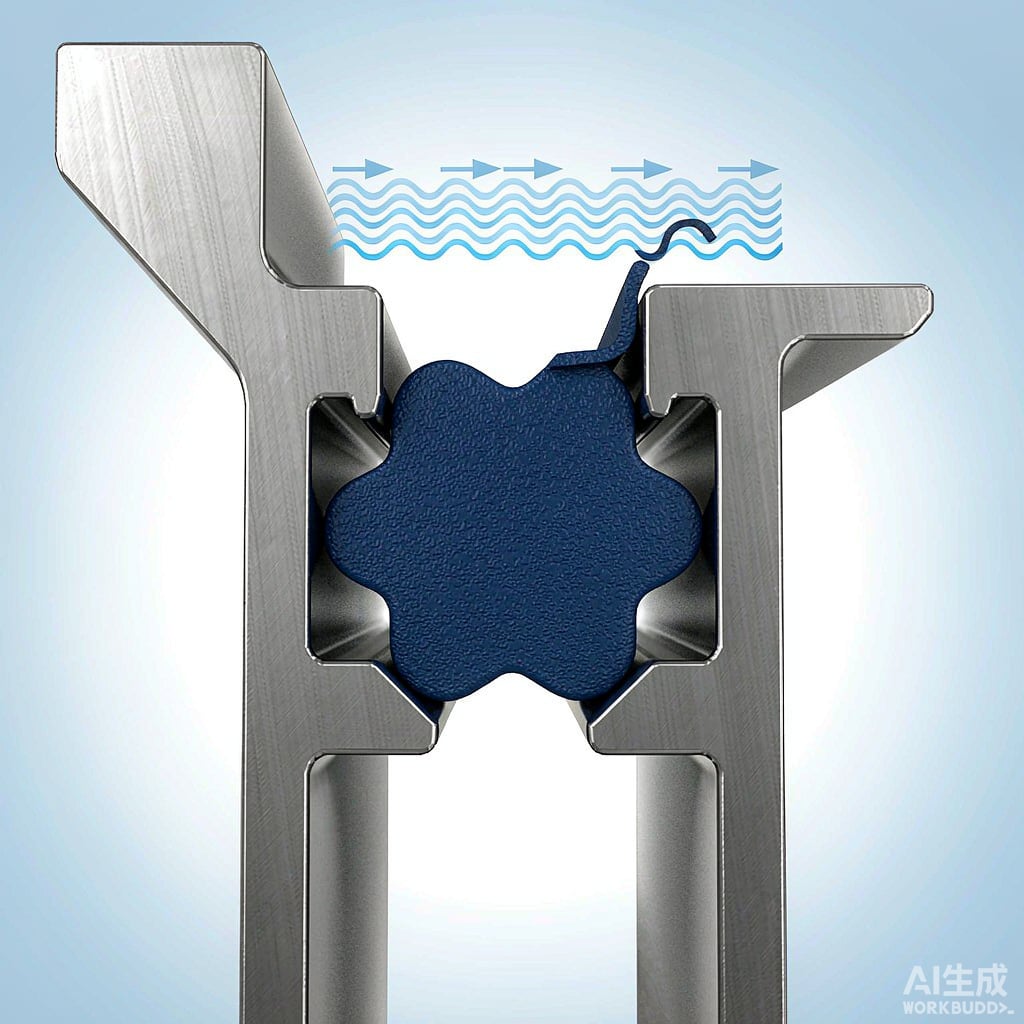
Electromagnetic interference can turn a well-designed product into a certification failure. Whether the source is a high-speed processor, a switching regulator, or an external radio transmitter, unwanted energy must be contained. An EMI shielding gasket closes the gaps around enclosure seams, doors, and co
ector panels, restoring electrical continuity across joints that would otherwise act as slot ante
as.
What an EMI Shielding Gasket Does
A gasket does two things at once. First, it provides environmental sealing against dust and moisture. Second, and more importantly for EMC engineers, it establishes a low-impedance conductive path between mating metal surfaces. Without this path, RF currents flowing on one half of an enclosure ca
ot return on the other half, and emissions leak through every seam.
Common EMI Shielding Gasket Materials
Conductive Elastomers
These are silicone or fluorosilicone compounds loaded with silver-plated aluminum, silver-plated copper, graphite, or nickel-graphite particles. They combine excellent shielding effectiveness—often above 100 dB at 1 GHz—with environmental sealing. Conductive elastomers are popular in military, aerospace, and medical equipment where both EMI and moisture protection are required.
Metal Finger Stock
Beryllium copper and stainless-steel finger stock gaskets provide spring-like contact fingers that maintain low resistance through thousands of open-close cycles. They are common on rack-mounted equipment, shielded doors, and removable access panels. Their main limitation is that they do not seal against liquids.
Fabric-Over-Foam
A conductive fabric wrapped around polyurethane foam offers a lightweight, cost-effective solution for consumer electronics. Shielding effectiveness typically reaches 60–90 dB, sufficient for most commercial devices. The foam compresses easily, making it forgiving on uneven flanges.
Mesh and Knitted Wire Gaskets
Monel or tin-plated copper mesh is used in high-temperature applications and where very high shielding is needed. Knitted wire gaskets can also be filled with elastomer cores to combine EMI performance with sealing.
Gasket Shape and Geometry
The cross-sectional shape affects both compression force and shielding consistency:
- Round O-rings: Classic choice for sealed joints; need a groove for retention.
- Rectangular strips: Easy to adhesive-mount along flat flanges.
- D-shaped profiles: Provide a wide flat sealing surface with lower closure force.
- Finger profiles: Designed for doors and panels requiring repeated access.
Mounting Methods
Gaskets can be held in place by adhesive backing, mechanical retention grooves, riveted clips, or conductive glue. Adhesive-backed gaskets speed assembly but require clean, oil-free surfaces. Groove-mounted elastomers stay aligned during repeated compression and are preferred for high-reliability designs.
Always ensure that the gasket material is galvanically compatible with the enclosure metal. For example, a silver-filled gasket against bare aluminum can create a galvanic couple in humid environments; a nickel-graphite filler is usually safer.
Testing Shielding Effectiveness
Shielding effectiveness is measured in a shielded room or with a network analyzer and near-field probes. Common test standards include MIL-DTL-83528 for elastomeric gaskets and IEEE 299 for large enclosures. A well-chosen gasket should contribute only a few dB of degradation compared to a fully welded enclosure.
Conclusion
Selecting an EMI shielding gasket is a balance of electrical performance, environmental sealing, mechanical durability, and cost. By matching material, geometry, and mounting method to the enclosure design, engineers can pass EMC tests on the first try while keeping assembly straightforward.