Introduction
EMI shielding gaskets provide the electrical continuity between conductive enclosure panels, preventing electromagnetic energy from leaking through seams and gaps. However, a gasket must maintain consistent contact force over the product lifetime to remain effective. Compression set and shielding effectiveness testing are the two primary methods used to validate gasket performance and predict long-term reliability.
What Is Compression Set?
Compression set is the permanent deformation a material retains after being compressed and then released. In gasket terms, it measures how much the gasket loses its ability to spring back after being squeezed between mating surfaces for an extended period. A high compression set means the gasket no longer applies enough contact force to maintain low electrical resistance across the seam.
Compression set is expressed as a percentage of the original compression. For example, a gasket compressed to 30% deflection and then measured at 10% remaining compression after release would have a compression set of 33%. Lower values indicate better elastic recovery and longer service life.
Compression Set Testing Standards
ASTM D395 is the most widely used standard for compression set testing of rubber and elastomeric materials. Method A measures compression set after a fixed compression under specified temperature and time conditions. Method B uses a constant force to compress the specimen. For EMI gaskets, Method A is most common because it simulates the fixed gap found in assembled enclosures.
Test conditions are selected based on the application environment. Automotive electronics may test at 85°C or 125°C for 72 hours or 1,000 hours to simulate under-hood aging. Military and aerospace applications often require testing per MIL-DTL-83528, which includes specific compression set and shielding effectiveness requirements for conductive elastomer gaskets.
Typical Compression Set Requirements
| Application | Standard | Max Compression Set |
|---|---|---|
| Commercial Electronics | ASTM D395 | ≤ 30% |
| Automotive Under-Hood | ASTM D395 @ 125°C | ≤ 25% |
| Military / Aerospace | MIL-DTL-83528 | ≤ 20% |
Shielding Effectiveness Measurement
Shielding effectiveness (SE) quantifies how well a gasketed joint attenuates electromagnetic energy. It is measured in decibels and varies with frequency. The most common methods use a shielded room, a TEM cell, or a coaxial test fixture per MIL-DTL-83528. Each method has a specific frequency range and sample size requirement.
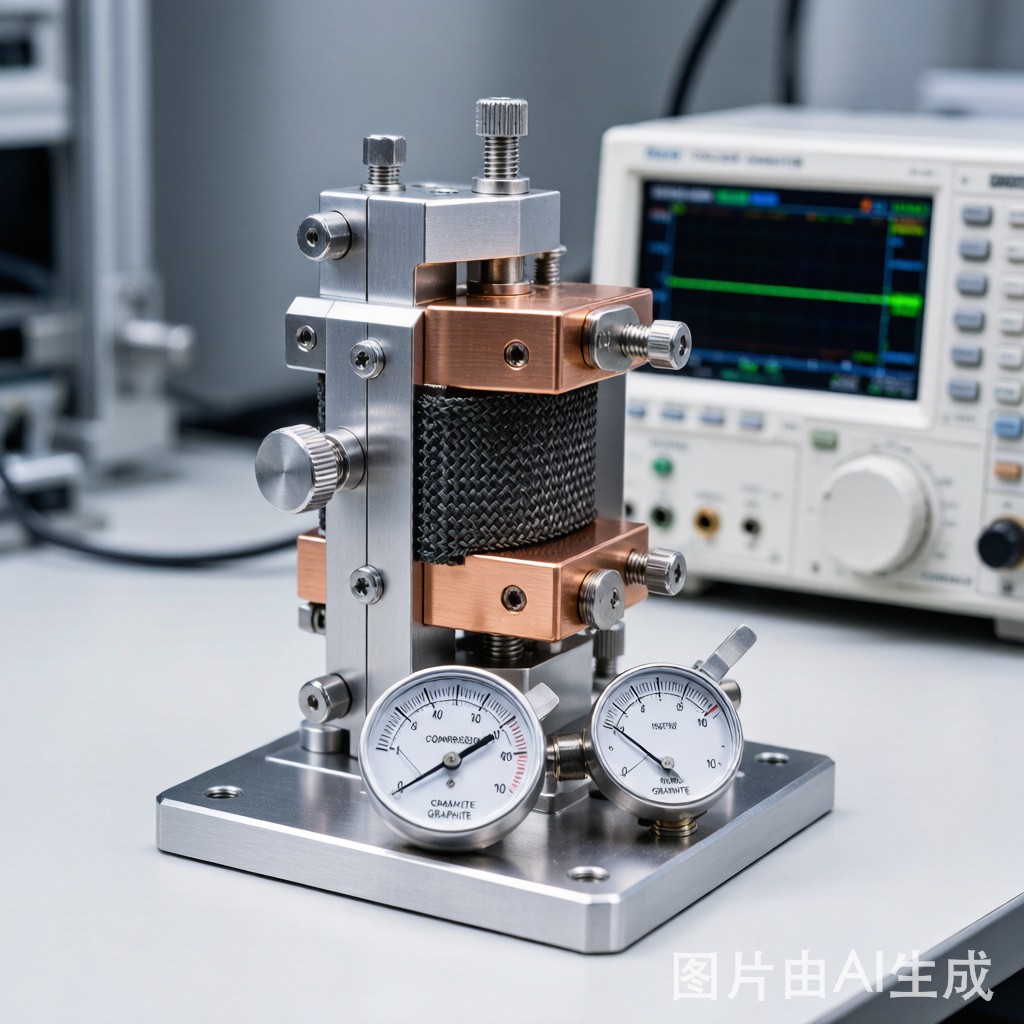
Coaxial test fixtures provide repeatable small-sample measurements and are often used for material qualification. The gasket material is placed between two flanges, and the transfer impedance is measured as a function of frequency. Lower transfer impedance indicates better electrical contact and higher shielding effectiveness.
Material Selection and Tradeoffs
EMI gasket materials include conductive elastomers, oriented wire mesh, metal fingerstock, and fabric-over-foam. Each has different compression set and shielding characteristics. Silicone-based conductive elastomers offer excellent compression set resistance and environmental sealing, but may have lower shielding effectiveness than metal mesh at very high frequencies.
Metal fingerstock gaskets, such as beryllium copper and stainless steel, provide the highest shielding effectiveness and the lowest compression set for applications with repeated opening and closing. However, they require more design attention for galvanic compatibility and compression stops to prevent over-compression.
Correlating Compression Set to Shielding Degradation
Compression set and shielding effectiveness are not independent properties. As a gasket loses its elastic recovery, the contact pressure at the interface drops, which increases transfer impedance and reduces shielding effectiveness. Accelerated aging tests that combine compression set exposure with before-and-after shielding measurements provide the most meaningful qualification data.
Conclusion
EMI shielding gasket reliability depends on both electrical performance and mechanical durability. Compression set testing predicts whether a gasket will maintain contact force over time, while shielding effectiveness testing confirms that the gasket meets electromagnetic requirements. Together, these tests form a complete qualification protocol for selecting gaskets that perform reliably across the full product lifecycle.