EMI shielding effectiveness is the single most important figure of merit for enclosures, shielding cans, and conductive gaskets used in electronics. Two standards have historically dominated the field: MIL-STD-285 and IEEE 299. Although MIL-STD-285 has been cancelled and superseded by IEEE 299, many defense and aerospace procurement documents still reference the older standard. Understanding both methods helps engineers interpret test reports and design shields that pass customer qualification.
What Is Shielding Effectiveness?
Shielding effectiveness, expressed in decibels, is the ratio of field strength measured without a shield to the field strength measured with the shield in place. Higher decibel values mean more attenuation. A shield providing 60 dB of effectiveness reduces the transmitted field by a factor of one thousand, while 100 dB reduces it by a factor of one hundred thousand.
Electric, Magnetic, and Plane-Wave Fields
Shielding behavior depends on the type of electromagnetic field. Electric fields are relatively easy to shield because conductive surfaces reflect them. Magnetic fields, especially at low frequencies, are harder to attenuate and depend heavily on material permeability and shield geometry. Plane-wave fields occur at higher frequencies where electric and magnetic field impedances are approximately equal. Both standards require testing in all three regimes.
MIL-STD-285 Overview
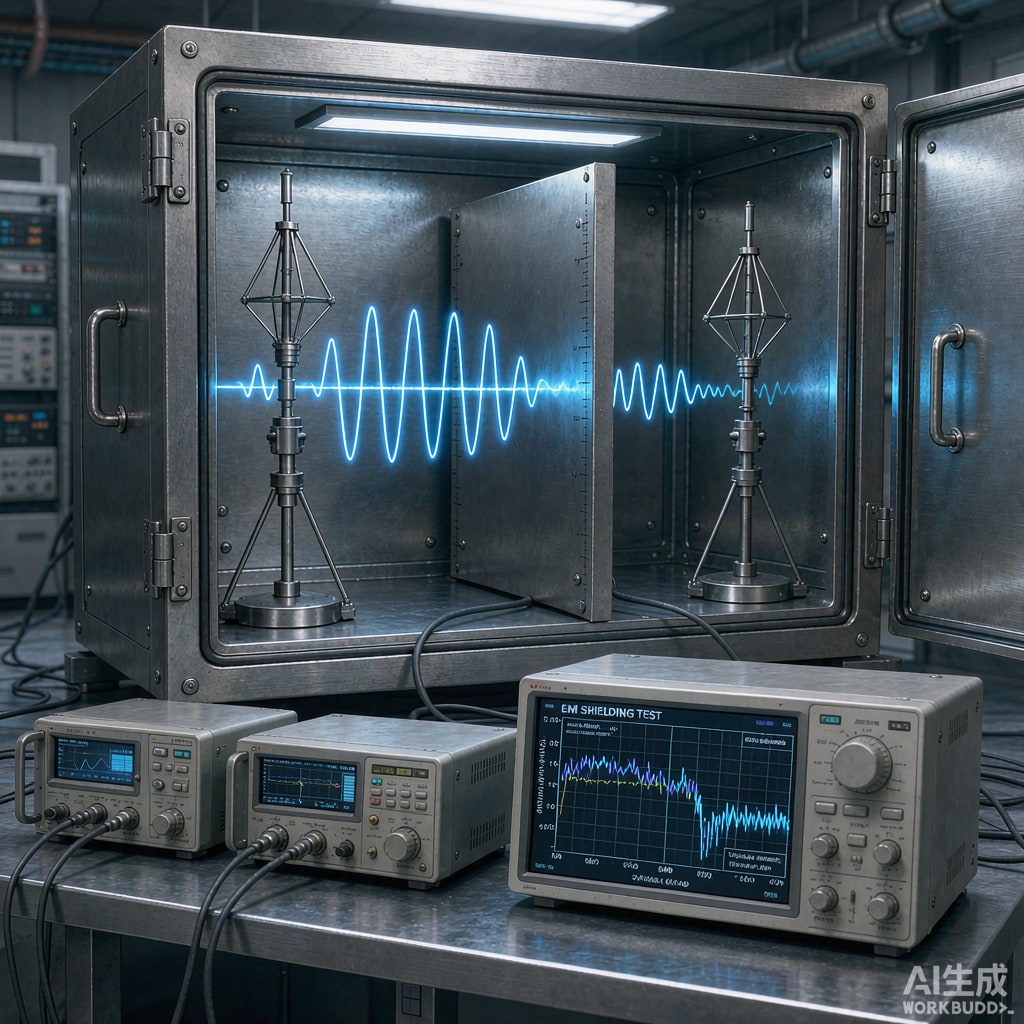
MIL-STD-285 was issued by the U.S. Department of Defense and became the foundational standard for shielding effectiveness testing of electronic enclosures. It specified a dual-chamber setup with transmitting and receiving ante
as separated by a test panel. Measurements were made over a frequency range from 30 Hz to 10 GHz using loop ante
as for magnetic fields, rod ante
as for electric fields, and horn ante
as for plane-wave fields.
Limitations of MIL-STD-285
The standard was cancelled in 1997 and is no longer maintained. Its procedures lack modern guidance on calibration, data reporting, and treatment of seam and aperture effects. Nevertheless, because many legacy contracts still cite it, laboratories often perform MIL-STD-285-style tests using equipment and procedures consistent with the original document.
IEEE 299 Overview
IEEE 299, first published in 1997 and revised several times since, replaced MIL-STD-285 as the primary commercial and military standard for shielding effectiveness testing. It covers frequencies from 9 kHz to 18 GHz and provides more detailed instructions for test fixture design, ante
a placement, calibration, and reporting. IEEE 299 is the standard most commonly cited in modern electronics manufacturing specifications.
Test Configurations in IEEE 299
IEEE 299 defines several test configurations depending on the size and type of enclosure. Small enclosures use a nested reverberation or dual-chamber approach, while large shielded rooms are tested in situ with ante
as placed inside and outside. The standard specifies minimum dynamic range requirements, ante
a distances, and sweep parameters to ensure repeatable results.
Key Differences Between the Standards
The most important differences include frequency range, calibration procedures, and reporting requirements. MIL-STD-285 extended down to 30 Hz, which is useful for very low-frequency magnetic shielding, while IEEE 299 starts at 9 kHz. IEEE 299 places greater emphasis on swept frequency measurements, normalized data, and statistical treatment of multiple test locations. Modern test reports should clearly state whether IEEE 299 or a legacy MIL-STD-285 procedure was followed.
When to Specify Each Standard
For new commercial products, specify IEEE 299. For defense or aerospace customers with legacy procurement documents, you may need to test to MIL-STD-285-equivalent procedures. In many cases, a single test campaign can be structured to satisfy both requirements by extending the low-frequency range and reporting the data in the legacy format.
Designing for Test Success
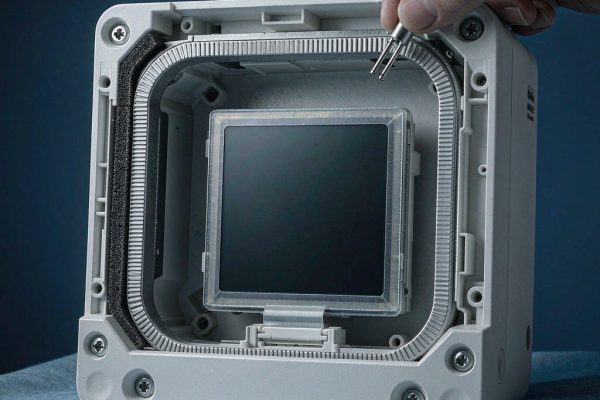
Shielding effectiveness is determined not only by material conductivity but also by seams, apertures, vents, and displays. A perfectly conductive box with a poorly designed seam can fail EMI testing. Engineers should use continuous welding or conductive gaskets at seams, specify honeycomb vents with waveguide-below-cutoff dimensions, and use conductive coatings or mesh over windows.
Conclusion
Both IEEE 299 and MIL-STD-285 provide frameworks for measuring EMI shielding effectiveness, but IEEE 299 is the current and more rigorous standard for modern electronics. By understanding the test setups, frequency ranges, and reporting conventions, designers can specify appropriate shields and interpret test results with confidence.