Introduction
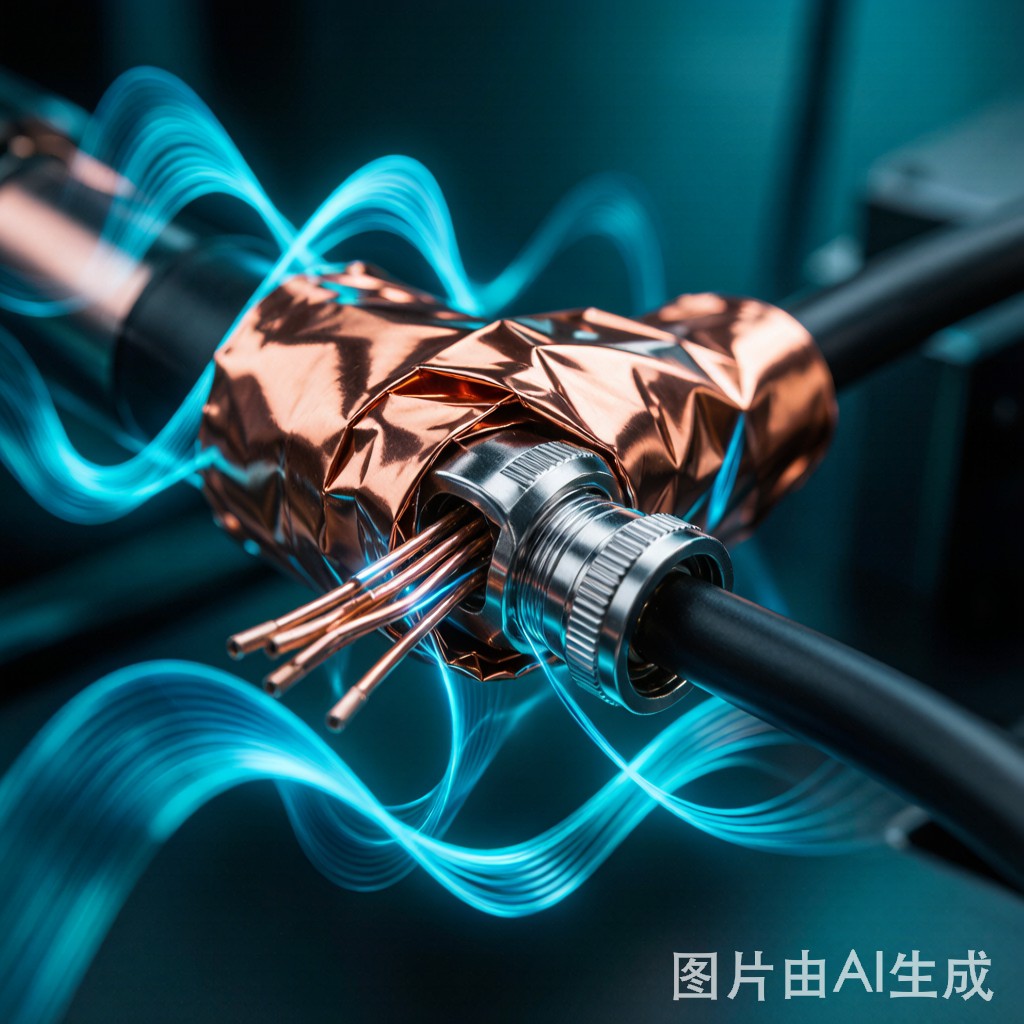
As 5G telecommunications networks extend into millimeter-wave frequencies and massive MIMO architectures, the quality of RF coaxial cable shielding has become more critical than ever. Copper strip and copper braid are the primary materials used to construct the outer conductor shields in coaxial cables, protecting signal integrity from external electromagnetic interference and preventing signal leakage. This article examines the role of copper strip in RF coaxial shielding, with a focus on 5G infrastructure performance requirements.
How Coaxial Cable Shielding Works
A coaxial cable consists of a central conductor, dielectric insulation, an outer conducting shield, and an outer jacket. The shield serves two functions: it carries the return current for the i
er conductor, and it blocks external electromagnetic fields from coupling into the signal path. The effectiveness of this shielding depends on the conductivity, continuity, and coverage of the outer conductor material.
Copper is the preferred shield material because of its combination of high electrical conductivity (100% IACS for pure copper), excellent ductility for fine braiding, and good corrosion resistance when plated with tin or silver. At RF frequencies, current flows primarily near the conductor surface due to the skin effect, making surface quality and plating even more important than bulk conductivity.
Skin Effect and High-Frequency Behavior
The skin depth — the depth at which current density falls to 1/e of its surface value — is given by:
δ = √(2ρ / ωμ)
where ρ is resistivity, ω is angular frequency, and μ is permeability. For copper at 1 GHz, the skin depth is approximately 2.1 µm; at 28 GHz (a common 5G millimeter-wave frequency), it drops to about 0.39 µm. This means that at 5G frequencies, only the outermost sub-micron layer of the copper shield carries current. Any oxidation, contamination, or plating with higher-resistivity metals can significantly degrade shielding performance.
Braided vs Foil-Braid Composite Shields
Coaxial cable shields are constructed in several configurations:
- Copper braid: Woven from fine copper wire strands. Provides flexibility, mechanical strength, and good low-frequency shielding. Shielding effectiveness depends on braid coverage (typically 70-95%) and the number of carriers.
- Aluminum-polyester foil + copper braid: A foil layer provides 100% coverage and excellent high-frequency shielding, while the copper braid provides low-resistance ground continuity and mechanical protection. This composite is standard for high-performance RF cables.
- Corrugated copper tube: A rigid copper tube provides near-perfect shielding but limited flexibility. Used in low-loss coaxial cables for base station feeders.
For 5G base stations and small-cell deployments, the foil-braid composite is most common. The copper strip or foil layer is typically 9-50 µm thick, with tin or silver plating to prevent oxidation and improve solderability.
Shielding Effectiveness and Transfer Impedance
Shielding effectiveness (SE) is the ratio of field strength without and with the shield, expressed in decibels. For high-frequency coaxial cables, transfer impedance (Zt) is often a more useful figure of merit. It relates the voltage induced on the i
er conductor to the current flowing on the outer shield, accounting for both absorption and coupling effects. Lower Zt means better shielding.
Typical transfer impedance values for 5G RF cables range from 1 mΩ/m at 1 GHz for premium braided cables to below 0.1 mΩ/m for corrugated copper tube cables. Tin-plated copper braid generally offers better oxidation resistance than bare copper, but the tin layer adds a small resistive penalty at millimeter-wave frequencies.
Material Selection for 5G Applications
Selecting the right copper alloy and plating for RF coaxial shields involves trade-offs between conductivity, cost, flexibility, and environmental durability:
| Material | Conductivity (% IACS) | Best For | Considerations |
|---|---|---|---|
| Bare Copper | 100 | High conductivity, cost-sensitive | Oxidation requires ti
ing or plating |
| Tin-Plated Copper | 85-95 | General outdoor use | Solderable, corrosion resistant |
| Silver-Plated Copper | 95-105 | High-frequency, low-loss | Costly; tarnish affects appearance, not RF much |
| Nickel-Plated Copper | 20-30 | High-temperature environments | Higher resistivity; use only where required |
Conclusion
Copper strip and copper foil are foundational materials for RF coaxial cable shielding, and their importance grows as 5G networks push into higher frequency bands. The skin effect at millimeter-wave frequencies places extreme demands on surface quality and plating, making material selection and manufacturing cleanliness critical. By combining high-coverage copper braid or foil with appropriate plating, telecom equipment manufacturers can achieve the shielding effectiveness and transfer impedance performance required for reliable 5G signal transmission in base stations, small cells, and ante
a systems.