The Need for Surface Treatment on Copper EMI Shielding Cans
Raw copper offers excellent electrical conductivity and formability, making it a popular material for EMI shielding cans, enclosures, and gaskets in SMT assemblies. However, bare copper tarnishes rapidly in ambient air, forming copper oxide and sulfide films that increase surface contact resistance, degrade solderability, and compromise the corrosion resistance of the finished product.
For shielding cans that must maintain low electrical contact resistance at seams and grounding points over a 10+ year product life, a protective surface treatment is essential. Two cost-effective options dominate the industry: anodizing (specifically for aluminum, but adapted for copper through specialized alloys or coatings) and chromate conversion coatings. For copper-based shielding cans, we examine chromate conversion (also known as chemical film or Alodine) applied to copper alloys, and compare it with newer chrome-free alternatives including trivalent chromium and cerium-based conversion coatings.
Chromate Conversion Coating (Hexavalent and Trivalent)
Hexavalent Chromium (Cr⁶⁺) Conversion
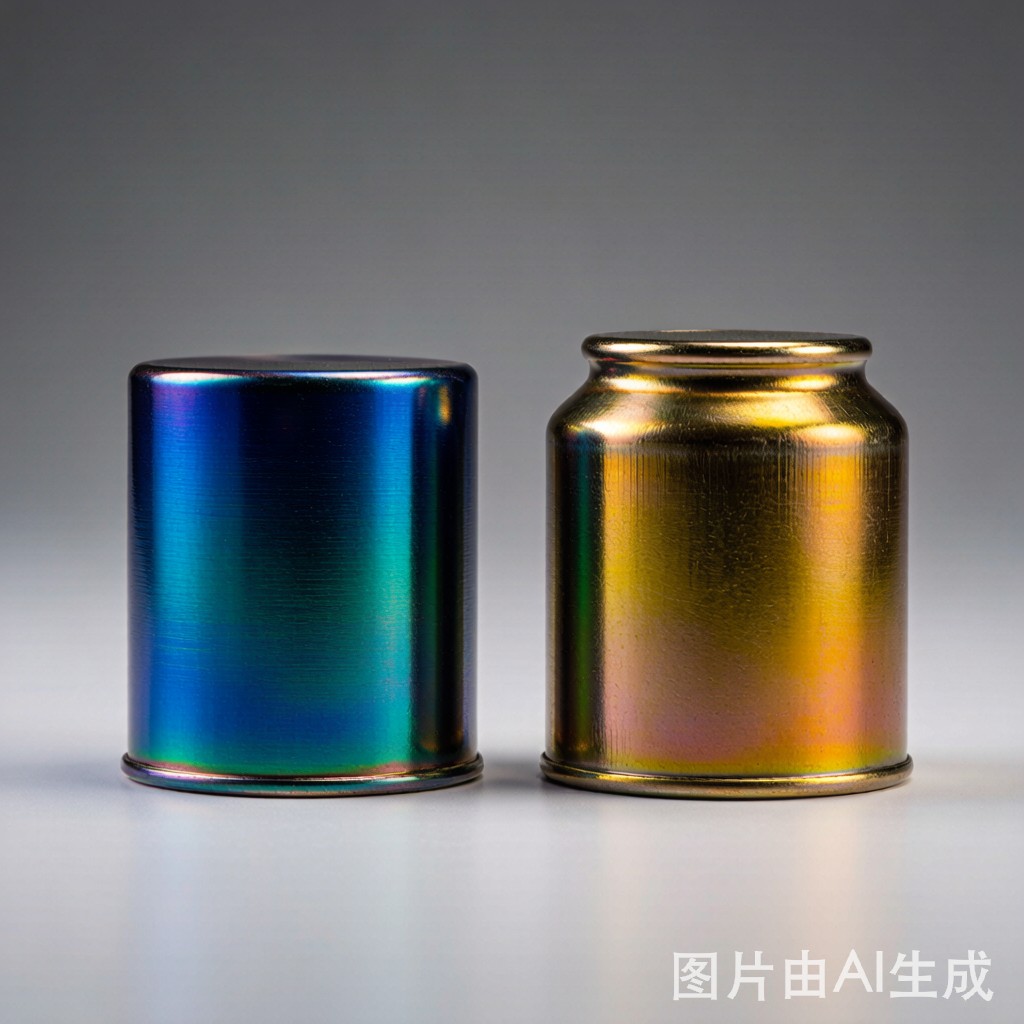
Traditional hexavalent chromate conversion coatings (yellow or olive drab finishes) provide exceptional corrosion resistance through a self-healing mechanism: hexavalent chromium ions in the coating migrate to exposed areas when the coating is scratched, re-passivating the surface. For copper and brass, the process typically involves immersion in a chromic acid–fluoride bath, producing a thin (50–200 nm) mixed oxide film containing Cr₂O₃, CuO, and CuCrO₄ compounds.
The coating reduces the corrosion rate of copper in salt spray (ASTM B117) by 95–99% compared to bare copper. However, hexavalent chromium is classified as a carcinogen under EU REACH and RoHS directives, and its use is increasingly restricted. For export-oriented electronics manufacturers in Southeast Asia, hexavalent chromate conversion is effectively a legacy process.
Trivalent Chromium (Cr³⁺) Conversion
Trivalent chromium conversion coatings offer a RoHS-compliant alternative with 80–90% of the corrosion protection of hexavalent formulations. The self-healing mechanism is weaker (Cr³⁺ does not migrate), but modern formulations with proprietary additives (including nanoparticles and organic inhibitors) approach hexavalent performance. The coating thickness is typically 100–400 nm, appearing clear to light blue or faintly iridescent on copper surfaces.
Electrical contact resistance remains low (0.5 MPa), making trivalent chromate suitable for EMI shielding cans where grounding continuity is critical. Salt spray resistance for trivalent chromate on copper is typically 24–72 hours to first visible corrosion (vs. 200+ hours for hexavalent), which is sufficient for indoor electronics but marginal for marine or outdoor applications.
Chrome-Free Conversion Coatings
Cerium and Molybdate-Based Coatings
Chrome-free conversion coatings use cerium salts, molybdates, titanates, or silanes to form protective oxide films. Cerium-based coatings on copper form a CeO₂/Cu₂O composite layer that provides cathodic inhibition—cerium ions suppress the oxygen reduction reaction that drives copper corrosion. Salt spray performance is typically 12–48 hours, making these coatings suitable for controlled indoor environments but inadequate for tropical outdoor exposure without supplementary paint or powder coating.
Silane and Sol-Gel Treatments
Silane coupling agents (γ-GPS, aminosilanes) and sol-gel formulations (SiO₂/TiO₂/ZrO₂) create thin organic–inorganic hybrid layers. They offer excellent adhesion for topcoats and moderate corrosion inhibition, but their standalone electrical conductivity is poor. For EMI shielding cans, silane treatments are typically used as adhesion promoters beneath conductive paints or as a base for combined conversion + topcoat systems.
Anodizing for Copper Alloys: Process and Limitations
True anodizing—the electrochemical growth of a thick (5–25 μm) oxide layer—is not practical for pure copper because the natural oxide (CuO/Cu₂O) is porous and non-protective. However, copper-aluminum alloys and brass components with aluminum-rich surfaces can be anodized using sulfuric acid or chromic acid electrolytes. The resulting aluminum oxide (Al₂O₃) layer is hard, insulating, and highly corrosion-resistant.
For pure copper shielding cans, a hybrid approach is emerging: deposit a thin aluminum layer (2–5 μm) by electroplating or PVD, then anodize the aluminum to create a dense Al₂O₃ barrier. This provides the corrosion resistance and hardness of anodized aluminum with the conductivity and formability of copper. The trade-off is increased processing cost and the need for precise masking to preserve grounding tabs and contact surfaces in the un-anodized state.
Comparative Analysis for EMI Shielding Applications
| Property | Trivalent Chromate | Chrome-Free (Cerium) | Aluminum Deposit + Anodize |
|---|---|---|---|
| Corrosion Resistance (ASTM B117) | 24–72 hours | 12–48 hours | 200+ hours |
| Electrical Contact Resistance | <1 mΩ | 1–5 mΩ | Insulating (must mask) |
| RoHS/REACH Compliance | Compliant (Cr³⁺) | Fully compliant | Fully compliant |
| Solderability | Good (flux-assisted) | Fair | Poor (must remove oxide) |
| Relative Cost | 1.0× (baseline) | 1.1–1.3× | 2.5–4.0× |
Selection Recommendations
For indoor consumer electronics in controlled environments (offices, homes), trivalent chromate conversion on copper or brass shielding cans offers the best balance of corrosion protection, electrical conductivity, solderability, and cost. For automotive under-hood or tropical outdoor applications, the aluminum-deposit-plus-anodize approach is preferred, with laser ablation or masking to preserve grounding contact zones. Chrome-free cerium coatings are appropriate for cost-sensitive indoor products where regulatory compliance is the primary driver and 24-hour salt spray is sufficient.
Conclusion
The choice of surface treatment for copper EMI shielding cans depends on the operating environment, regulatory requirements, and cost targets. Trivalent chromate remains the practical standard for most indoor electronics, while anodized aluminum layers offer premium corrosion resistance for harsh environments. As RoHS and REACH restrictions tighten, chrome-free alternatives continue to improve, but their performance gap remains significant for critical applications.