The Shielding Challenge in Wearables
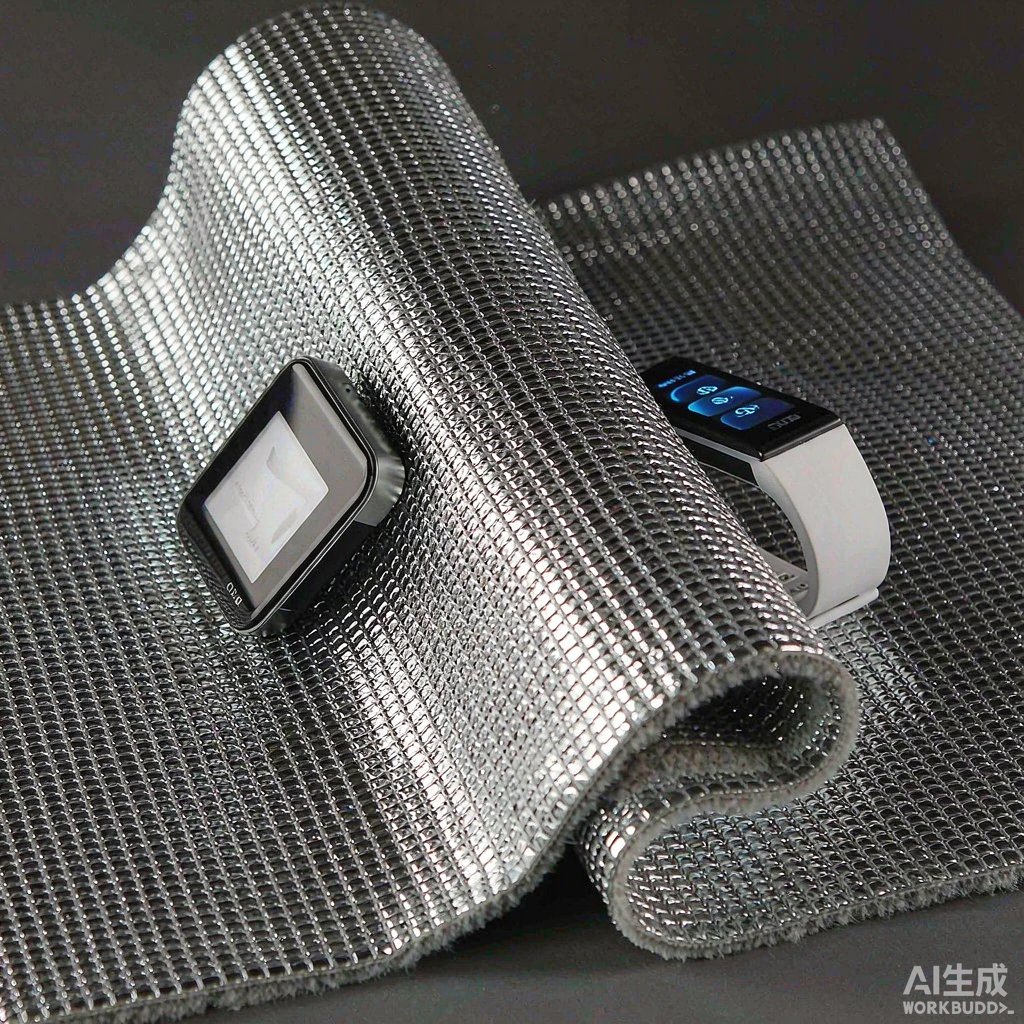
Smartwatches, health-monitoring patches, and AR glasses pack Bluetooth, Wi-Fi, GPS, and bio-signal sensors into curved, flexing enclosures. Rigid metal enclosures and board-level shielding cans are too heavy and inflexible. Conductive fabrics, tapes, and yarns offer a compliant, lightweight alternative for EMI control in wearable electronics.
Types of Conductive Textiles
Silver-Coated Nylon (Ag/Nylon)
The most common conductive fabric for consumer wearables:
- Surface resistivity: 0.1–1.0 Ω/sq depending on silver loading and weave density.
- Shielding effectiveness: 40–60 dB from 30 MHz to 3 GHz (MIL-STD-285 / IEEE 299 test methods).
- Advantages: Lightweight, soft hand feel, antimicrobial, washable (30–50 cycles before degradation).
- Limitations: Silver sulfidation in high-sulfur environments; cost higher than copper alternatives.
Copper Ripstop and Taffeta
Copper-coated polyester or nylon provides higher conductivity at lower cost:
- Surface resistivity: < 0.05 Ω/sq.
- Shielding effectiveness: 60–80 dB up to 1 GHz; effective for cellular band isolation.
- Oxidation: Bare copper tarnishes; nickel-plated copper coatings extend shelf life but add contact resistance.
Conductive Yarns and Threads
Stainless steel fiber or silver-plated polymer threads are sewn into seams or embroidered as ante
as/ground planes:
- Linear resistance: 10–100 Ω/m depending on denier and metal content.
- Applications: E-textile circuit routing, capacitive touch electrodes, strain sensors.
Conductive Adhesive Tapes
For seam sealing and grounding flex circuits to fabric:
- Copper foil tape with conductive acrylic adhesive: Provides 360° shield continuity at panel joints; adhesive bulk resistivity ~ 0.005 Ω·cm.
- Conductive fabric tape: More compliant than foil; conforms to curved surfaces without wrinkling.
- Transfer tapes (no carrier): Ultra-thin (0.05 mm) bonding of conductive textile to plastic housings.
Design Integration Strategies
Grounding and Zoning
Conductive fabric is only effective when properly grounded:
- Peripheral grounding: Stitch or tape conductive fabric to PCB ground at ≤ λ/20 spacing (e.g., 1.5 cm at 1 GHz).
- Zoning: Separate Bluetooth ante
a zone from ECG analog front-end with a grounded fabric wall to prevent digital noise coupling.
- Ground impedance: Use wide copper tape strips (≥ 5 mm) or multiple parallel conductive threads to keep ground inductance < 10 nH.
Washability and Durability
Consumer wearables must survive laundering:
- Encapsulation: Polyurethane or silicone overcoats protect silver coatings from detergent and mechanical abrasion.
- Detachable modules: Design electronics pods to remove before washing; fabric ante
a remains passive and unaffected.
- Abrasion testing: Martindale abrasion (ISO 12947) should exceed 20,000 cycles without resistivity increase > 20%.
Shielding Effectiveness Measurement
Standard coaxial fixture methods (ASTM D4935) are too rigid for textiles. Alternative approaches:
- Dual-chamber reverberation: Measures statistical SE from 0.5–6 GHz; suitable for anisotropic fabrics.
- Near-field probe sca
ing:
Maps leakage hotspots around seams and coectors.
- Wearable-specific: Place a transmitting ante
a inside a garment and measure received power outside, comparing with and without shielding layer.
Biocompatibility Considerations
Medical wearables (ECG patches, continuous glucose monitors) require:
- ISO 10993-5 cytotoxicity: Silver ions can be cytotoxic at high concentrations; encapsulation or low-silver formulations are required for prolonged skin contact.
- Sensitization: Nickel-free options for users with metal allergies; copper and silver are generally better tolerated than nickel.
Conclusion
Conductive fabrics and tapes bridge the gap between rigid EMI solutions and the soft, curved world of wearable electronics. By selecting the right material (Ag/Nylon for comfort, Cu for cost and shielding), ensuring robust grounding, and validating washability and biocompatibility, engineers can achieve 40–80 dB of shielding without compromising wearability.