Cigarette butts are the most persistent waste problem in any smoking area. A single facility can generate thousands of butts per day; each one contains residual tobacco, paper, and a cellulose acetate filter that persists in the environment for years. Beyond appearance, smoldering butts are an active fire hazard — a receptacle full of partially extinguished butts can ignite overnight. Well-designed smoking areas treat waste management as a system: the right receptacle, safe servicing procedures, and increasingly, recycling routes that turn butts into usable material.
Receptacle Selection: The First Line of Defense
Self-extinguishing and metal construction
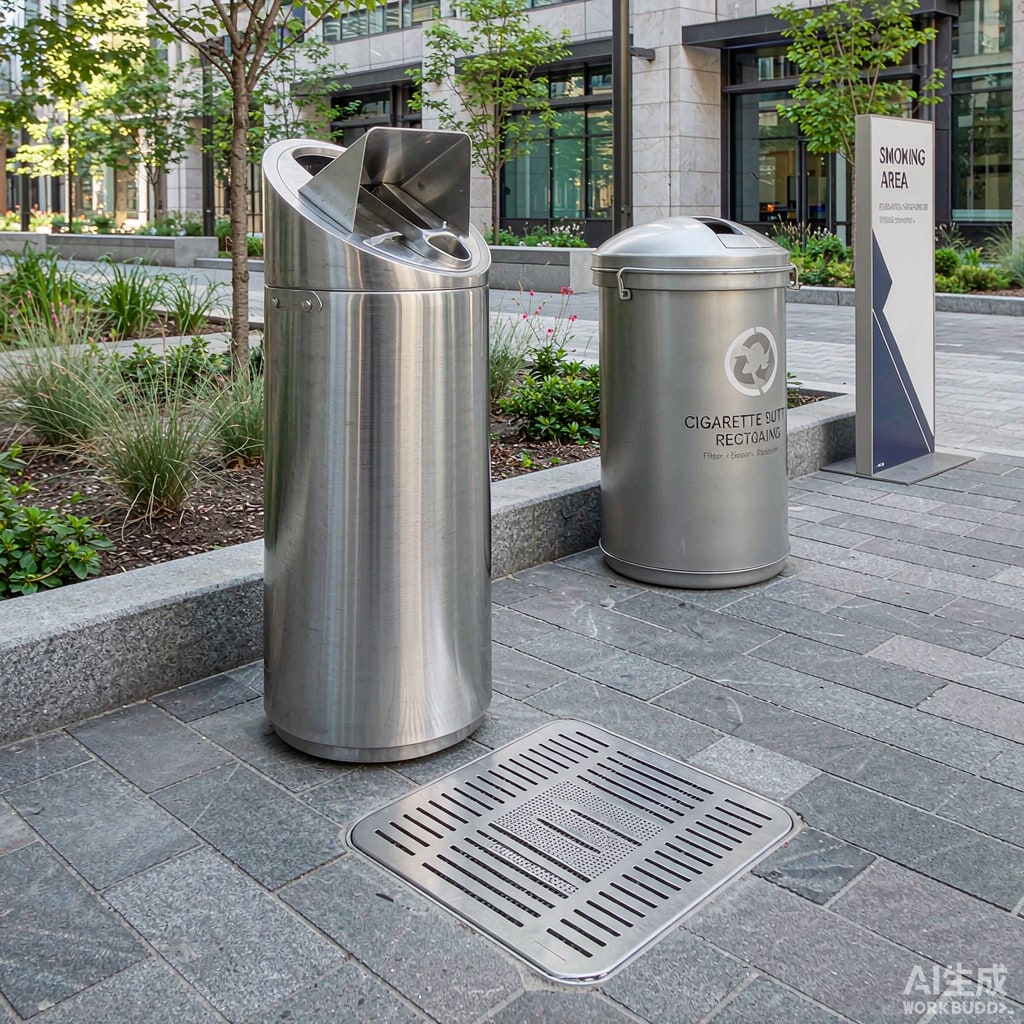
The single most important specification is fire-safe construction. Choose receptacles made of steel or stainless steel — never plastic — with an internal metal liner bucket and a restricted entry aperture that both blocks wind and prevents hands or trash from reaching in. Wall-mounted butt cans for indoor smoking booths should include a baffle or snorkel entry that extinguishes dropped butts by starving oxygen; self-extinguishing designs with internal sand or baffling have effectively eliminated receptacle fires in transit and airport applications. Ground-standing units in outdoor areas must be weighted or anchored — an overturned butt can is both a litter bomb and an ignition source for landscaping.
Capacity and servicing interval
Size receptacles to the true traffic: a workplace smoking booth with 50 users per day fills a 5-liter butt can within two to three days. Overflowing receptacles push users to discard butts on the floor and planting beds, undoing the area’s cleanliness immediately. Specify emptying at a fixed interval — daily for indoor booths, at least twice weekly outdoors — and pair the receptacle with a general waste bin so butts are never dropped into mixed trash where paper waste provides fuel.
Servicing Procedures and Fire Risk Control
Safe emptying practice
The danger window is during and after emptying. Butts that appear cold can retain embers deep in a mass of butts; adding fresh oxygen when tipping the liner can reignite them. Staff should empty into a metal container with a lid, never into plastic bags or directly into a dumpster, and the liner should be allowed to cool before washing. Facilities with elevated risk — those adjacent to fuel storage, dry landscaping, or flammable goods — should wet down the contents or use receptacles with integrated extinguishing fluid trays (water with a small amount of surfactant wets the filter effectively).
Prevention at the source
Reduce the ember load entering the receptacle: prominent stub-out plates — flat metal plates beside the receptacle where smokers press butts out — catch the majority of users’ attention and remove much of the smoldering material before it enters the can. Good signage that shows where to extinguish and where to dispose measurably reduces floor littering. Inside booths, the combination of metal stub plates, self-extinguishing butt cans, and non-combustible flooring (concrete, tile, or metal deck rather than timber) addresses the realistic fire scenarios in one stroke.
Butt Recycling: Making Waste a Resource
Cellulose acetate from filters can be recovered and reprocessed into industrial plastics — park benches, pallets, ashtrays, and construction materials have all been made from recycled butt polymer, with the tobacco and paper fraction composted or used for energy recovery. Several commercial programs now supply collection drums with sealed, fire-rated liners and take back full units for processing. For a facility generating large butt volumes, participation turns a cost (disposal) into a sustainability credential that pairs naturally with ESG reporting. The practical requirements are modest: keep collected butts dry (moisture ruins the polymer yield), use the provider’s sealed liner system, and store full drums away from combustibles until pickup — the same fire discipline that applies to any receptacle.
Checklist for Facility Managers
- Steel receptacles with restricted, baffled entries and metal liners; no plastic butt cans.
- Anchor or weight all freestanding units; wall-mount where possible.
- Fixed emptying schedule; metal lidded transfer containers; never empty into plastic bags or dumpsters hot.
- Metal stub-out plates at every smoking station; clear signage for extinguish-then-dispose.
- Non-combustible flooring and walls near receptacles inside booths.
- Consider sealed-liner recycling drums with a certified butt recycling provider for high-traffic sites.
- Inspect receptacles weekly for damage, rust-through, and heat scorching — scorch marks signal a near-miss and a design gap.
Conclusion
Cigarette waste management is unglamorous, but it determines whether a smoking area stays clean, stays compliant, and stays fire-safe. The formula is consistent across industries: fire-safe metal receptacles sized to real traffic, disciplined emptying procedures, stub-out plates to reduce smoldering load, and — increasingly — recycling partnerships that convert the problem waste stream into a sustainability asset. Facilities that get this right rarely think about cigarette waste again; those that do not get it right discover it through a scorch mark, a litter complaint, or worse.