UL 752 Ballistic Levels and Threat Profiles
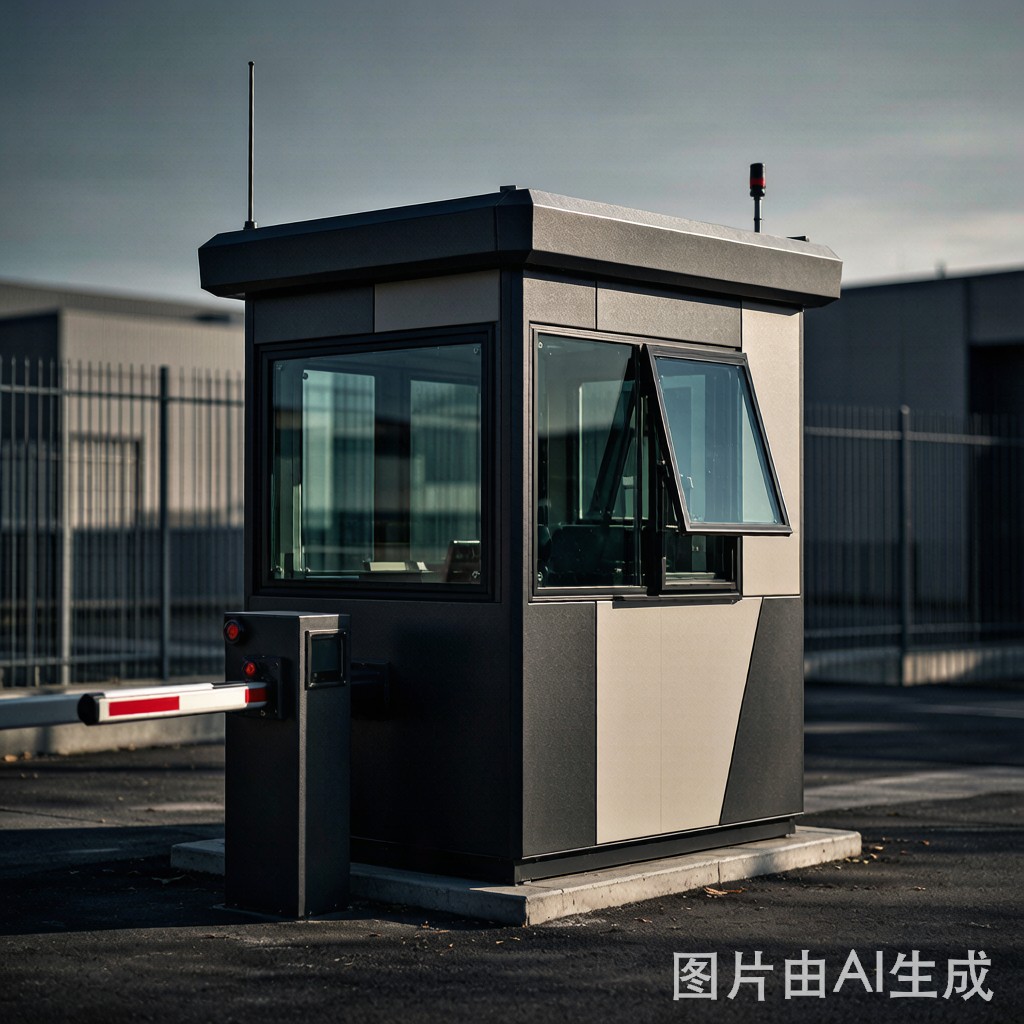
Ballistic-rated guard booths protect security perso
el at embassies, data centers, banks, military checkpoints, and critical infrastructure. The most widely referenced standard is UL 752, which classifies bullet-resistant barriers into eight levels based on the type of firearm and ammunition they stop. Levels 1 through 3 address common handguns, Levels 4 through 8 address high-powered rifles and special threats.
| UL 752 Level | Threat | Typical Application |
|---|---|---|
| Level 1 | 9 mm handgun | Retail cash handling, parking gates |
| Level 3 | .44 Magnum handgun | Bank branches, guard booths |
| Level 4 | .30-06 rifle | Embassies, government facilities |
| Level 8 | 7.62 mm assault rifle | Military and high-risk checkpoints |
Material Systems: Steel, Composite, and Glass-Clad Polycarbonate
Three material families dominate ballistic booth construction:
- Ballistic steel: Hot-rolled armor plate (AR500, AR550) offers multi-hit capability and low cost but is heavy and prone to condensation. Typical thickness ranges from 6 mm at Level 3 to 12 mm at Level 8.
- Composite panels: Fiber-reinforced polymer or ceramic-tile composites are lighter than steel and resist spalling, but they cost more and may require specialized fabrication.
- Glass-clad polycarbonate: Used for windows, this laminated material combines glass hardness with polycarbonate impact resistance. It is available in thicknesses from 25 mm to 75 mm depending on the UL level.
Structural Design for Multi-Hit Performance
A ballistic rating applies to the entire assembly, not just the wall panels. Weak points include door frames, ventilation louvers, roof edges, and corners. Best practices include:
- Overlapping ballistic sheets at seams so there is no direct line of sight through joints.
- Reinforced door frames with continuous hinges rated to the same UL level as the walls.
- Angled or baffled ventilation openings that stop straight-line projectile paths.
- A steel-reinforced floor system to resist underbody threats and vehicle impact.
Glazing, Viewing Ports, and Overlap Requirements
Windows must be tested and labeled to the same UL 752 level as the surrounding wall. The frame-to-glazing overlap is critical: most manufacturers require a minimum bite of 25 mm–40 mm around the perimeter. Use non-shrink ballistic sealant and avoid drilling holes through the transparent armor after installation.
Shooting ports and transaction drawers create additional vulnerabilities. These accessories should be factory-installed and tested as part of the overall assembly, not field-modified.
SE Asian Deployment Considerations: Climate, Power, and Logistics
Southeast Asia imposes environmental loads beyond ballistic threats. High humidity, salt air near coastlines, and intense solar radiation accelerate corrosion and interior heat buildup. Mitigation strategies include:
- Corrosion protection: Apply epoxy powder coating or zinc-rich primer to all steel surfaces; specify stainless-steel hardware.
- Thermal comfort: Size split-type air conditioning at 150 W/m²–200 W/m² to offset solar gain through windows and steel walls.
- Lightning protection: Bond the booth frame to a dedicated earth electrode with resistance ≤10 Ω.
- Transport: Modular knock-down designs reduce shipping cost and allow crane placement in tight compounds.
A properly specified ballistic-rated guard booth balances threat level, environmental durability, and operator ergonomics to deliver reliable protection in challenging tropical conditions.