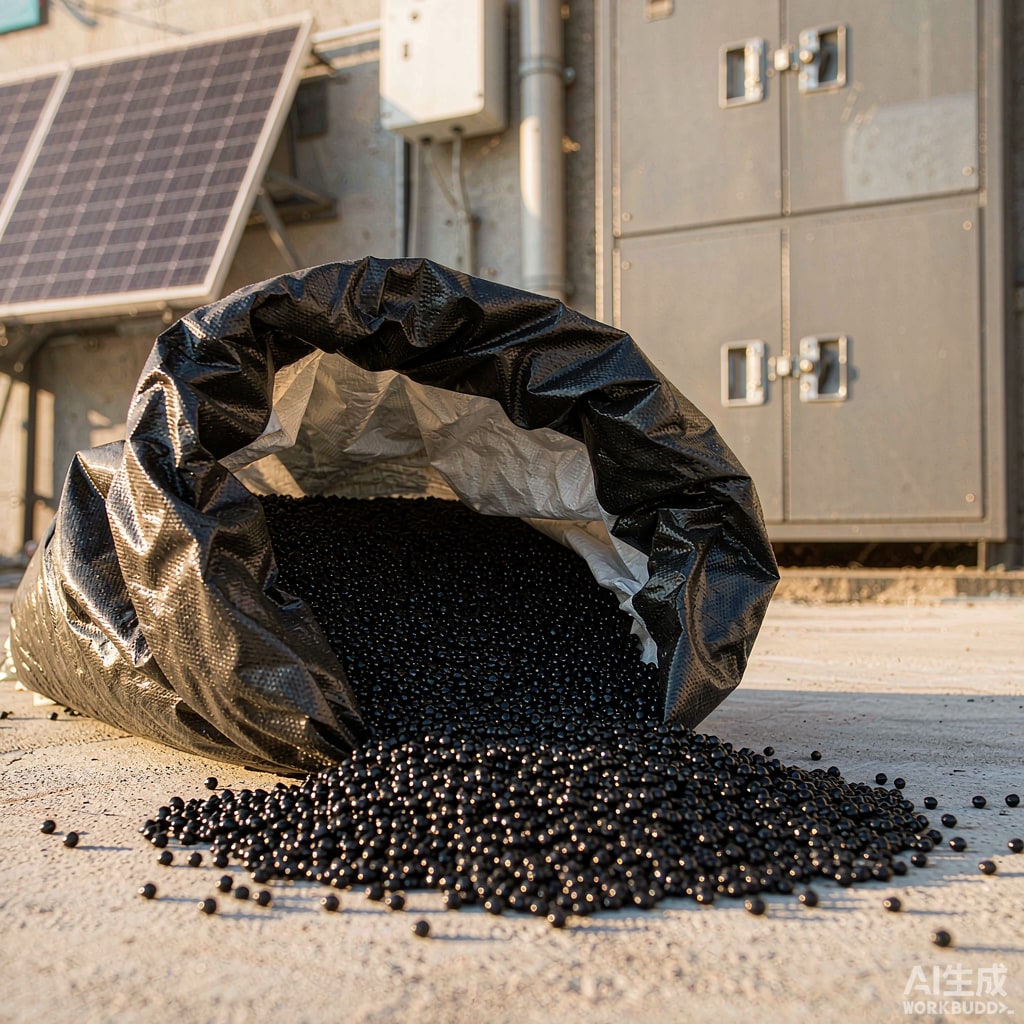
Any electronics housing that lives outdoors — telecom cabinets, smart meters, EV charging stations, solar junction boxes — punishes the wrong material choice. ABS, the workhorse of indoor electronics enclosures, degrades visibly within one to two summers: yellowing, chalking, gloss loss, and a sharp drop in impact strength. ASA (acrylonitrile styrene acrylate) was engineered specifically to fix this. Here is how it works, what data to demand from your pellet supplier, and how to mold it right.
Why ABS Fails Outdoors and How ASA Fixes It
ABS gets its toughness from a dispersed butadiene rubber phase — and butadiene contains carbon–carbon double bonds. UV energy in sunlight breaks these bonds, creating radicals that oxidize the rubber phase. The result is the familiar failure sequence: yellowing, micro-cracking of the surface, chalking as oxidized material washes away, and brittle impact behavior long before the part looks seriously damaged.
ASA replaces the butadiene rubber with an acrylate ester rubber whose backbone is fully saturated — no double bonds to attack. The chemistry inside the part is otherwise familiar: same styrene-acrylonitrile matrix family, similar processing window, similar stiffness and gloss. What changes is weathering life: ASA retains color and impact performance for many years where ABS fails in months to a couple of years, depending on climate.
Key Properties of ASA for Enclosure Design
| Property | Typical Value | Design Note |
|---|---|---|
| Heat deflection temp (HDT, 1.8 MPa) | 95–105°C | Comfortable for outdoor electronics; below PC |
| Notched Izod impact (23°C) | 10–20 kJ/m² | Retained far better after UV exposure than ABS |
| Density | 1.05–1.07 g/cm³ | Comparable to ABS |
| Gloss (molded) | High achievable, 80–95 GU | Holds gloss outdoors with proper pigment |
| Color shift after weathering | ΔE < 3 typical | After 1000–3000 h xenon arc, depending on grade |
Where ASA Beats ABS and Where It Doesn’t
Choose ASA when the enclosure sees sunlight directly: pole-mounted cabinets, rooftop devices, automotive exterior electronics, outdoor APs and cameras. ASA also paints and bonds like ABS, so secondary operations carry over. Its weaknesses: slightly lower ambient impact than premium ABS at room temperature, less heat resistance than polycarbonate, and higher cost than ABS. For sun-exposed parts needing higher heat or impact, ASA/PC blends are the next step up — better HDT (110–125°C) and impact, with the UV stability preserved by the ASA phase.
Weathering Data to Demand From Your Supplier
“UV resistant” on a datasheet is meaningless without a test method. Ask for:
- Xenon-arc exposure per ISO 4892-2 or ASTM D4459/D2565, with the cycle specified (irradiance, rain cycles). Compare ΔE color change and ΔYI yellowness at 1000, 2000, and 3000 hours.
- Retained impact strength after exposure — not just color. An enclosure can keep its color while becoming brittle.
- Gloss retention percentage after exposure, relevant for consumer-facing housings.
- Real outdoor benchmarks where available: Florida and Arizona are the standard hot/humid and hot/dry reference climates; data after 1–3 years there is worth more than any accelerated test number.
Processing ASA Pellets: Drying Through Demolding
- Drying: 80–90°C for 3–4 hours to below 0.1% moisture. ASA is less hygroscopic than ABS but still needs drying; moisture shows up as silver streaks and gloss defects.
- Melt temperature: 240–270°C. Stay below 280°C — prolonged overheating causes acrylate phase degradation and yellowing that no masterbatch can hide.
- Mold temperature: 50–80°C. Higher mold temperatures improve surface gloss and reduce residual stress around gates and ribs.
- Colorants: use weathering-grade masterbatch. Inorganic pigments (rutile TiO2, iron oxides) withstand UV far better than many organics; avoid anatase TiO2, which photocatalyzes chalking. Match the masterbatch carrier to ASA for best dispersion.
- Design notes: uniform wall sections and generous radii reduce weathering-driven stress cracking; ASA holds up best when molded parts carry low frozen-in stress.
Applications Where ASA Is the Default
- Telecom and network cabinets, ante
a radomes, and 5G small-cell housings
- Smart meter covers and utility-grade outdoor junction boxes
- EV charging station housings and solar combiner boxes
- Outdoor consumer electronics: garden lighting, door stations, marine-grade control panels
A Practical Material Comparison for Outdoor Housings
Position ASA against the alternatives buyers usually shortlist:
- ABS: cheapest and easiest to process, but reserve it for indoor or fully shaded, painted applications. Paint adds cost and a failure mode (peel) that molded-in ASA color avoids.
- Polycarbonate: superior impact and heat resistance, and intrinsically UV-stable grades exist — but PC yellows faster than ASA in practice, scratches easily, and costs more. Glass-filled or coated PC suits small, high-value parts.
- ASA/PC blends: the pragmatic middle path for outdoor parts with snap-tabs, latches, or mounting bosses that see mechanical stress plus sun. Expect HDT of 110–125°C and impact roughly between ASA and PC.
- Filled and conductive grades: for EMI-shielded outdoor cabinets, ASA can be compounded with carbon fillers or plated via metallization processes similar to ABS — check with your pellet supplier about plating-grade ASA availability.
Key Takeaways
For any enclosure exposed to direct sun, ASA plastic pellets deliver ABS-like processing and appearance with dramatically better UV durability. Specify the material with real weathering test data — ΔE, retained impact, gloss retention — dry it properly, keep melt temperatures in range, and pair it with weathering-grade pigments. Where heat or impact demands more, step up to ASA/PC blends rather than compromising with ABS.