## The Need for Anti-Static Protection in Electronics Manufacturing
Electrostatic discharge (ESD) is one of the leading causes of damage to sensitive electronic components during manufacturing, handling, and transport. A discharge of as little as 100 volts can damage semiconductors, and the human body can easily generate 3,000–5,000 volts simply by walking across a carpeted floor.
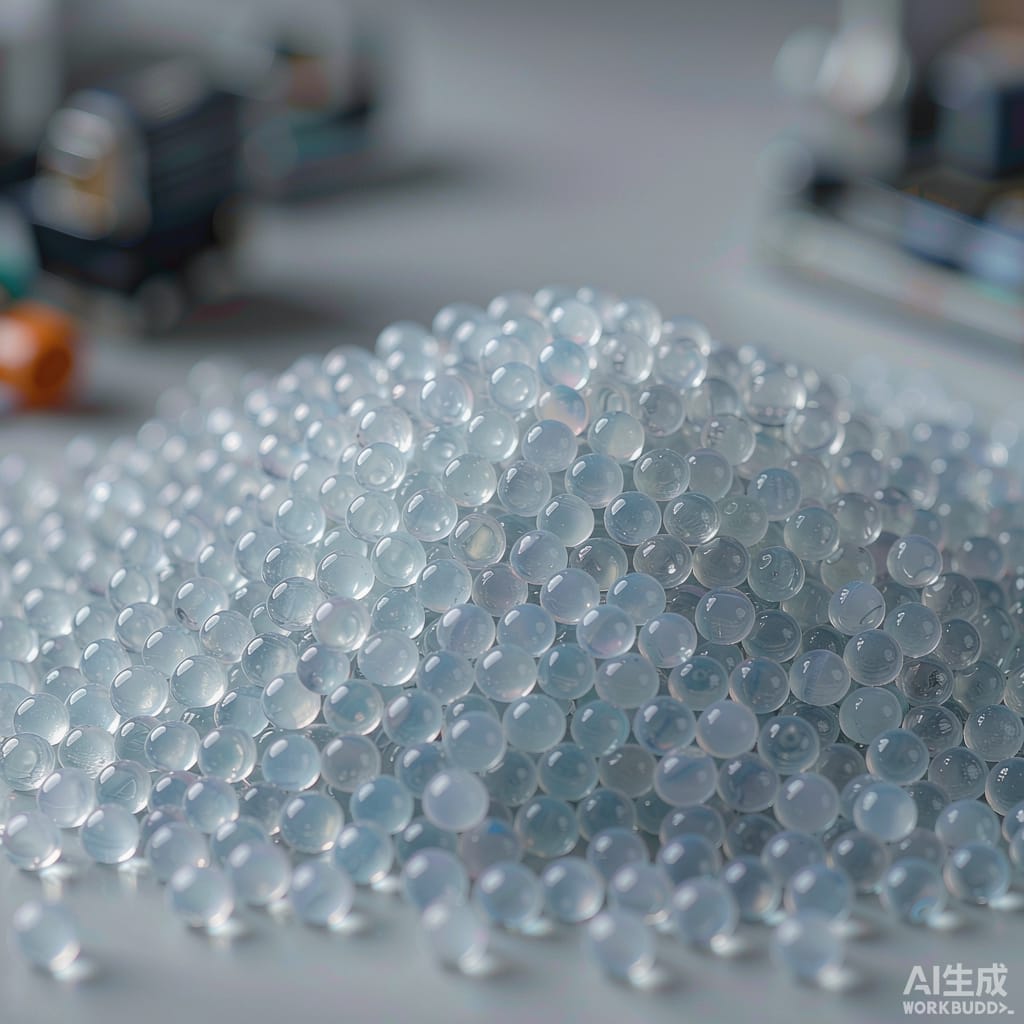
Anti-static modified plastic pellets provide a permanent solution by creating injection-molded or extruded products with controlled surface resistivity in the dissipative range (10⁴–10⁹ Ω/□). These materials are used to manufacture ESD-safe trays, tote boxes, component reels, IC tubes, and workbench mats that protect electronic components throughout the manufacturing supply chain.
## Understanding Surface Resistivity Classifications
### Conductive Range (≤ 10⁴ Ω/□)
Materials with surface resistivity below 10⁴ Ω/□ are classified as conductive. These materials actively route static charges to ground but can also create short-circuit risks if they contact energized circuitry. Conductive plastics are typically used for grounding paths and EMI shielding applications.
### Dissipative Range (10⁴–10⁹ Ω/□)
The dissipative range is the sweet spot for ESD-safe electronics manufacturing. Materials in this range:
– Discharge static charges slowly enough to avoid spark-induced damage
– Do not create short-circuit risks when in contact with components
– Provide a controlled path to ground through wrist straps or grounding points
Most ESD-safe packaging and handling products target the mid-range of 10⁶–10⁸ Ω/□, which provides optimal protection without conductivity risks.
### Insulative Range (≥ 10⁹ Ω/□)
Standard plastics (PE, PP, PS, ABS) have surface resistivity above 10¹² Ω/□, making them insulative and prone to triboelectric charge generation. These materials are unsuitable for direct contact with electronic components.
## Anti-Static Modification Technologies
### 1. Migratory Anti-Static Additives
Migratory additives (typically ethoxylated amines or glycerol esters) are blended into the base polymer at 0.5–3.0% by weight. These additives migrate to the surface over time, forming a microscopic moisture-absorbing layer that provides temporary anti-static properties.
Characteristics:
– Surface resistivity: 10⁸–10¹¹ Ω/□
– Duration: 6–24 months (degrades as additive migrates away or is washed off)
– Humidity-dependent: performance improves with relative humidity above 30% RH
– Cost: low ($0.20–0.50 per kg of compound)
Limitations:
– Not permanent — requires reapplication or surface regeneration
– Can cause contamination of sensitive components due to additive migration
– Performance degrades in low-humidity environments
### 2. Permanent Intrinsic Dissipative Polymers
Intrinsic dissipative polymers incorporate conductive or semi-conductive polymer chains directly into the base resin. The most common approach blends a permanently dissipative polymer alloy (such as a block copolymer of polyamide and polyether) with the base polymer.
Characteristics:
– Surface resistivity: 10⁶–10⁹ Ω/□
– Duration: permanent (lifetime of the product)
– Humidity-independent: stable performance at 12%–90% RH
– Cost: moderate ($1.50–3.00 per kg of compound)
– No surface contamination
Applications: ESD-safe IC trays, transport tubes, and permanent workbench surfaces.
### 3. Carbon-Loaded Compounds
Carbon black or carbon nanotube (CNT) loaded compounds provide conductivity through a percolating network of conductive particles within the polymer matrix.
Characteristics:
– Surface resistivity: 10²–10⁶ Ω/□ (adjustable by carbon loading)
– Duration: permanent
– Humidity-independent
– Color: black only
– Cost: moderate ($1.00–2.50 per kg)
Limitations:
– Black color limits visual inspection and part identification
– Carbon particle sloughing can contaminate cleanroom environments
– Higher loadings degrade mechanical properties
### 4. Metal-Coated Fillers
Metal-coated glass or mineral fibers provide a conductive network within the polymer while maintaining lighter weight and better mechanical properties than carbon-loaded compounds.
Characteristics:
– Surface resistivity: 10³–10⁷ Ω/□
– Better mechanical properties than carbon-loaded compounds
– Light color (gray to silver) — compatible with color coding
– Higher cost ($3.00–6.00 per kg)
## Base Polymer Selection
### ABS (Acrylonitrile Butadiene Styrene)
ABS is the most common base for ESD-safe component trays and handling products. With permanent dissipative modification, ABS achieves surface resistivity of 10⁶–10⁸ Ω/□ while maintaining excellent impact strength, dimensional stability, and injection moldability. ABS trays can withstand reflow oven temperatures up to 130°C for short-term exposure.
### PC (Polycarbonate)
For applications requiring higher temperature resistance or transparency, polycarbonate-based dissipative compounds are used. PC trays handle temperatures up to 150°C and provide better stiffness. However, PC is more prone to stress cracking and requires careful mold design.
### PP (Polypropylene)
PP-based dissipative compounds are preferred for low-cost applications and where chemical resistance is required (e.g., cleaning solvent exposure). PP is lighter and less expensive but has lower stiffness and temperature resistance compared to ABS and PC.
### PPO (Polyphenylene Oxide)
For high-temperature ESD applications (reflow oven trays, wave solder pallets), modified PPO compounds maintain dissipative properties at temperatures up to 180°C. These are the premium choice for solder-compatible handling equipment but come at higher cost ($4.00–8.00 per kg).
## Applications in Electronics Manufacturing
### ESD-Safe IC Transport Trays
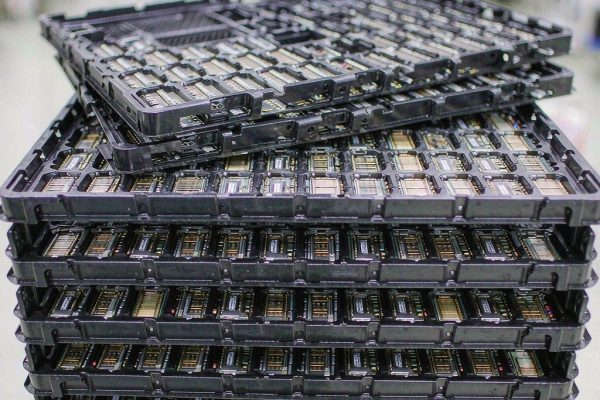
Anti-static modified plastic pellets are injection-molded into matrix trays for IC transport and handling. These trays hold chips in individual pockets with controlled pocket dimensions and maintain dissipative surface resistivity throughout their 3–5 year service life.
### Component Reels and Tape
Surface mount components are packaged on embossed carrier tape wound onto reels. The tape and reel material must be dissipative to prevent static buildup during high-speed pick-and-place operations. Permanent dissipative PC compounds are typically used for carrier tape, while ABS is used for reels.
### Workbench Mats and Flooring
ESD-safe workbench mats are typically made from 3–5 mm thick dissipative PVC or rubber compounds. The top layer is dissipative (10⁶–10⁹ Ω/□) while the bottom layer is conductive (10³–10⁵ Ω/□) to provide a grounding path.
### Cleanroom Tote Boxes
In semiconductor cleanrooms, components are transported between process steps in sealed tote boxes. These totes must be both dissipative and non-outgassing. Permanent intrinsic dissipative polymers (without migratory additives) are required to prevent contamination.
## Quality Testing and Verification
### Surface Resistivity Measurement
Surface resistivity is measured using a concentric ring electrode per ASTM D257 or IEC 60093. Measurements should be taken at:
– 23°C and 50% RH (standard condition)
– 23°C and 12% RH (worst-case low humidity)
– After thermal cycling and aging
### Charge Decay Time
Charge decay time measures how quickly a deposited charge dissipates from the material surface. For ESD-safe applications, the material should dissipate a ±5,000V charge to less than ±50V within 2 seconds (per MIL-STD-1686).
### Triboelectric Charge Generation
The material should not generate significant charge when contacted by other materials. Testing per ASTM D4470 verifies that the triboelectric charge generated by contact with standard IC packaging materials is below 50V.
## Sourcing Anti-Static Plastic Pellets
When sourcing anti-static modified plastic pellets for electronics manufacturing applications, specify:
– Base polymer (ABS, PC, PP, or PPO) appropriate for temperature and mechanical requirements
– Surface resistivity target (typically 10⁶–10⁸ Ω/□ for most ESD-safe applications)
– Modification type (permanent intrinsic preferred for long-life applications)
– Color requirements (clear, gray, or black)
– Regulatory compliance (RoHS, REACH, and cleanroom class certifications if applicable)
TechMartSE offers a range of anti-static modified plastic pellets in ABS, PC, and PPO base polymers, with surface resistivity from 10⁵ to 10⁹ Ω/□. Products are available in natural, black, and custom colors, with permanent and migratory anti-static modification options.