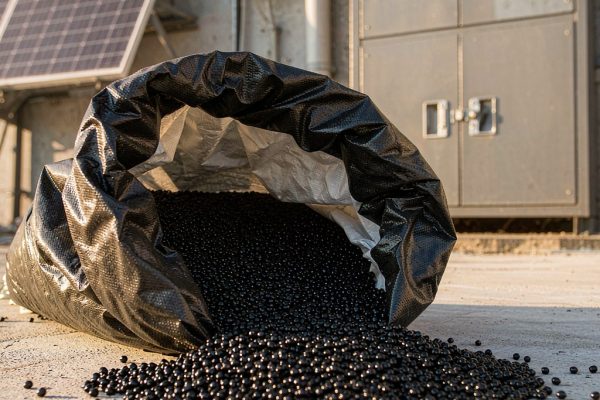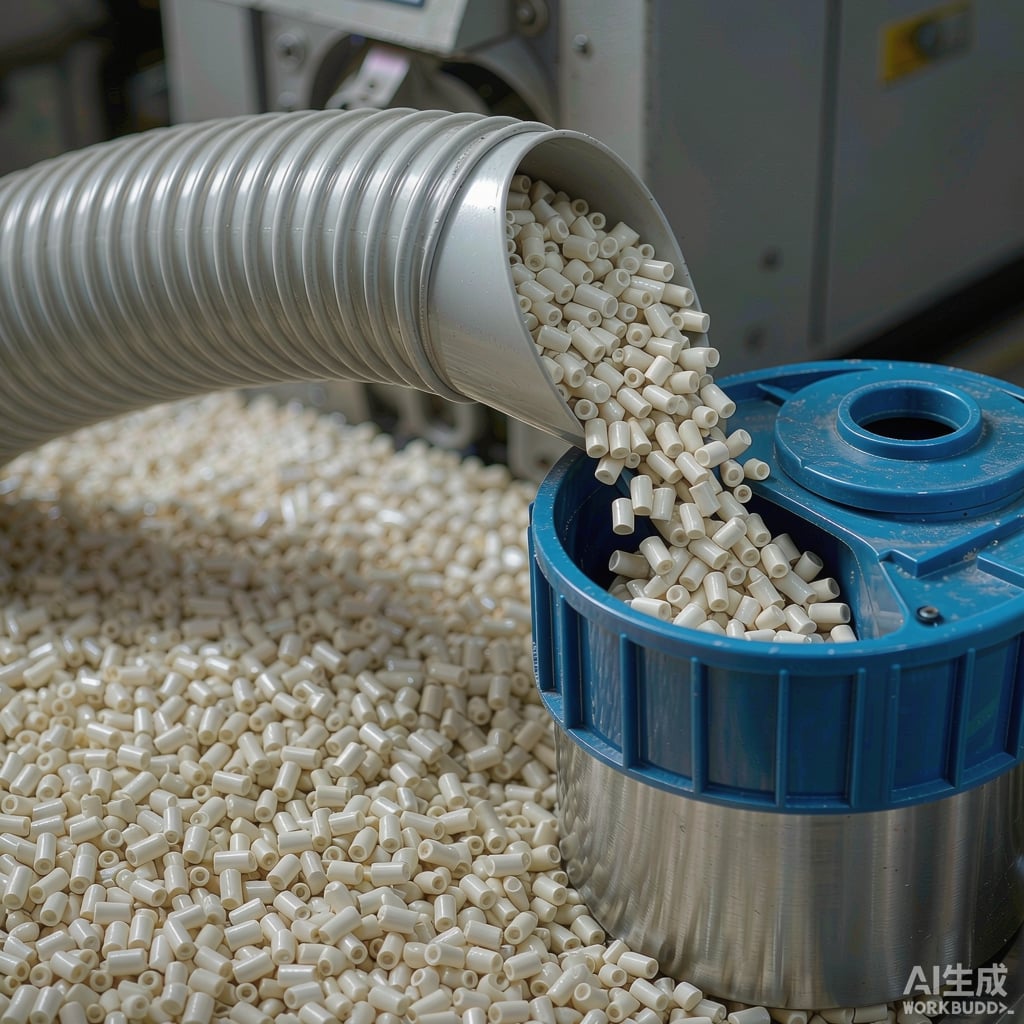
Acrylonitrile butadiene styrene, commonly known as ABS, is one of the most widely used thermoplastics in injection molding. It offers an attractive balance of impact strength, rigidity, surface finish, and cost. However, ABS plastic pellets are hygroscopic and will absorb moisture from the atmosphere. Molding wet pellets is a fast track to surface defects, reduced mechanical properties, and rejected parts.
Why Drying ABS Pellets Matters
Moisture trapped inside ABS pellets turns to steam during the injection process. As the melt travels through the barrel and into the mold cavity, water vapor expands and creates splay marks, silver streaks, and bubbles on the part surface. Deeper inside the melt, hydrolysis can break polymer chains, reducing impact strength and causing dimensional instability.
Even pellets that look dry on the outside can carry enough internal moisture to cause problems. Surface moisture dries quickly, but moisture that has diffused into the pellet core takes time and heat to remove.
Recommended Drying Parameters
Temperature
The standard drying temperature for ABS plastic pellets is between 75 °C and 85 °C. Temperatures below 70 °C slow drying significantly, while temperatures above 90 °C can cause pellets to soften, stick together, or begin thermal degradation. Always follow the supplier’s datasheet for the specific grade.
Time
A typical drying cycle lasts 2 to 4 hours. If pellets have been exposed to high humidity for an extended period, 4 to 6 hours may be necessary. Drying time depends on pellet size, initial moisture content, airflow rate, and hopper design.
Dew Point
Desiccant dryers should deliver air with a dew point of −40 °C or lower. A higher dew point means the drying air itself still contains too much moisture to pull water out of the pellets effectively. Monitor dew point daily and replace desiccant when it can no longer achieve the target.
Moisture Content Target
For most ABS injection molding applications, final moisture content should be below 0.05 %, and preferably below 0.02 %. A Karl Fischer moisture analyzer provides the most accurate measurement, though many shops use simple weight-loss dryers for routine checks.
Dryer Types
- Hot-air dryers: Cheapest option; only suitable for non-hygroscopic resins or very low humidity environments. Not recommended for ABS.
- Desiccant dryers: Use molecular sieves or honeycomb rotors to dehumidify air. The correct choice for ABS.
- Vacuum dryers: Faster drying at lower temperatures; useful for heat-sensitive grades but more expensive.
Hopper and Handling Considerations
Dry pellets should be transferred directly from the dryer to the machine throat without re-exposure to ambient air. Insulated hoppers with closed-loop dry-air circulation prevent moisture reabsorption during the production shift. Avoid leaving dried material in open gaylords or buckets.
Common Defects Linked to Poor Drying
When ABS is not dried properly, the following defects often appear:
- Splay marks: Silver or fan-shaped streaks radiating from the gate.
- Bubbles and voids: Trapped steam pockets inside thick sections.
- Reduced gloss: A dull, mottled surface finish.
- Weak weld lines: Lower molecular weight polymer fails to knit properly.
Conclusion
Proper ABS plastic pellet drying is a low-cost way to prevent expensive defects and quality issues. Maintaining 75–85 °C for 2–4 hours with desiccant air at −40 °C dew point will bring moisture below 0.05 %, giving molders the best chance of producing strong, glossy, dimensionally stable parts.