Why Quality Matters in SMT Copper Selection
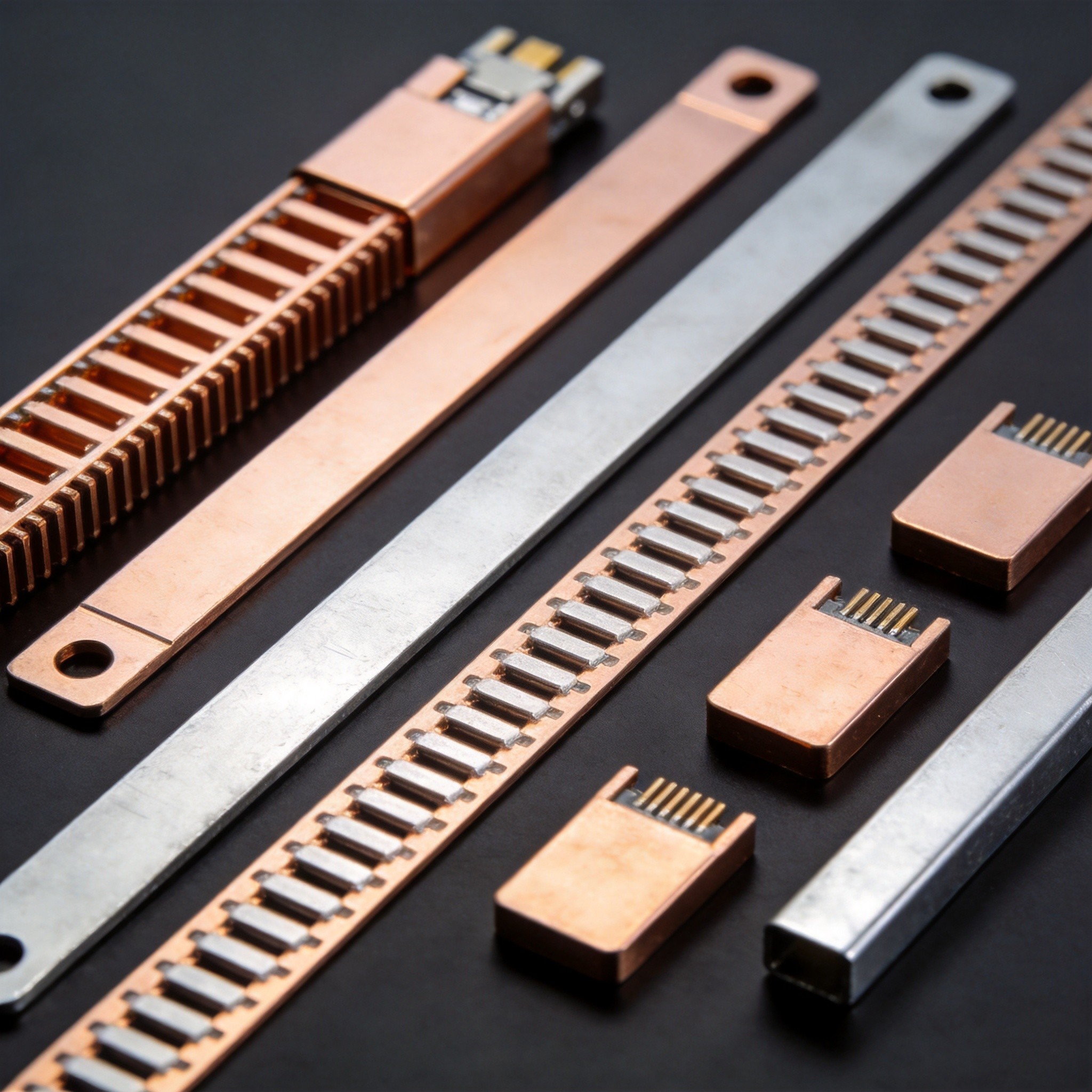
In electronics manufacturing, the components you choose directly impact product reliability, manufacturing efficiency, and total cost of ownership. SMT copper components are no exception. Whether you are sourcing bare copper strips, nickel-plated contacts, or tin-plated terminals, following these essential guidelines will help you select parts that meet your quality requirements and production needs.
Tip 1: Verify Material Composition and Purity
The foundation of any copper component starts with the base material. Understanding what you are getting ensures optimal performance.
Key Considerations
- Purity ratings – Request C11000 (99.9% pure) copper for most applications requiring maximum conductivity
- Mill certifications – Reputable suppliers provide material test reports (MTR) with each shipment
- Alloy documentation – For specialty alloys, verify chemical composition meets your specifications
- Conductivity testing – High-quality components include IACS conductivity ratings
Red Flags to Watch
- Suppliers unable or unwilling to provide material certifications
- Prices significantly below market rates (may indicate substandard materials)
- Inconsistent appearance between samples and production parts
Tip 2: Evaluate Dimensional Tolerances
Precision matters in SMT applications. Components must fit your PCB designs and assembly equipment specifications precisely.
Critical Dimensions
- Thickness tolerance – Typically ±0.02mm to ±0.05mm for standard applications
- Width tolerance – Critical for automated pick-and-place equipment
- Length consistency – Affects soldering and assembly alignment
- Flatness and coplanarity – Essential for reliable solder joints
Quality Verification
Request first article inspection (FAI) reports for new components. These documents verify that delivered parts match your engineering specifications and can reveal manufacturing inconsistencies.
Tip 3: Assess Surface Finish Quality
The surface treatment on your copper strips affects solderability, corrosion resistance, and long-term reliability.
Plating Thickness
Verify plating meets industry standards:
- Tin plating – Minimum 2-4 microns for good solderability
- Nickel plating – 1-3 microns typical for corrosion protection
- Gold plating – Specified in microinches for contact applications
Uniformity Testing
Quality plating should be uniform without voids, lumps, or bare spots. Request samples and examine under magnification before production orders.
Storage and Shelf Life
Consider how plating affects component shelf life:
- Tin-plated parts may taish over extended storage
- Proper packaging with desiccants extends usable life
- Check supplier recommendations for maximum storage periods
Tip 4: Match Components to Your Assembly Process
The best component is worthless if it does not work with your manufacturing equipment and processes.
Compatibility Checklist
- Pick-and-place compatibility – Verify component dimensions work with your feeder equipment
- Soldering profile – Ensure plating and base materials suit your reflow profile
- Welding requirements – Some designs require specific surface conditions for ultrasonic or laser welding
- Cleaning compatibility – Consider post-assembly cleaning processes
Process Qualification
Before committing to high-volume production, run full process qualification builds to verify:
- First-pass yield rates
- Solder joint quality under inspection
- Performance after accelerated life testing
Tip 5: Evaluate Supplier Capabilities and Support
Your supplier relationship impacts more than just component quality. Consider their ability to support your business long-term.
Essential Supplier Qualities
- Consistency – Track record of delivering parts meeting specifications over multiple orders
- Responsiveness – Ability to address issues quickly and provide technical support
- Flexibility – Willingness to accommodate custom orders or specification changes
- Documentation – Provide certificates of conformance, material certs, and test reports
Questions to Ask Potential Suppliers
- What quality management system do you follow (ISO 9001, IATF 16949 for automotive)?
- What inspection equipment do you use for dimensional verification?
- How do you handle quality complaints or non-conforming material?
- What are your typical lead times and minimum order quantities?
- Can you provide references from similar customers?
Making the Final Decision
Selecting quality SMT copper components requires balancing multiple factors:
- Performance requirements – Match specifications to application needs
- Quality standards – Verify suppliers meet required certifications
- Cost considerations – Balance initial price against total cost including failures and rework
- Supply chain reliability – Ensure consistent availability for production needs
Partner with TechMart SE
At TechMart SE, we understand the importance of quality SMT copper components. Our comprehensive inventory includes:
- Bare copper, nickel-plated, and tin-plated strips
- Custom cutting and fabrication services
- Full technical documentation with every order
- Competitive pricing for volume orders
Contact our technical sales team today to discuss your specific requirements and discover how we can support your electronics manufacturing success.