Introduction
Electronic components do not last forever on the shelf. Even when packaged in moisture barrier bags with desiccant, copper lead frames and terminations gradually oxidize, reducing solderability and increasing the risk of poor solder joints during assembly. For high-value or long-lead-time components, re-ti
ing offers a cost-effective way to restore solderability and extend usable life. This article examines the re-ti
ing process specifically for SMT components with copper lead frames, from oxidation assessment to final quality verification.
Why Copper Lead Frames Lose Solderability
Copper is an excellent conductor but readily forms oxide layers when exposed to oxygen and humidity. At room temperature, a thin copper oxide layer forms within hours. After months of storage, this oxide thickens and can be contaminated with organic residues, sulfur compounds, or chloride ions from the environment. Even tin-plated copper leads can develop a stable tin oxide layer that resists soldering if storage conditions exceed recommended limits.
The severity of solderability degradation depends on storage temperature, humidity, atmosphere, and the original surface finish. Components with bare copper or hot-tin-dipped finishes are more susceptible than those with nickel-palladium-gold or immersion silver finishes. Oxidation is also accelerated by cyclic temperature exposure, which drives moisture into the package and accelerates corrosion at the lead-to-mold interface.
When Re-ti
ing Is Appropriate
Re-ti
ing is appropriate when components have exceeded their manufacturer-recommended shelf life but show no other damage. It is commonly used for obsolete components, military or aerospace spares, and inventory recovered from long-term storage. However, not all components are suitable for re-ti
ing. Moisture-sensitive devices, plastic-bodied parts with low thermal tolerance, and components with internal solder joints may be damaged by the thermal shock of the solder pot.
Before re-ti
ing, components should be evaluated for package integrity, lead straightness, and initial solderability. A wetting balance test per IPC J-STD-002 provides an objective measure of solderability and establishes a baseline for process verification.
The Re-ti
ing Process
Step 1: Pre-Cleaning and Degolding
Heavy oxide or contaminated surface finishes must be removed before fresh solder is applied. For tin-lead or pure tin finishes, flux cleaning is usually sufficient. For gold-plated leads, the gold must be dissolved into the solder bath to prevent embrittlement. A gold stripping step or prolonged contact with a freshly maintained solder pot ensures the gold layer is fully removed before the new solder coating forms.
Step 2: Flux Application
Flux selection is critical for re-ti
ing success. Activated rosin fluxes (RMA or RA) provide strong oxide removal for heavily oxidized copper. Water-soluble fluxes offer aggressive cleaning but require thorough post-process washing to avoid ionic contamination. No-clean fluxes are acceptable for lightly oxidized parts but may not be sufficient for severely degraded solderability. The flux must be compatible with the final assembly process and cleanliness requirements.
Step 3: Solder Pot Immersion
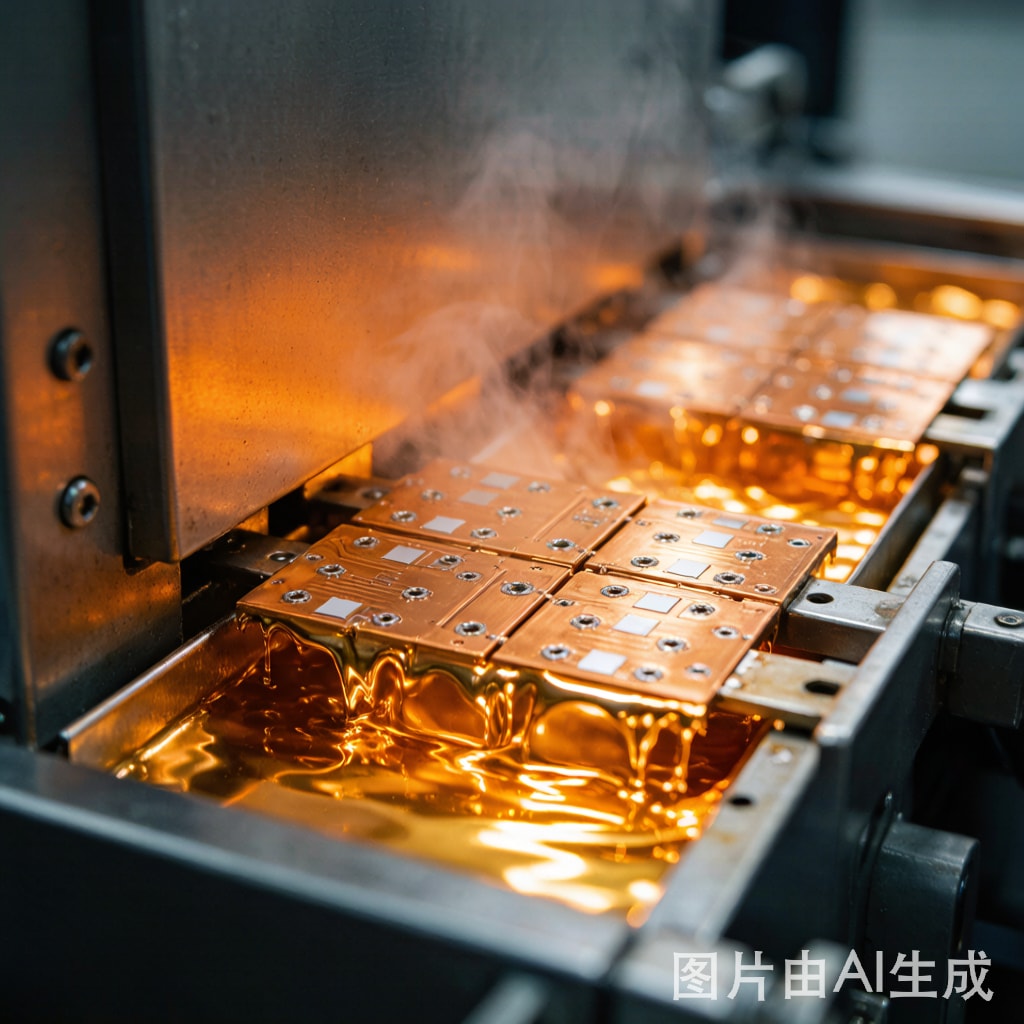
Component leads are dipped into a molten solder bath at a controlled temperature and dwell time. For SAC305 lead-free solder, the pot temperature is typically 260-270°C with a dwell time of 2-5 seconds. For tin-lead solder, 230-245°C is typical. The dwell time must be long enough for the solder to wet the copper surface but short enough to avoid overheating the component body. Multiple dips may be used to achieve a uniform coating, with cooling between dips to limit thermal exposure.
Quality Verification After Re-ti
ing
After re-ti
ing, components must be inspected for uniform solder coating, absence of dewetting or non-wetting, and lead geometry. IPC J-STD-002 provides acceptance criteria for dip-and-look testing, including minimum wetting percentage and maximum pinhole defects. For high-reliability applications, wetting balance testing quantifies wetting force and time to confirm restored solderability.
Moisture-sensitive components should be re-baked and resealed in moisture barrier bags with fresh desiccant and humidity indicator cards. This restores the component’s floor life and prevents moisture-induced damage during subsequent reflow assembly.
Conclusion
Re-ti
ing is a valuable process for recovering solderability on copper lead frame SMT components that have aged beyond their original shelf life. When performed with correct flux selection, solder pot control, and quality verification, re-ti
ing can restore components to like-new solderability and extend their usable life. For electronics manufacturers managing long-lead-time inventory or obsolete part availability, mastering the re-ti
ing process is an essential capability for supply chain resilience and cost control.