Introduction
Mixed-technology PCB assemblies combine surface-mount devices (SMDs) with through-hole components on the same board. When the through-hole side is wave soldered, surface-mount components on the bottom of the board can be washed away or displaced by the solder wave. SMT adhesive, also known as SMT glue or red glue, solves this problem by mechanically securing SMDs until the wave soldering process is complete.
How SMT Adhesive Works
SMT adhesive is a one-component epoxy or acrylic material that is dispensed onto the PCB before component placement. After placement, the adhesive is cured — typically by heat — to form a strong mechanical bond between the component body and the board. The adhesive must hold the component firmly during wave soldering but remain compatible with the cleaning process and not interfere with solder joints or electrical testing.
Unlike solder paste, SMT adhesive does not create an electrical or thermal co
ection. Its sole purpose is mechanical retention. This means the adhesive dot must be placed carefully to avoid contact with component leads, solder pads, or exposed copper traces that will later be soldered.
Adhesive Types and Selection
The two dominant SMT adhesive chemistries are epoxy and acrylic. Epoxy adhesives offer high strength, excellent chemical resistance, and good thermal stability, but they require precise temperature control during curing. Acrylic adhesives cure faster and at lower temperatures, making them attractive for temperature-sensitive boards, though they generally have lower shear strength.
Key selection criteria include curing temperature, shear strength, viscosity, pot life, and compatibility with the board cleaning process. Halogen-free and low-outgassing formulations are increasingly specified for automotive and aerospace applications where ionic contamination must be minimized.
Adhesive Property Comparison
| Property | Epoxy | Acrylic |
|---|---|---|
| Cure Temperature | 120-150°C | 80-120°C |
| Cure Time | 60-180 s | 30-90 s |
| Shear Strength | High | Moderate |
| Thermal Stability | Excellent | Good |
| Typical Use | Heavy components | Temperature-sensitive boards |
Dispensing Methods
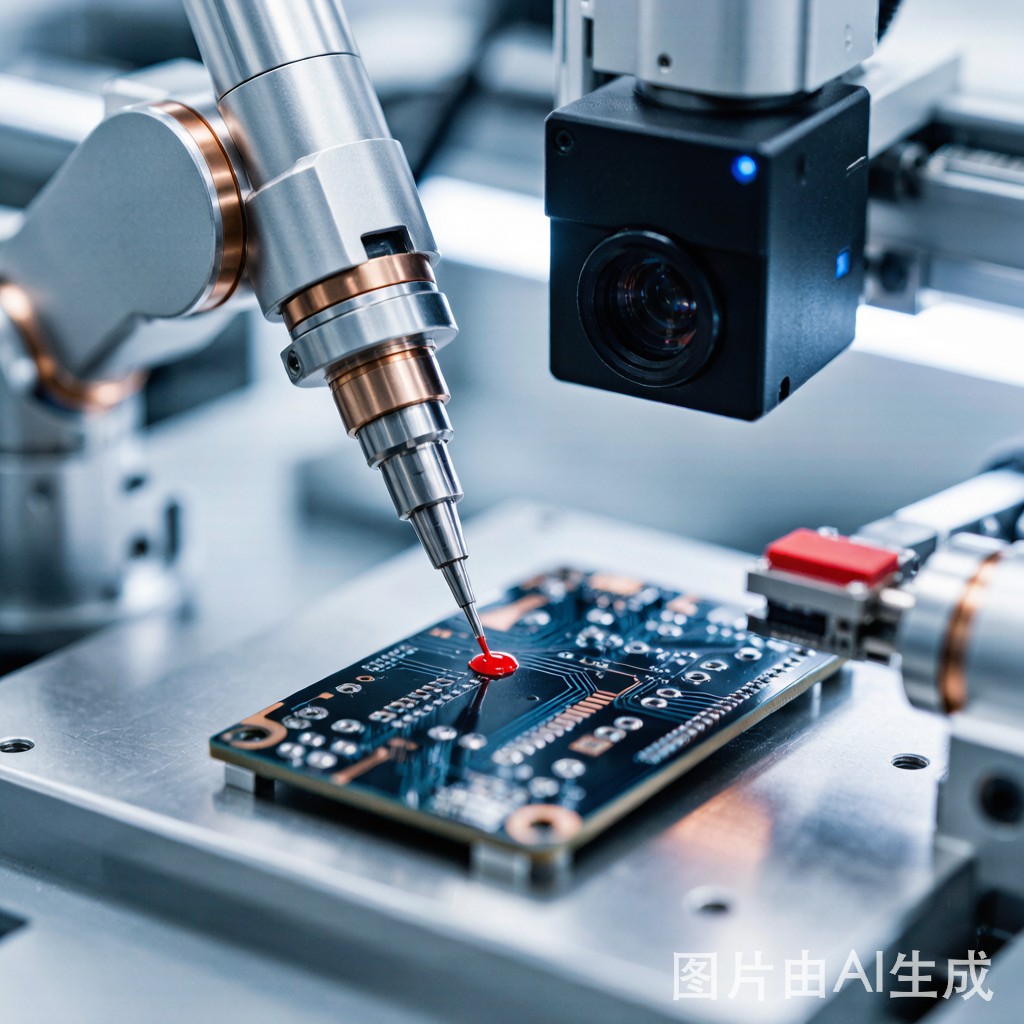
SMT adhesive can be applied by needle dispensing, stencil printing, or jet dispensing. Needle dispensing is the most common method for high-mix assembly, using a pneumatic dispenser to deposit precise dots at programmed locations. Dot diameter, height, and shape are controlled by needle size, dispensing pressure, and z-axis standoff.
Stencil printing is efficient for high-volume production of boards with many adhesive locations. However, it requires a separate stencil and careful control of aperture size to prevent excessive adhesive volume. Jet dispensing, the newest method, shoots adhesive droplets without physical contact, enabling faster cycle times and smaller dot sizes for fine-pitch components.
Curing Profile and Quality Control
Curing transforms the adhesive from a viscous liquid into a solid mechanical anchor. Under-curing leaves the adhesive soft and weak, leading to component movement during wave soldering. Over-curing can make the adhesive too brittle, increase thermal stress, or cause discoloration. The ideal profile follows the manufacturer’s recommendation, typically a ramp to cure temperature with sufficient dwell time for full polymerization.
Quality control includes visual inspection of dot placement, shear testing of cured dots, and cross-sectioning to verify wetting area and cure depth. Automated optical inspection systems can detect missing adhesive, insufficient volume, or dots bridging solder pads.
Common Defects and Prevention
Common SMT adhesive defects include insufficient curing, dot misplacement, adhesive contamination of pads, and component floating. Floating occurs when the adhesive dot is too large or placed under the component body center, causing the component to lift during cure. The solution is to place smaller dots near the component corners, away from active leads.
Conclusion
SMT adhesive is a critical enabler of mixed-technology assembly, allowing designers to combine the density of surface-mount technology with the robustness of through-hole soldering. Proper adhesive selection, precise dispensing, and controlled curing ensure components stay in place during wave soldering while maintaining electrical integrity and long-term reliability.