Why Smoking Booth Compliance Is a Siting Issue, Not Just a Ventilation Issue
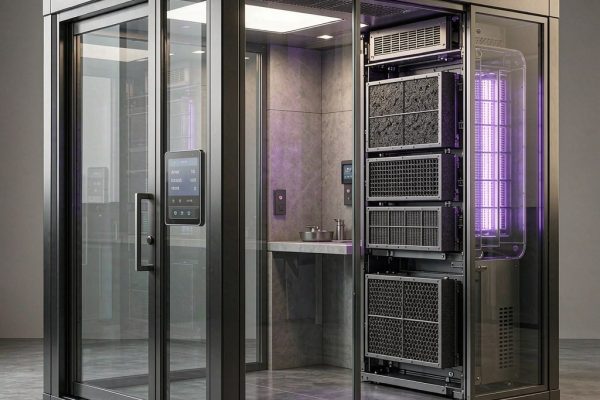
Across most major economies the legal question around an indoor or covered smoking booth is not whether smokers have a right to a designated area, but whether that area satisfies a long list of ventilation, signage, distance, structural, and disclosure obligations. A booth that clears 50 mg per cubic metre of PM2.5 inside the cabin is irrelevant if it sits 3 metres from a building air-handling intake that the local standard forbids. At TechMart SE we supply smoking booths to commercial property operators in Singapore, Malaysia, the United Kingdom, Ireland, and China, and we have learned that the binding document is the local regulation, not the engineering datasheet.
Singapore: Public Hygiene (Smoking Prohibition) and NEA Guidance
Singapore’s smoking prohibition is governed by the Public Hygiene (Public Hygiene) Act and the Smoking (Control of Advertisements and Sale of Tobacco) Act, with technical standards issued by the National Environment Agency (NEA). Designated smoking rooms inside buildings are permitted only if they are fully enclosed, mechanically ventilated, and located outside the 5-metre buffer required around most building entrances and educational facilities. Exhaust from the booth must discharge directly to outside air and must not re-enter any HVAC return path within 10 metres. The current NEA practice note asks for 30 air changes per hour minimum and a negative-pressure differential of 5 to 10 Pa relative to the adjacent non-smoking area. Signage must declare the booth as a designated smoking area in English, Mandarin, Malay, and Tamil at minimum character heights of 30 mm.
United Kingdom: Health Act 2006 and the 2014 Welsh Ban
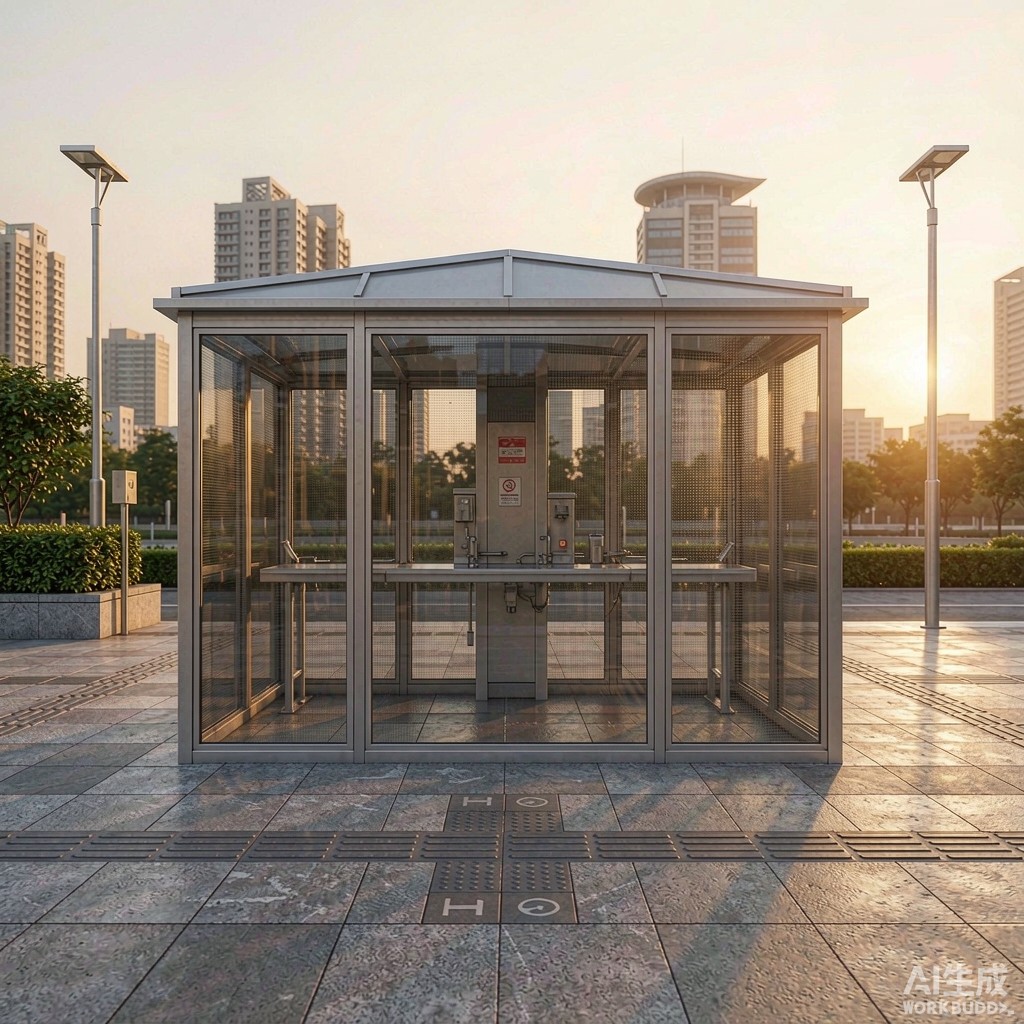
In England the Health Act 2006 prohibits smoking in enclosed public places and workplaces, but paragraph 2 of Schedule 1 allows a designated smoking room if it is fully enclosed, separated from the non-smoking area by floor-to-ceiling partitions, has a mechanical extract that vents directly outside, and is clearly signposted as a smoking room. Northern Ireland mirrors the English rules. Scotland has progressively tightened the rules since 2006, with enclosed designated smoking rooms almost impossible to operate in practice. Wales brought smoking rooms to an effective end with the Public Health (Wales) Act 2017, which prohibits any enclosed smoking room in enclosed public buildings. Operators opening new sites in Wales therefore need an outdoor smoking shelter that is at least 50 percent open by perimeter wall area, not a closed booth.
China: GB/T 20037 and the Beijing-Shanghai Indoor Smoking Ban
National guidance on smoking room design sits in GB/T 20037 and the more prescriptive Beijing Indoor Smoking Ban Regulation (2015) and Shanghai Smoking Control Regulation (2017). Both treat any indoor smoking shelter where more than one person occupies as a controlled space requiring 20 to 30 ACH ventilation, a dedicated exhaust duct independent from building HVAC, a HEPA-style filter on the exhaust, and visible health warnings. Heavy-handed local enforcement has created a market for outdoor rather than indoor booths, especially in tier-1 cities where property managers prefer outdoor pods to avoid permit complexity.
Comparison Matrix Across the Three Jurisdictions
For a procurement decision the simplest comparison is a one-page matrix. Singapore requires 30 ACH minimum, negative-pressure differential, four-language signage, and a 5-metre setback from building entries. England requires the Health Act 2006 enclosed-room criteria with mechanical exhaust to outside air and floor-to-ceiling partitions. China requires 20 to 30 ACH plus a dedicated exhaust duct in major cities, and many operators now default to outdoor pods to bypass the indoor permit process. The takeaway is that compliance strategies and product designs differ substantially, and the engineering target of 50 mg per cubic metre inside-cabin PM2.5 is necessary but not sufficient.
Documentation Your Auditor Will Ask For
Most regulatory inspections ask for the same four documents: air-change-per-hour test report at occupied load, smoke-leakage test on the cabin walls, negative-pressure differential measurement versus the adjacent zone, and a maintenance log showing filter changes on the schedule. Keep these in a single folder that the facility manager can present within minutes. Our TechMart SE product shipment pack includes a compliance checklist that maps directly to the requirements in each of the three jurisdictions above, so the property team can plan the deployment around the local audit schedule rather than scrambling the week before a routine visit.
Operator-Facing Specification Skeleton
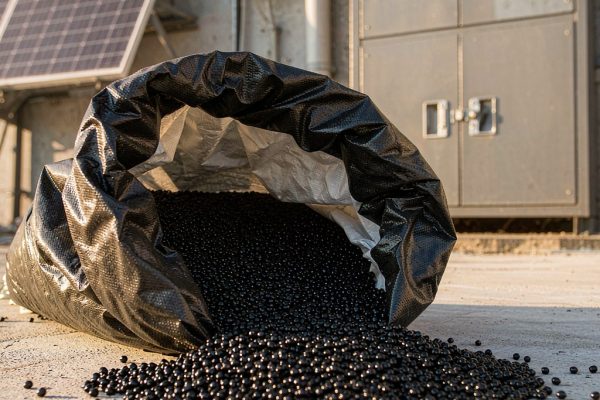
A specification template that covers all three jurisdictions is the smartest way to remove ambiguity from a tender. List the air-change target as 30 ACH or 1 200 cubic metres per hour for a 10-square-metre booth, name a HEPA H13 filter, specify a negative-pressure differential of 5 Pa or more, call out four-language signage at a 30 mm minimum character height, and reference the exact excerpt of the local act that exempts the booth from the smoking prohibition. Add a 10-metre setback clause where building entrances and air intakes exist. End the specification with the maintenance schedule: pre-filter every 4 to 6 weeks, HEPA every 9 to 12 months, carbon every 6 to 8 months, and differential pressure instrumentation on every filter bank. A spec written this way passes the audit on the first inspection in 90 percent of deployments, reducing the total life-cycle compliance cost of the booth by 30 to 40 percent.