The EMI Shielding Challenge in Portable Electronics
Portable electronics — smartphones, tablets, wearables, and IoT devices — face an acute electromagnetic interference (EMI) dilemma. As device form factors shrink, RF front-end modules, digital processors, and sensitive analog circuits are packed into ever-tighter spaces, creating fertile ground for intra-system interference (self-desense) and susceptibility to external RF threats. Designers must choose between two dominant shielding approaches: metal shielding cans (stamped or drawn enclosures) and conductive fabric shields (nickel-copper plated textiles).
Each approach carries distinct advantages and trade-offs that directly impact shielding effectiveness (SE), device weight, manufacturing cost, thermal performance, and design flexibility. This article provides a systematic comparison to guide electronics engineers and procurement teams in selecting the optimal EMI shielding strategy for their portable device designs.
Metal Shielding Cans: The Traditional Approach
Construction and Materials
Metal shielding cans are stamped or drawn from thin sheet metal, typically:
- SUS304 stainless steel: 0.15–0.30 mm thickness, excellent rigidity, SE 60–80 dB from 30 MHz to 6 GHz
- Nickel-silver (C7521): 0.15–0.25 mm, good solderability, SE 55–70 dB, lower cost than stainless
- Tin-plated cold-rolled steel: 0.20–0.30 mm, lowest material cost, SE 50–65 dB, solderable to PCB ground pads
- Brass (C2680): 0.15–0.20 mm, good formability for drawn cans, SE 45–60 dB
Attachment Methods
Metal cans attach to the PCB through several methods:
- Solder paste reflow: Most common for SMT production — can flanges sit on solder pads, reflowed simultaneously with component soldering
- Snap-fit clips: Press-fit metal clips on the PCB edge, can snaps onto clips — allows removal for rework
- Conductive adhesive: Silver-loaded epoxy bonds can to ground pads — used when reflow compatibility is impossible
Conductive Fabric Shields: The Emerging Alternative
Construction and Materials
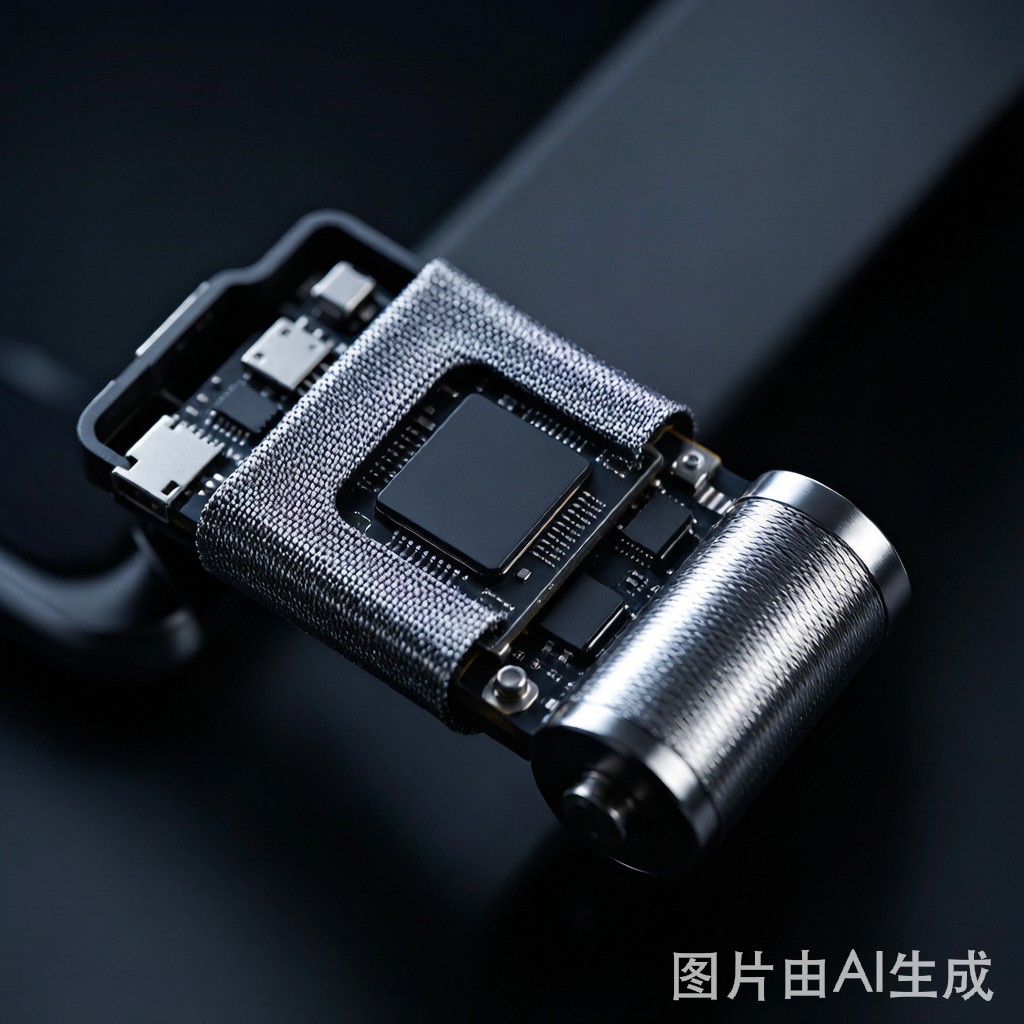
Conductive fabric EMI shields consist of textile substrates plated with metallic layers:
- Nickel-copper plated polyester: Most common type, 0.10–0.15 mm total thickness, fabric weight 40–80 g/m², SE 40–60 dB from 100 MHz to 3 GHz
- Nickel-copper plated nylon: Slightly heavier substrate, better abrasion resistance, SE 40–55 dB
- Pure copper fabric: Higher conductivity but oxidizes rapidly, SE 50–65 dB, requires protective coating
- Multi-layer laminates: Fabric + foam + fabric sandwich structures providing both SE and vibration damping
Attachment Methods
Conductive fabric shields mount differently from metal cans:
- Adhesive-backed foam gasket: Pre-cut fabric shapes with conductive adhesive foam backing, pressed onto PCB ground perimeter
- Frame-mounted wrap: Fabric wraps around a plastic or metal frame that clips onto the PCB — allows removal and replacement
- Heat-sealed pouch: Custom-formed fabric pouch surrounding the module, sealed by thermal bonding
Systematic Comparison: Conductive Fabric vs Metal Can
Shielding Effectiveness Across Frequency Ranges
| Frequency Range | Metal Can (SUS304 0.2mm) | Conductive Fabric (Ni/Cu Polyester) | Difference |
|---|---|---|---|
| 30–100 MHz | 70–80 dB | 35–45 dB | 30–35 dB |
| 100–500 MHz | 65–75 dB | 40–55 dB | 20–25 dB |
| 500 MHz–1 GHz | 60–70 dB | 45–55 dB | 15–20 dB |
| 1–3 GHz | 55–65 dB | 40–50 dB | 15–20 dB |
| 3–6 GHz | 50–60 dB | 30–40 dB | 20–25 dB |
Key insight: Metal cans maintain 15–35 dB higher SE across all frequencies. However, many portable devices require only 30–40 dB isolation between modules (e.g., WiFi/BT co-existence with GPS), making conductive fabric’s 40–55 dB range sufficient for many practical scenarios.
Weight Comparison
| Shield Type | Area Density | Weight for 20×20mm Shield | Relative to Metal Can |
|---|---|---|---|
| SUS304 can (0.2mm) | ~1.57 g/cm³ × 0.2mm | ~630 mg | 1.0× (baseline) |
| C7521 can (0.2mm) | ~1.34 g/cm³ × 0.2mm | ~536 mg | 0.85× |
| Ni/Cu polyester fabric | ~60 g/m² | ~24 mg | 0.04× |
| Fabric + foam laminate | ~120 g/m² | ~48 mg | 0.08× |
Key insight: Conductive fabric shields weigh 4–8% of equivalent metal cans. In weight-sensitive portable devices (smartphones, wearables), this difference can be decisive — a typical smartphone contains 5–8 shielded modules, where replacing cans with fabric saves 2.5–5 grams.
Cost Comparison
| Cost Element | Metal Can (per module) | Conductive Fabric (per module) |
|---|---|---|
| Material cost | $0.08–0.25 | $0.05–0.15 |
| Tooling (stamping die) | $3,000–8,000 (one-time) | $500–2,000 (cutting die) |
| Assembly labor | SMT reflow (no extra step) | Manual placement or custom fixture |
| Rework difficulty | Snap-fit: easy; Soldered: very hard | Adhesive: moderate; Frame: easy |
| Total per-unit (10K volume) | $0.15–0.40 | $0.10–0.30 |
Thermal Impact
Metal cans provide a confined thermal environment — trapped heat can raise module temperatures 5–15°C above ambient, requiring thermal vias, heat spreaders, or ventilation holes in the can. Conductive fabric is thermally porous, allowing natural convection through the textile weave, typically keeping module temperatures 3–8°C lower than metal-can equivalents.
However, this thermal permeability is a double-edged sword: fabric shields provide less thermal mass to absorb transient power spikes, and they ca
ot function as integrated heat spreaders the way thick metal cans can.
Design Flexibility
Conductive fabric wins decisively on design flexibility:
- 3D conformability: Fabric wraps around irregular module shapes — cameras, ante
a modules, flex circuit folds — without custom tooling
- Thickness flexibility: 0.10 mm fabric fits into spaces too thin for any metal can (minimum practical can wall ≈ 0.15 mm)
- Rapid prototyping: Fabric shields can be hand-cut and adhesive-mounted in minutes; metal cans require stamping die fabrication (2–4 weeks)
- Module variation accommodation: Fabric stretches slightly to accommodate component height variations; cans require exact height matching
Application-Specific Decision Guide
When Metal Cans Are Preferred
- High-frequency modules (>3 GHz): mmWave/5G NR front-ends, radar sensors — metal’s superior SE at high frequencies is essential
- High-power modules: RF power amplifiers, PMICs — metal serves as both shield and heat spreader
- Military/aerospace applications: TEMPEST compliance requires >60 dB SE, only metal cans reliably deliver
- Automotive safety systems: ADAS controllers, brake-by-wire — maximum SE and vibration resistance mandate metal
When Conductive Fabric Is Preferred
- Ultra-thin devices: Smartwatch internals, foldable phone hinge regions — space constraints prohibit metal can height
- Weight-critical designs: Drones, portable medical monitors — every gram matters
- Irregular module geometries: Multi-camera arrays, flex-circuit fold regions — fabric conforms where cans ca
ot fit
- Rapid iteration/NPI phase: Prototyping and early production — fabric shields avoid stamping die lead-time
- Low-to-moderate SE needs (30–50 dB): GPS, BT/WiFi co-existence, audio codec isolation — fabric is sufficient
Hybrid Solutions
Many modern portable devices employ hybrid shielding — metal cans for critical RF modules (PA, transceiver) and conductive fabric for lower-priority isolation (audio codec, sensor hub). This approach optimizes the cost-weight-performance triangle across the entire PCB.
Southeast Asian Market Considerations
For electronics manufacturing serving Southeast Asian markets:
- Humidity corrosion: 80–95% RH environments accelerate bare copper oxidation — metal cans with tin/nickel plating resist corrosion better than fabric (copper-plated fibers can oxidize, reducing SE by 5–10 dB over 6 months)
- Local sourcing: Metal cans are manufactured regionally (Vietnam, Thailand, Malaysia); conductive fabric sourcing typically requires Japan or China imports
- Repair/rework culture: Southeast Asian contract manufacturers prioritize snap-fit or frame-mounted shields that enable quick rework, favoring fabric-on-frame or snap-fit metal cans
Conclusion
The choice between conductive fabric and metal can EMI shielding in portable electronics is not binary — it is a multi-dimensional optimization across SE requirements, weight budget, cost ceiling, thermal constraints, and form factor geometry. Metal cans remain the gold standard for high-frequency and high-power shielding, while conductive fabric excels in ultra-thin, weight-sensitive, and irregularly-shaped applications. The most effective modern designs combine both approaches strategically across the PCB, allocating each module the shielding technology that best balances its specific interference isolation needs against the device’s overall design constraints.