Introduction: The Hidden Threat to Brass SMT Components in Coastal Electronics
Brass strips—typically C26000 (70/30 cartridge brass) or C26800 (65/35 yellow brass)—are widely used in SMT co
ector contacts, lead frames, and EMI shielding components due to their excellent formability, electrical conductivity (28% IACS), and cost-effectiveness. However, in Southeast Asian tropical marine climates where temperatures routinely exceed 30°C with 75–95% relative humidity and elevated chloride concentrations, brass components face a silent but destructive enemy: dezincification.
Dezincification is a selective corrosion process where zinc is leached from the brass alloy matrix, leaving behind a porous, mechanically weak copper-rich residue. This phenomenon compromises both the electrical and mechanical integrity of SMT co
ector contacts, potentially leading to contact resistance increases, spring force degradation, and catastrophic co
ection failure.
Dezincification Mechanisms: Understanding the Science
Type I: Plug-Type Dezincification
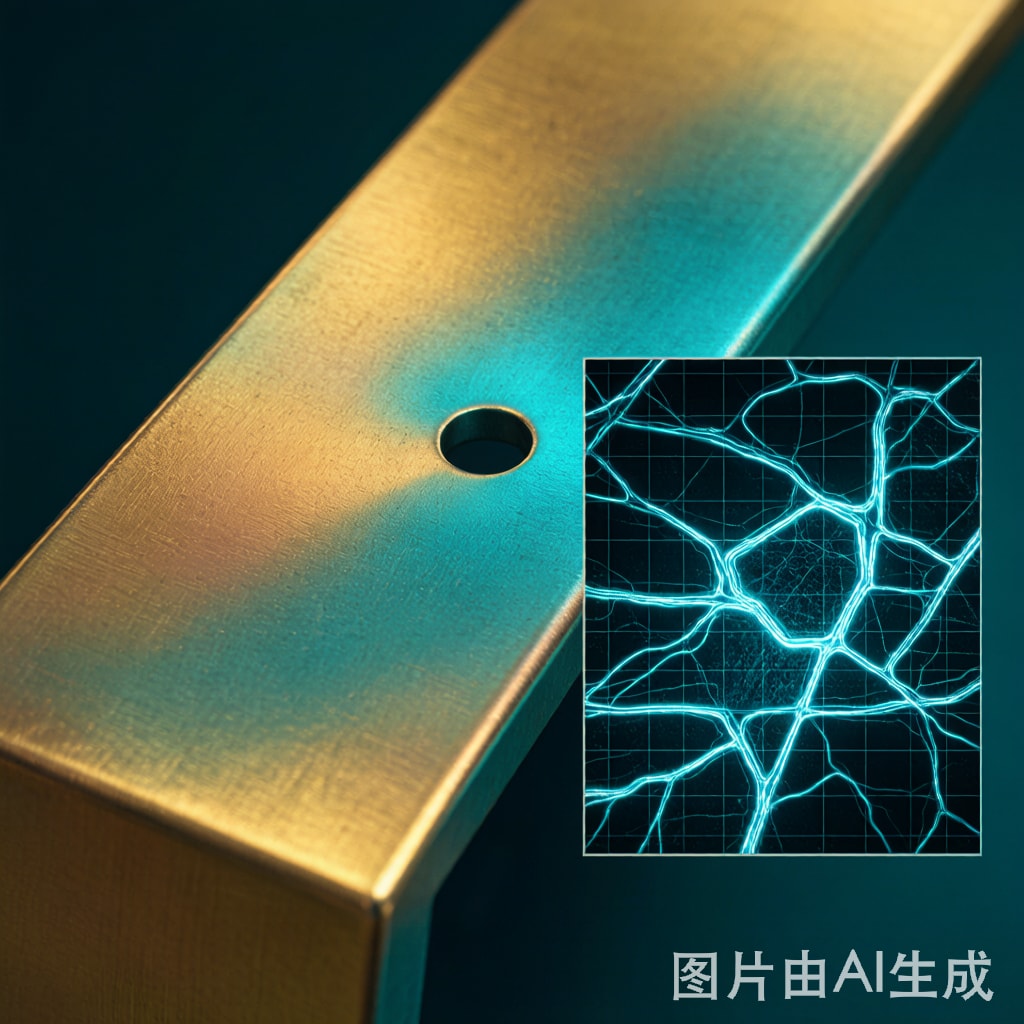
Plug-type dezincification occurs in localized areas, forming deep pits filled with porous copper. These plugs penetrate the brass strip perpendicular to the surface and are particularly dangerous because they can perforate thin SMT co
ector contact zones (typically 0.15–0.30 mm thick) without visible surface warning. Plug-type attack is favored by:
- High zinc content (>20% Zn) in single-phase α-brass
- Neutral or slightly acidic chloride environments
- Stagnant or low-flow conditions where chloride ions concentrate
- Elevated temperatures (acceleration begins above 25°C)
Type II: Layer-Type Dezincification
Layer-type dezincification spreads uniformly across the brass surface, creating a continuous porous copper layer. While less dangerous than plug-type in terms of penetration depth per unit time, it causes generalized wall thi
ing and loss of mechanical spring properties in SMT contact beams. The corrosion rate typically ranges from 0.05 to 0.5 mm/year depending on environmental severity.
The Electrochemical Process
Dezincification proceeds through a two-step mechanism: (1) simultaneous dissolution of both copper and zinc from the alloy, followed by (2) re-deposition of copper from the dissolved Cu²⁺ ions back onto the surface. The overall reaction in chloride media is:
Cu-Zn + 2Cl⁻ → Cu + ZnCl₂ + 2e⁻
The re-deposited copper is spongy and porous, offering negligible mechanical strength. The zinc chloride byproduct is soluble and washes away, leaving the characteristic reddish-brown copper deposit that signals active dezincification.
Alloy Selection: DZR Brass for Critical Applications
Dezincification-Resistant (DZR) brass, also known as arsenical brass (CZ132 / C35330), contains 0.02–0.10% arsenic that acts as a corrosion inhibitor by blocking the copper re-deposition step. The table below compares common brass alloys used in SMT electronics:
| Alloy | Composition | Zn % | IACS % | Dezincification Resistance | Typical SMT Use |
|---|---|---|---|---|---|
| C26000 | Cartridge Brass | 30 | 28 | Poor | General contacts, lead frames |
| C26800 | Yellow Brass | 35 | 27 | Very Poor | EMI shielding cans |
| C35330 | DZR (As) | 32–34 | 26 | Excellent | Marine/coastal contacts |
| C46400 | Naval Brass | 39 | 26 | Good (with Sn) | Structural hardware |
| C7521 | Nickel Silver | 20 | 5.5 | Excellent | Decorative/corrosion-critical |
For SMT co
ector contacts deployed in tropical marine environments (Philippines, Indonesia, Vietnam coastal zones), C35330 DZR brass offers the best balance of formability, conductivity, and corrosion resistance. The arsenic addition does not significantly affect mechanical properties or stamping behavior, making it a drop-in replacement for C26000 in progressive die tooling.
ISO 6509 Testing Protocol
ISO 6509 specifies the standard test method for determining dezincification depth in copper-zinc alloys. The test involves immersing polished brass specimens in a 1% copper(II) chloride solution at 75°C for 24 hours, then metallographically sectioning and measuring the maximum dezincification depth under optical microscopy.
Acceptance Criteria
- Non-DZR brass (C26000/C26800): Typical dezincification depth 150–400 μm after 24h exposure—unacceptable for marine applications
- DZR brass (C35330): Maximum dezincification depth <100 μm, typically <50 μm—classified as dezincification-resistant
- Nickel silver (C7521): No dezincification observed due to absence of zinc in the copper-nickel matrix
For SMT electronics manufacturers targeting Southeast Asian markets, specifying DZR brass with ISO 6509 compliance documentation should be a mandatory procurement requirement for any co
ector contact or EMI shielding component deployed in uncontrolled or semi-controlled environments.
Environmental Acceleration Factors
The tropical marine climate of Southeast Asia creates a particularly aggressive environment for brass corrosion. Key accelerating factors include:
Temperature
The dezincification rate approximately doubles for every 10°C increase. At 35°C (typical ambient in Jakarta, Manila, Ho Chi Minh City), the corrosion rate is roughly 2.5× faster than at 25°C (standard laboratory conditions). Inside enclosed electronic enclosures without forced air cooling, component surface temperatures can reach 50–60°C, further accelerating degradation.
Chloride Deposition
Coastal areas within 5 km of the shoreline experience chloride deposition rates of 15–100 mg/m²/day. Salt aerosols penetrate through enclosure ventilation openings and deposit on brass contact surfaces, creating localized chloride concentration cells that drive plug-type dezincification even in nominally dry conditions.
Humidity Cycling
Daily humidity cycling between 60% and 95% RH causes repeated condensation and evaporation on metal surfaces. Each cycle concentrates dissolved chlorides and creates thin electrolyte films that sustain electrochemical corrosion. The time-of-wetness (TOW) factor in tropical climates can exceed 5,000 hours per year, compared to 1,500–2,500 hours in temperate zones.
Mitigation Strategies for SMT Brass Components
1. Material Upgrade to DZR Brass
The most effective long-term solution is specifying C35330 DZR brass for all contact-critical brass components. The cost premium is typically 8–15% over standard C26000, but the service life improvement can exceed 5× in marine environments.
2. Protective Plating
Nickel plating (2–5 μm) with optional gold flash (0.05–0.1 μm) provides a barrier against chloride attack. For cost-sensitive applications, tin plating (1–3 μm) offers adequate protection while maintaining solderability. The plating must be defect-free—any pinholes become initiation sites for localized dezincification.
3. Conformal Coating
For assembled PCBs with brass components, acrylic or silicone conformal coating (IPC-CC-830 Class B or C) provides an additional moisture barrier. However, coating must be excluded from contact zones to prevent insulation of mating surfaces.
4. Enclosure Design
Design electronics enclosures with IP54 or higher sealing for coastal installations. Incorporate desiccant compartments and humidity indicators. Avoid natural convection vents that allow salt aerosol ingress; use gortex-sealed pressure equalization vents instead.
Conclusion
Brass strip dezincification is a significant reliability risk for SMT electronics deployed in Southeast Asian tropical marine environments. Understanding the corrosion mechanism, selecting DZR alloys per ISO 6509 criteria, and implementing layered protection strategies—material selection, plating, coating, and enclosure design—can extend co
ector service life from 2–3 years to 10+ years. For SMT manufacturers serving coastal markets, proactive dezincification management is not optional; it is essential for maintaining product reliability and brand reputation in demanding environmental conditions.