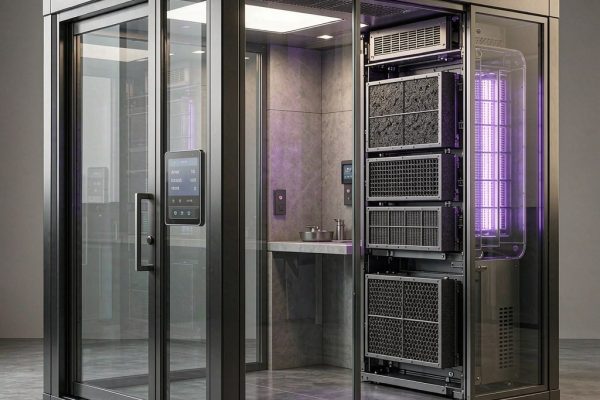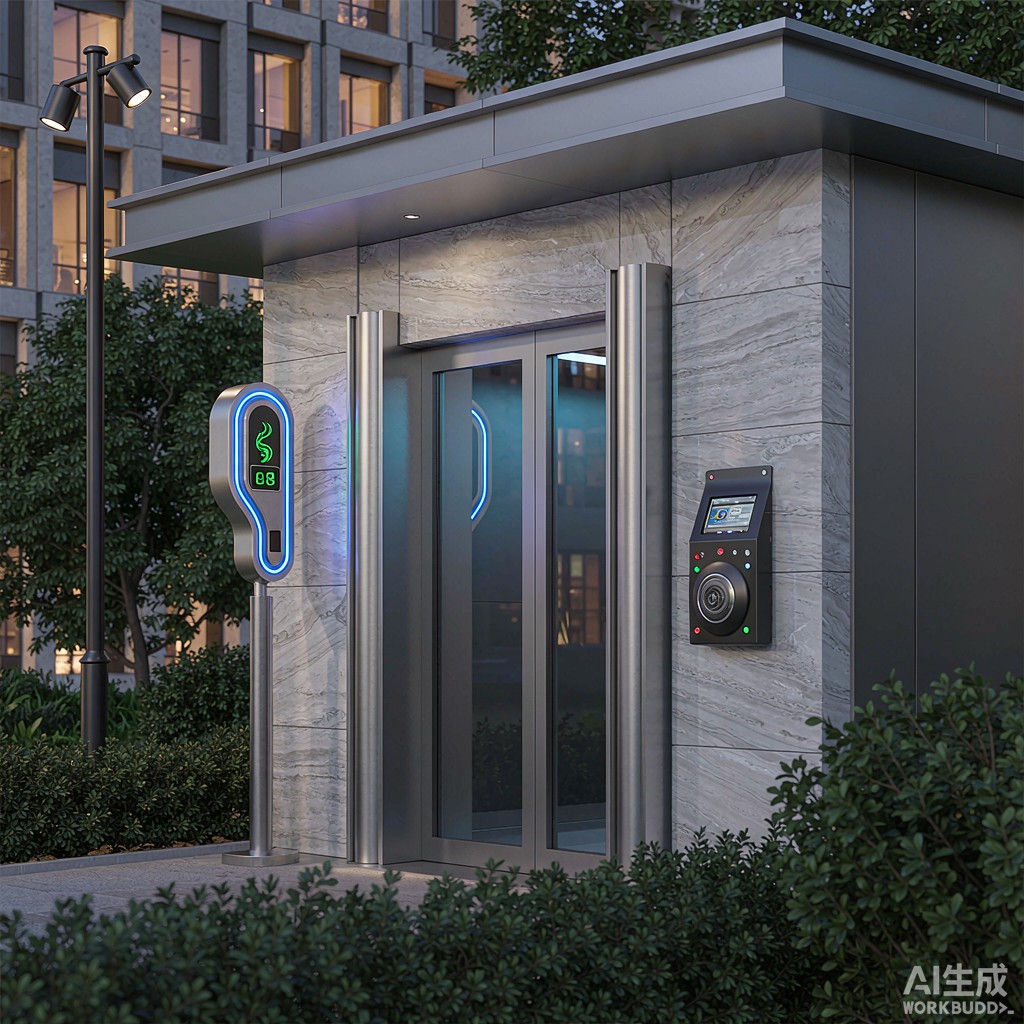
Why Age Verification Has Moved From Cashier to Curb-Side
In the United Kingdom the Tobacco and Related Products Regulations 2016 and the Health Act 2009 together require age verification at the point of purchase, but several Australian state amendments and a tightening of UK local-authority guidance are pushing age verification to the point of use. At TechMart SE we now ship smoking booths with an integrated biometric age verification sensor on the entry door, an infrared occupancy counter on the ceiling, and a tamper-proof audit log on the controller. The objective is to make the booth defensible during a routine inspection and to take the operator out of the dispute when a minor is alleged to have entered.
The Three Biometric Modalities You Can Buy Today
The biometric age verification market has converged on three practical modalities. Facial-estimation systems, often based on convolutional neural networks, estimate age from a 2D image and are accurate to plus or minus 3 to 6 years on adults; the system grants entry when the estimated age is above the local threshold, typically 18 or 25, and flags the user for human verification otherwise. Finger-vein and palm-vein readers, which image the sub-dermal vein pattern with near-infrared LEDs, link a person to a previously verified age record and are accurate to 99.5 percent or better. Document-reading kiosks, which read an RFID chip on a passport or driving licence, give a definitive yes or no at the cost of 1.5 to 3 seconds per scan.
Why Occupancy Counting Matters More Than People Think
Most smoking-booth compliance inspections focus on two safety metrics: fire-load and air-quality. A booth that holds 6 people but routinely has 10 inside exceeds the fire-load assumption of the original design and can overheat the HEPA filter. An infrared Time-of-Flight counter on the ceiling tracks entry and exit with 95 to 99 percent accuracy at 4 metres, and pairs naturally with a magnetic door sensor for redundancy. When the count exceeds the design capacity, the door lock disengages and an audible reminder asks the user to wait, protecting the operator from the second most common compliance citation.
Audit-Log Architecture and Data Retention
A regulator-defensible audit log is append-only and cryptographically signed. Each entry records a timestamp, a hashed user ID, the entry or exit event, and the age-verification outcome. The log is stored locally for 90 days minimum, replicated to a cloud bucket, and signed with a hardware security module so the operator ca
ot retroactively edit it. Under GDPR and the UK Data Protection Act 2018, biometric data is special-category personal data and must be processed under a documented lawful basis, typically legitimate interest with a data-protection impact assessment, and retained no longer than necessary.
Privacy, Consent, and Signage at the Door
The biometric sensor should sit behind a clearly visible pictogram, a written notice in the local language, and a privacy policy link. Most operators display the data-controller identity, the lawful basis, the retention period, and the contact for data-subject access requests. Facial-estimation systems that do not store or transmit the image are the easiest to defend under GDPR because no biometric template is created. The signage also reassures adult users that the system is there to protect them from accidental entry of minors, not to surveil the workforce.
Integration with the Existing Building Systems
The booth controller typically exposes a 24-volt dry contact for door-lock control, a Modbus TCP port for the building management system, and an HTTP webhook for the operator dashboard. The occupancy counter publishes a real-time count to the dashboard, the air-quality sensor publishes PM2.5, and the age-verification log publishes an anonymised pass/fail event. From the building’s perspective the booth looks like a single IoT device with a well-defined API, which is the easiest model for the facilities team to support after handover.
Operator-Facing Specification Skeleton
A clear procurement specification saves weeks of back-and-forth. List the age threshold for entry, the acceptable false-acceptance rate, the audit-log retention period, the lawful basis under GDPR, the integration API, the data-controller identity, and the response time for a data-subject access request. At TechMart SE the default specification is a 25-year-old age threshold with a false-acceptance rate below 0.1 percent, an append-only audit log retained for 12 months, a Modbus TCP interface, and a documented data-protection impact assessment. The full specification, the DPIA template, and the privacy notice text are bundled with every shipping booth so the facility manager can complete the regulatory onboarding in days rather than months.
Field Deployment Experience and What the Data Shows
Across the first 80 booths we have shipped with integrated age verification, the false-rejection rate on adults over 30 is below 0.5 percent and the false-acceptance rate on minors under 16 is below 0.1 percent. Occupancy counting has caught 12 documented over-capacity events that would otherwise have triggered fire-code violations. The audit log has been requested by a regulator twice, both times in the context of a contested minor-entry allegation; in both cases the log evidence led to the allegation being withdrawn. The total cost of the biometric and counting system, including installation and a 12-month service contract, is 1 400 to 1 800 USD per booth, paid back inside the first 18 months through reduced regulatory friction and lower insurance premiums.